


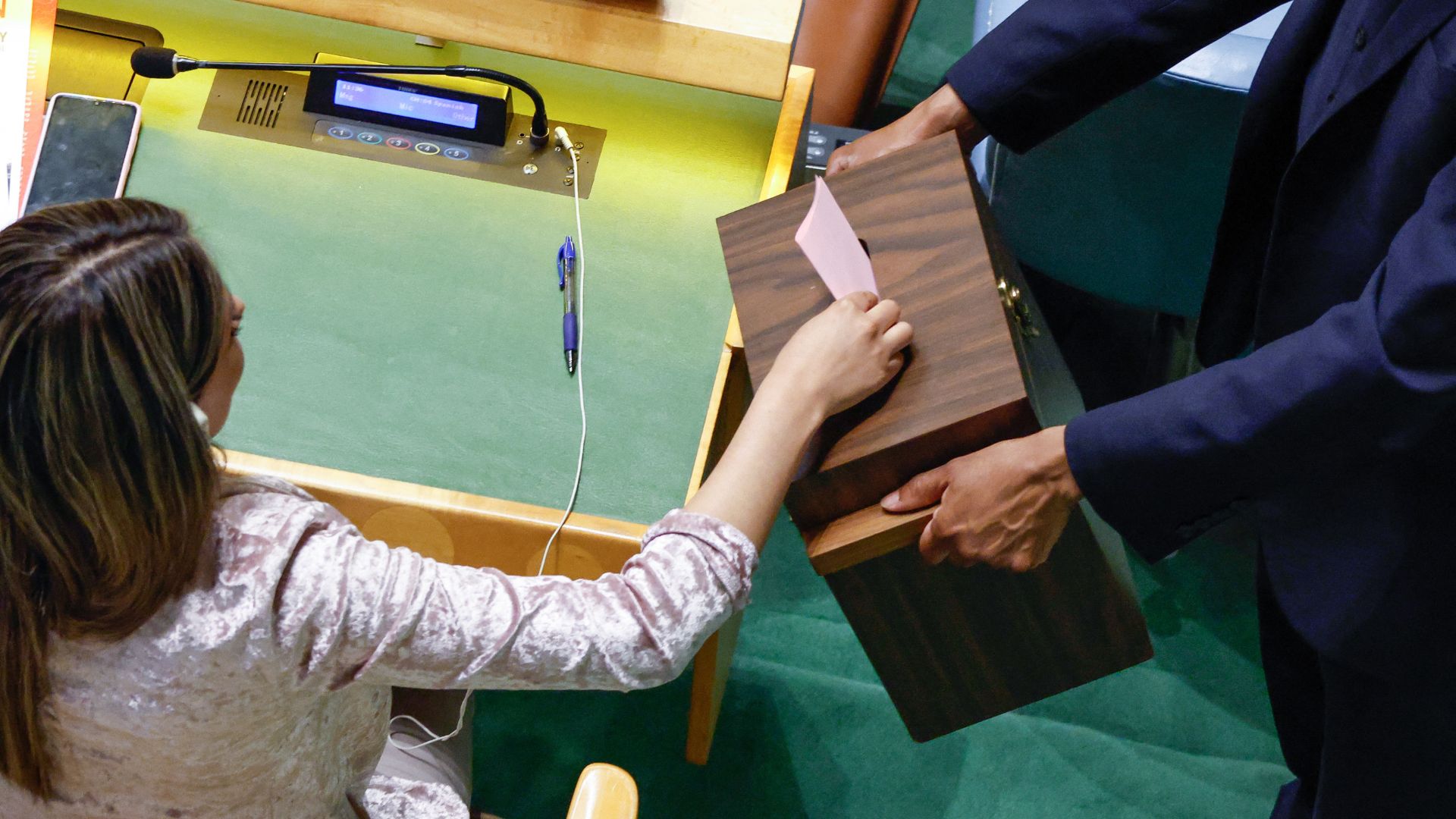
The Bolivian delegation voteds in the UN General Assembly meeting for the election of the non-permanent members of the UN Security Council. (Photo: Kena Betancur/AFP)
Germany's leading role in rallying support for Ukraine and its close relations with Israel may have cost Berlin the chance of a seat on the UN Security Council, Foreign Minister Johann Wadephul said on Wednesday.
The Council vote, which elected Austria and Portugal to a two-year term along with Trinidad and Tobago, Kyrgyzstan and Zimbabwe, was a blow to Chancellor Friedrich Merz's struggling government, which has sought to position Berlin as a leading voice in Europe on global issues.
"We have always taken a clear stance on certain issues, and these are positions that not all member states share," Wadephul told reporters, calling it "no secret" that Russia had stirred up sentiment against Germany.
"There is our firm support for Ukraine; the fact that Russia does not want such a voice at the Security Council," he said.
"The fact that Germany must always assume a special responsibility for Israel in the Middle East conflict may also have cost votes," he said, referring to Germany's support for Israel following the Nazi Holocaust of World War II.
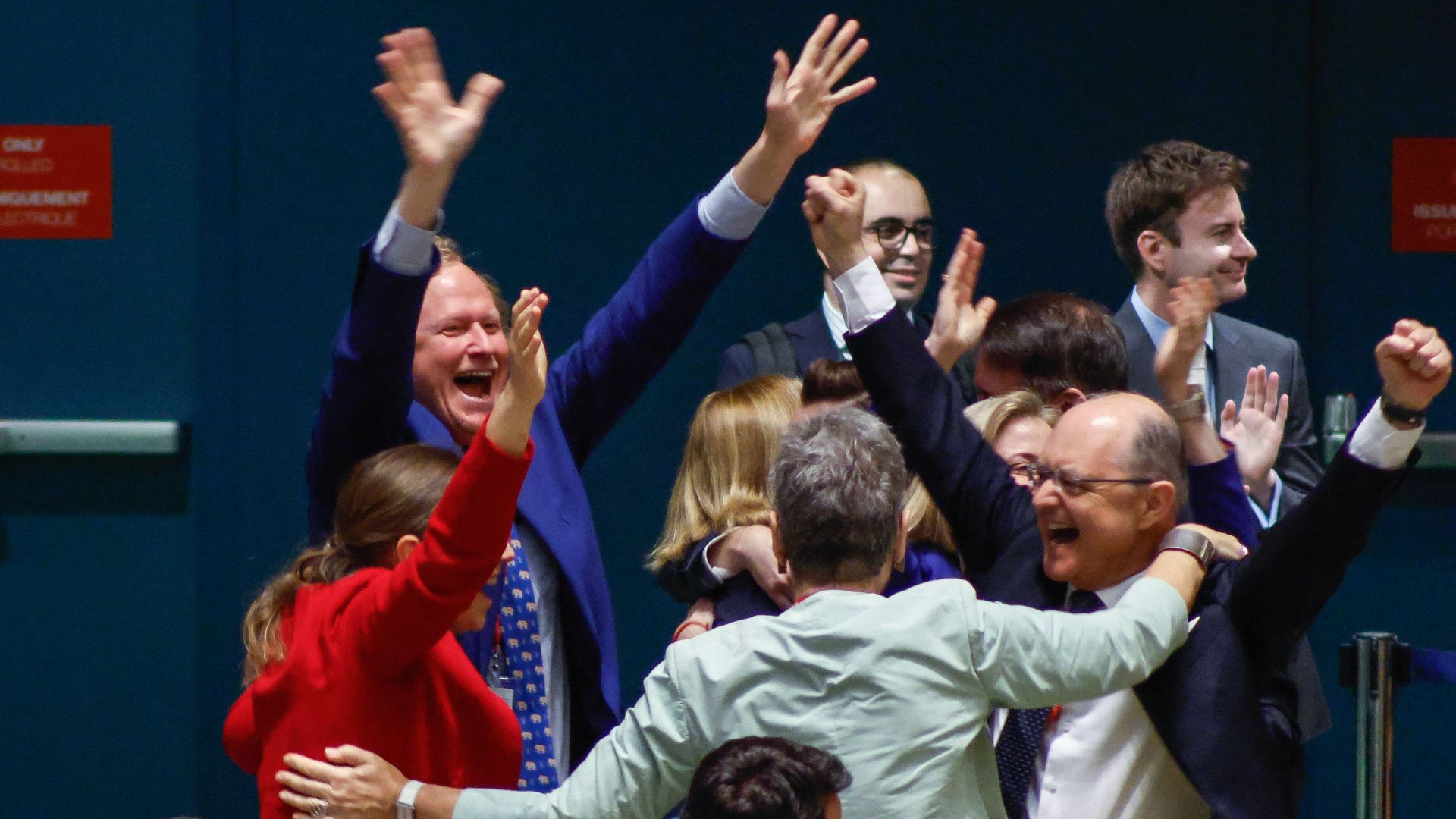
Representatives from Austria, including Austrian Ambassador to the UN Gregor Koessler (lower R), react after winning a seat as a non-permanent member of the UN Security Council. (Photo: Kena Betancur/AFP)
Germany has repeatedly found itself under pressure to take a tougher stance against Israel over the war in Gaza.
Wadephul said Germany would stand by this responsibility even if it does voice criticism of the Israeli government on certain points.
There was no immediate reaction from Russia to Germany's accusation of lobbying against it.
Opposition blames Merz for 'embarrassing defeat'
In a separate statement, Merz said Germany would remain a firm supporter of the international system and he offered congratulations to Austria and Portugal, which were in direct competition with Germany for two of the five available seats on the 15-member council.
"We applied with conviction. We did not achieve our goal," he said. "This result does not alter the tasks we face at the United Nations. Germany remains a reliable pillar of the multilateral system."
While Merz's government has struggled domestically with a difficult package of economic and spending reforms that have strained his coalition with the center-left Social Democrats, he has earned more respect on the foreign policy front, where he has rallied Western support for Ukraine.
However, the opposition Greens said the "embarrassing defeat" was down to Merz and Wadephul, who was in New York for the vote.
"Last year, the German government did far too little to underpin this bid with modern ideas," Agnieszka Brugger, the party's deputy parliamentary leader, said in a statement.
The far-right Alternative for Germany, which has regularly criticized Berlin's support for Ukraine and its efforts to isolate Russia, said the result was no accident. Rather it was "the result of years of ideologically blinkered, unrealistic foreign policy which isolates Germany internationally," AfD parliamentarian Markus Frohnmaier said in a statement.
Frohnmaier, a member of the parliamentary foreign affairs committee, was one of a group of AfD lawmakers who attended Russian President Vladimir Putin's showcase economic forum in St Petersburg on Wednesday.
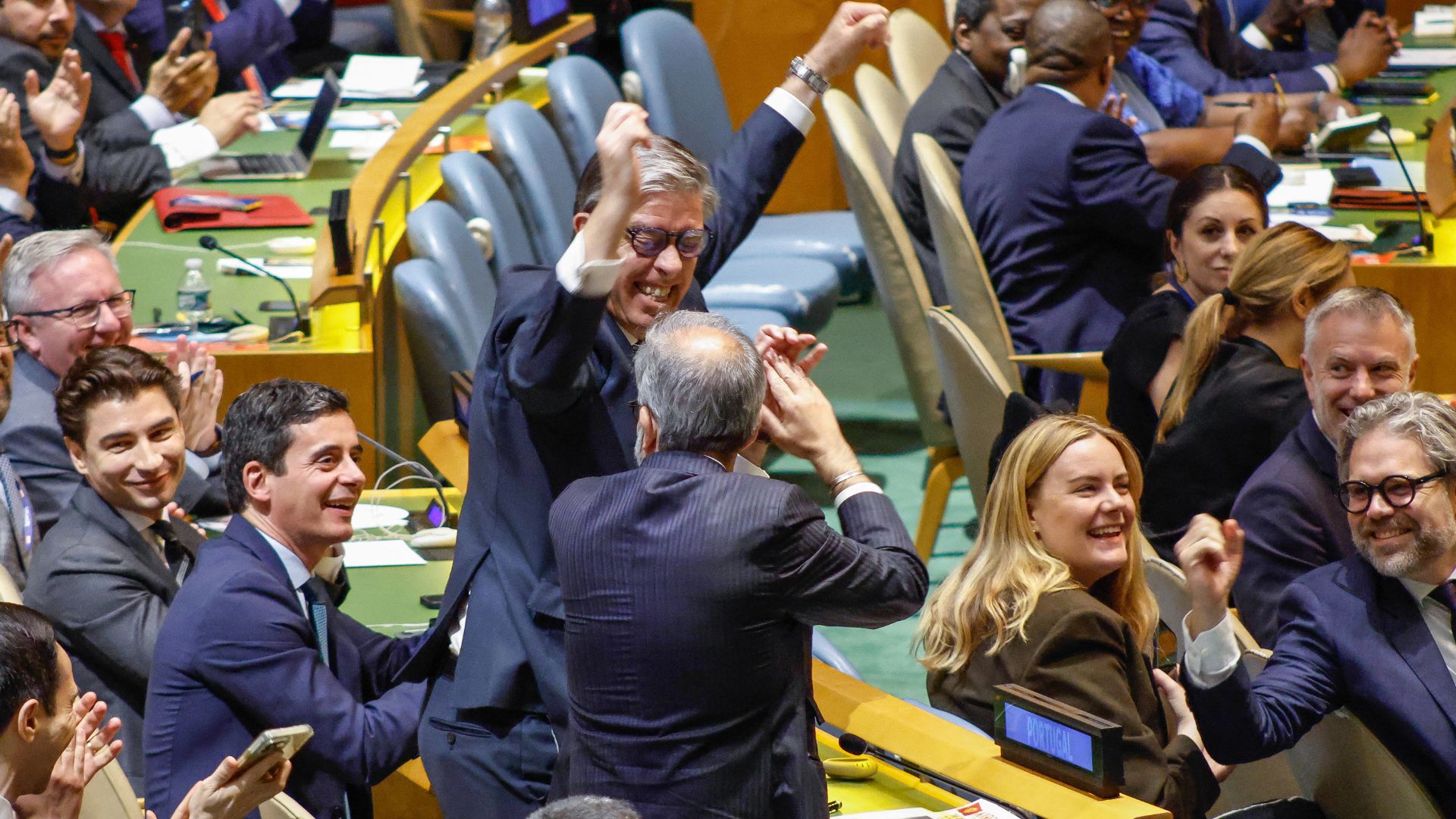
Portuguese Ambassador to the UN Rui Vinhas (C) gestures in celebration after his country won a seat as a non-permanent member of the UN Security Council. (Photo: Kena Betancur/AFP)
How is the UN Security Council elected?
The UN Security Council has 15 seats in total. Five of them are permanent, held by China, France, Russia, the UK and the US; these five nations have the power of veto over Council decisions.
The other 10 seats are rotated among UN member states, with five of them being elected every year for a two-year term. These five seats are carefully balanced among the UN's various geographical groupings.
Each year, one new country is elected from the 54-member African group; one from the 53-member Asia-Pacific group; one from the 33-state 'GRULAC' grouping which includes Central and South America plus the Caribbean; and two from the more disparate, 28-nation WEOG (Western European and Others Group) which includes Australia, Canada, Israel and New Zealand.
There is also a 22-state Eastern European grouping, but its single seat is currently held by Latvia, halfway through its two-year term.
In this year's elections, Zimbabwe ran unopposed for the African seat, as did Trinidad and Tobago for the GRULAC seat. Kyrgyzstan beat the Philippines to the Asia-Pacific nomination, but only after four rounds of secret balloting; each seat must be secured by a two-thirds majority.
It's the first time Kyrgyzstan has had a seat on the Security Council, whereas the Philippines has served four terms. Austria and Portugal, which won the two WEOG nominations, have each served six times previously. Zimbabwe has had two previous terms, Trinidad and Tobago just one.
The most regularly elected non-permanent members have been Japan (12 terms), Brazil (11), Argentina (9), and Colombia, India and Pakistan (8 each).
The five newly-elected members will take their seats from 1 January 2007 to 31 December 2028.