


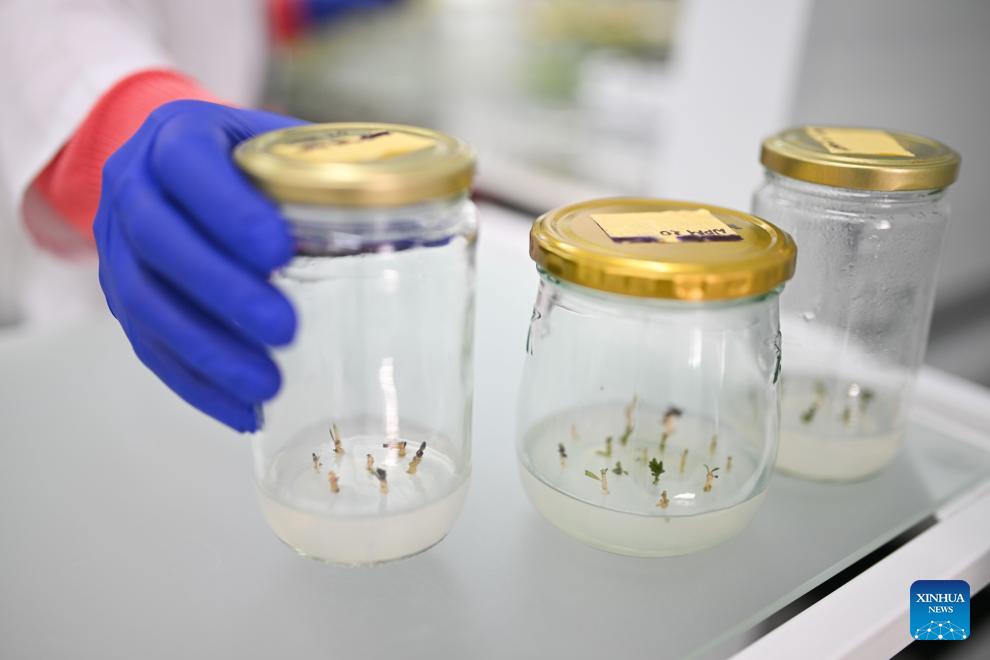
A researcher works at the International Innovation Center for the Aral Sea Basin in Nukus, Uzbekistan, April 9, 2026. (Xinhua/Li Renzi)
ALMATY, June 6 (Xinhua) -- Rusting fishing vessels lie stranded on the desert floor in Muynak, Uzbekistan, once a bustling port on the Aral Sea. The retreating waters have left these hulls as silent reminders of a profound ecological disaster.
"The scale of this disaster and its impact on local communities is unimaginable," said Makhmudjan Aitzhanov, a guide at the Museum of Aral Sea History.
The Aral Sea, once the world's fourth-largest inland lake, spans Kazakhstan and Uzbekistan. Since the 1960s, excessive water use and climate change have reduced its area by over 90 percent. Vast stretches of the dried seabed have turned into desert, earning the shrinking lake the nickname "Dry Tears" of Central Asia.
To address this crisis, China has collaborated with Central Asian countries. In 2013, the Xinjiang Institute of Ecology and Geography under the Chinese Academy of Sciences, together with regional partners, established the Research Center for Ecology and Environment of Central Asia, headquartered in Tashkent with branches in Kazakhstan, Kyrgyzstan, and Tajikistan. The center serves as a platform for research and practical measures on water conservation, desertification control, saline-alkaline land restoration, and ecological rehabilitation.
Chinese researchers have conducted field surveys, set up over 80 monitoring sites, and used high-resolution remote sensing to analyze the Aral Sea's shrinkage and its causes. Based on soil, vegetation, biodiversity, and water data, they divided the region into ecological zones to guide targeted restoration.
According to Zhang Yuanming, director of the Xinjiang Institute of Ecology and Geography, Chinese researchers have brought expertise in restoring saline-alkaline land in China's arid regions. Working with Uzbek partners, they have established five halophyte gardens to test salt-tolerant plants that can absorb excess soil salt and improve soil quality. Two more gardens are planned.
Uzbek officials see the initiative as an important step toward long-term recovery.
"We hope these gardens will serve as seed bases for expanding the cultivation of salt-tolerant species such as saxaul and tamarisk," said Erkin Mukhitdinov, head of the Forestry Agency of Uzbekistan's Ministry of Ecology, Environmental Protection and Climate Change. "This will help gradually restore the productivity of degraded land."
At the International Innovation Center for the Aral Sea Basin in Nukus, a "Chinese Smart Agriculture Demonstration Zone" showcases over 40 species of halophytes studied with Chinese support. Center director Bakhytzhan Khabibullaev highlighted that some plants, such as the medicinal cistanche, have both ecological and economic potential.
Since 2018, Uzbekistan has planted salt-tolerant vegetation across about 2 million hectares. Vegetation growth has reduced the frequency and intensity of sand and salt-dust storms.
"About 10 years ago, spring dust and salt storms were severe. Now the situation has improved. International cooperation, including with China, is very important for local people," said museum guide Aitzhanov.
Experts agree that long-term recovery depends on improved water management. Since 2011, Chinese researchers have promoted efficient irrigation technologies in Uzbekistan, achieving cotton yields over 400 kg per mu (about 0.067 hectares) while reducing water use by 50-70 percent.
Jilili Abuduwaili, deputy director of the Research Center for Ecology and Environment of Central Asia, emphasized that the Aral Sea crisis requires international cooperation. By sharing research and technology, China and Central Asian partners are exploring ways to balance ecological restoration with economic development.
Shahriyor Nurulloev, vice rector of the Central Asian University of Environmental and Climate Change Studies, said, "Together with our Chinese partners, we hope to advance ecological restoration and land improvement in the Aral Sea region, improve living conditions for residents, and support the region's long-term sustainable development." ■
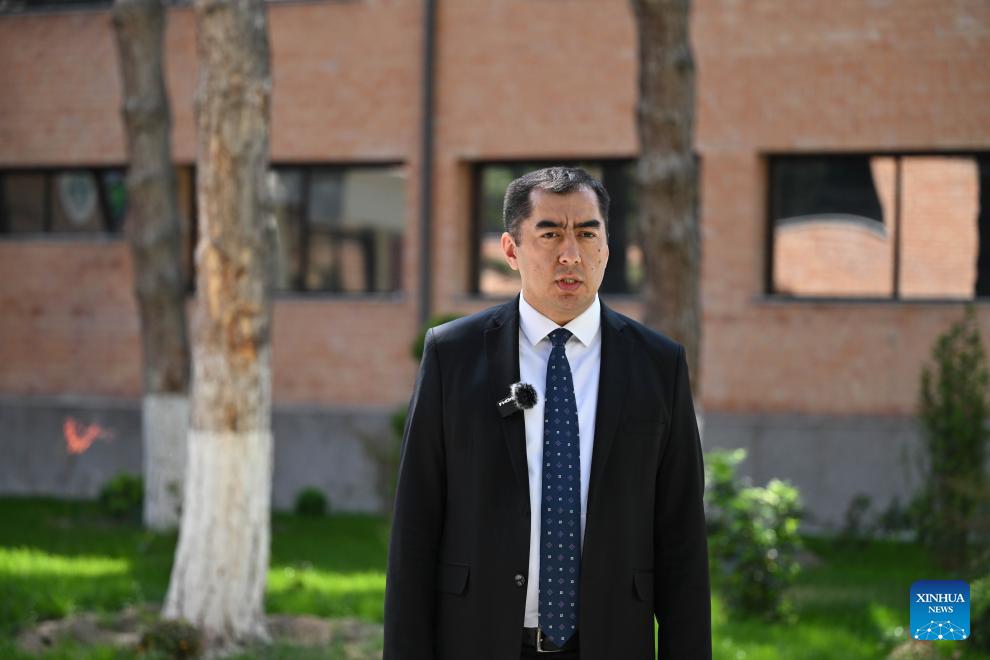
Shahriyor Nurulloev, vice rector of the Central Asian University of Environmental and Climate Change Studies, receives an interview from Xinhua News Agency in Nukus, Uzbekistan, April 12, 2026. (Xinhua/Li Renzi)
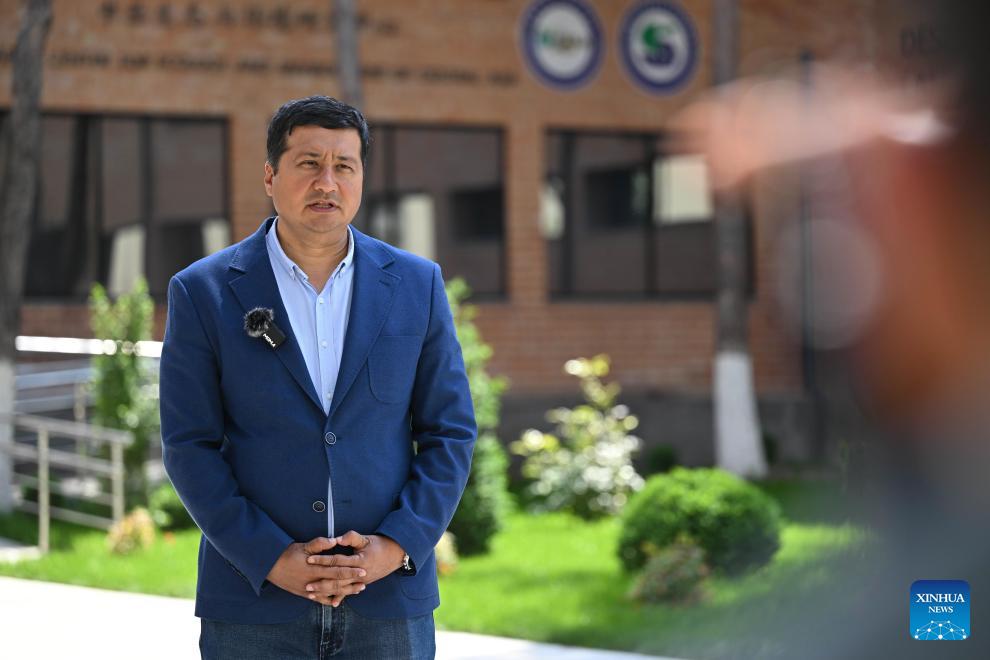
Erkin Mukhitdinov, head of the Forestry Agency of Uzbekistan's Ministry of Ecology, Environmental Protection and Climate Change, receives an interview from Xinhua News Agency in Nukus, Uzbekistan, April 12, 2026. (Xinhua/Li Renzi)
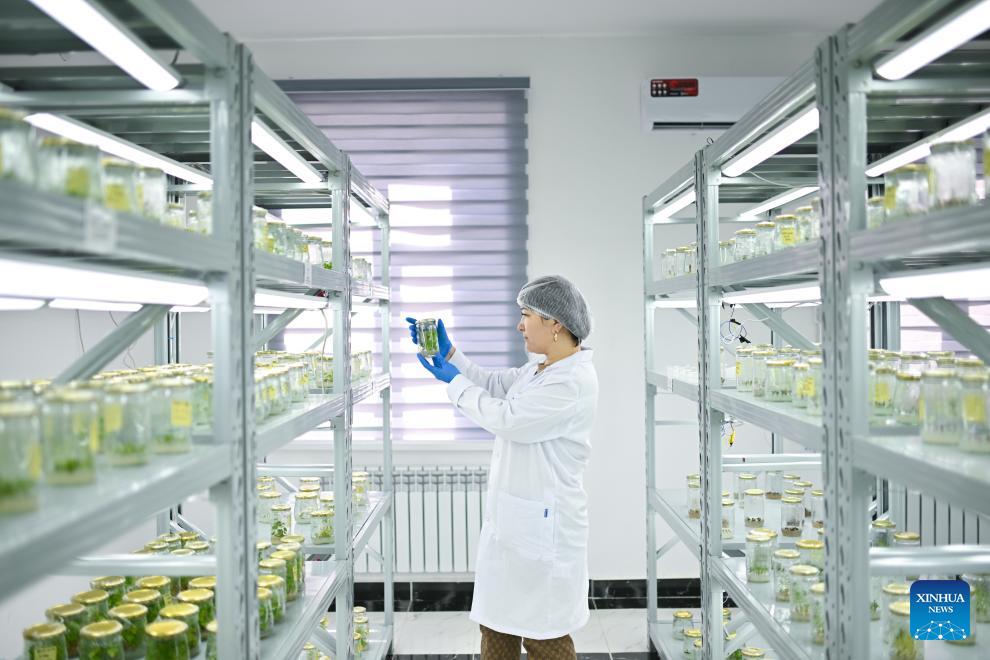
A researcher works at the International Innovation Center for the Aral Sea Basin in Nukus, Uzbekistan, April 9, 2026. (Xinhua/Li Renzi)

Researchers work at the International Innovation Center for the Aral Sea Basin in Nukus, Uzbekistan, April 9, 2026. (Xinhua/Li Renzi)
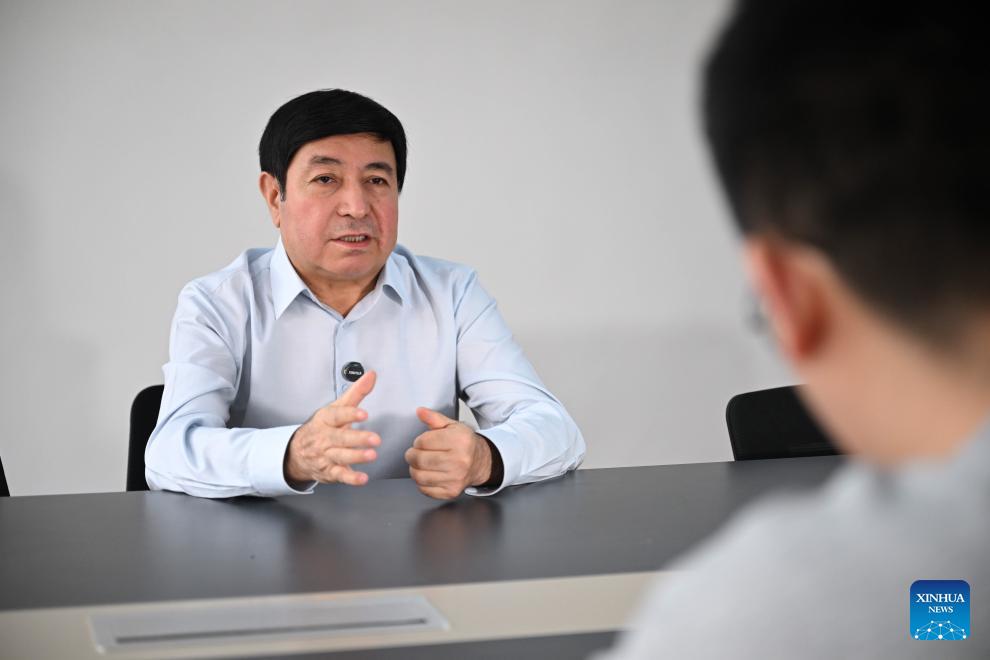
Jilili Abuduwaili, deputy director of the Research Center for Ecology and Environment of Central Asia, receives an interview from Xinhua News Agency in Almaty, Kazakhstan, March 31, 2026. (Xinhua/Li Renzi)
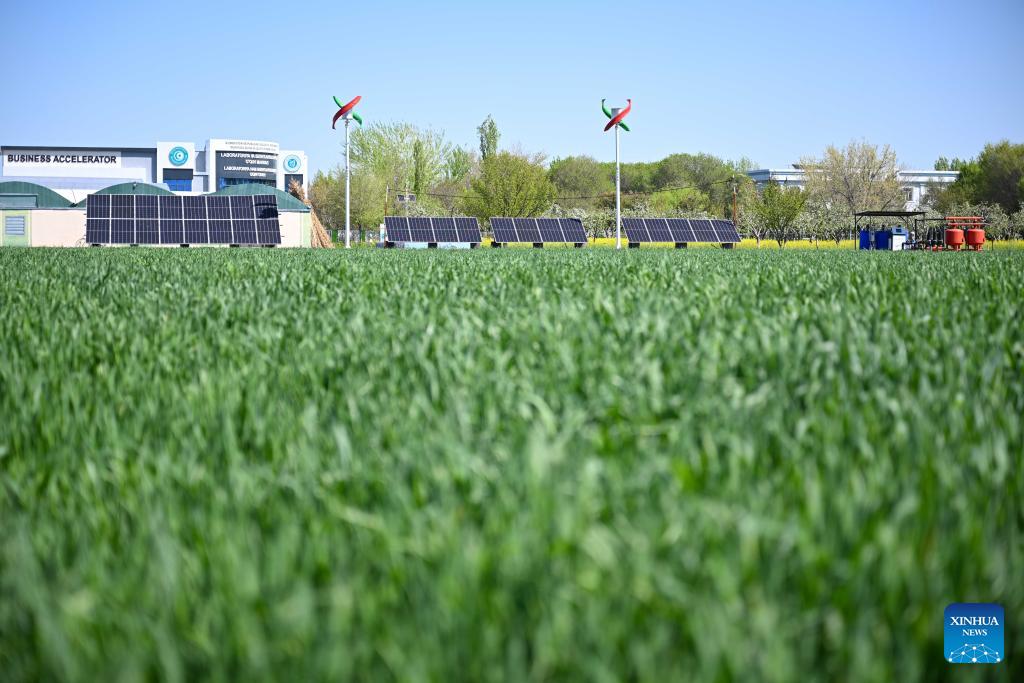
This photo taken on April 9, 2026 shows Chinese Smart Agriculture Demonstration Zone outside the International Innovation Center for the Aral Sea Basin in Nukus, Uzbekistan. (Xinhua/Li Renzi)