


Juiz de Fora (People's Daily) – The wind from the Brazilian highlands sweeps over rolling hills and across the vast interior of Minas Gerais, a region known for mining, agriculture, and livestock farming.
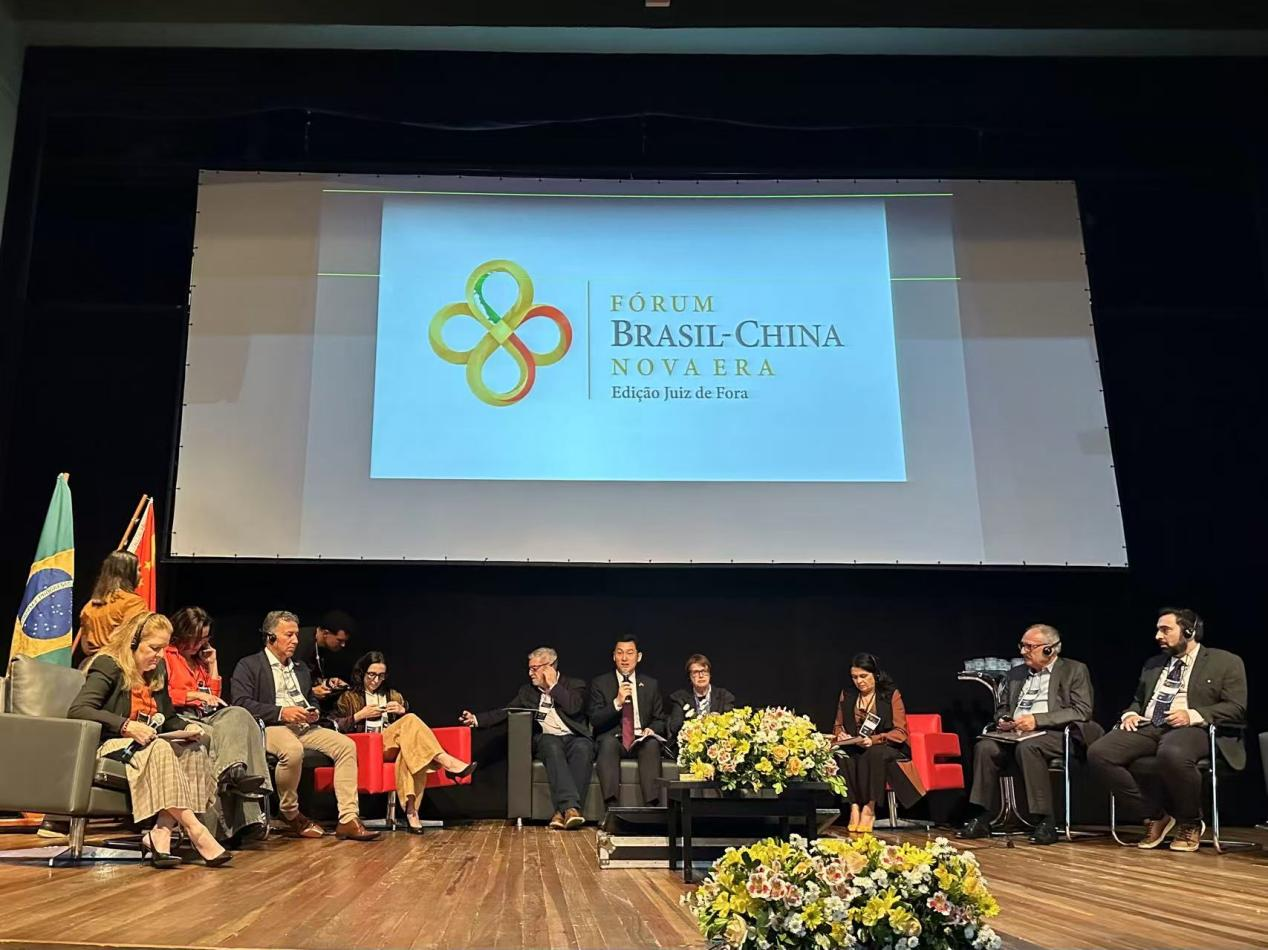
The "Brazil-China New Era Cooperation Forum," co-hosted by the Brazil-China Innovative Economy Research Institute and the municipal government of Juiz de Fora in Minas Gerais State, is held on June 1, 2026. (Photo: Chen Yiming/People's Daily)
On June 1, the "Brazil-China New Era Cooperation Forum," co-hosted by the Brazil-China Innovative Economy Research Institute and the municipal government of Juiz de Fora, was held as part of the city's 176th anniversary celebrations. More than 300 representatives from government, business, academia and cultural institutions from both countries gathered to discuss trade, investment, technological innovation, and people-to-people exchanges. One keyword was repeatedly emphasized throughout the forum: logistics.
Participants agreed that as logistics networks continue to extend deeper into Brazil’s interior, China-Brazil cooperation is gradually expanding from coastal ports and trade corridors into inland regions, driving deeper collaboration in industry, innovation, and cultural exchange.
Located at the intersection of three major metropolitan areas – Rio de Janeiro, São Paulo and Belo Horizonte, the state capital – Juiz de Fora is an important transportation and industrial hub in southeastern Brazil. Known as the "Manchester of Brazil," the city was once famous for its railways, textile industry and industrial development. Today, it has become a key regional development center, leveraging its higher education resources, technological innovation capacity, and regional influence. Like many inland Brazilian cities, it is at a critical stage of industrial transformation.
"We hope to strengthen our logistics and manufacturing base through Brazil-China cooperation, enhance the city's position in regional industrial chains, and create more opportunities for youth employment and innovation," Mayor Margarida Salomão said at the forum's opening ceremony. As one of the few female mayors in Brazil, Salomão is also an educator. She previously served as president of the Federal University of Juiz de Fora and has long focused on education, science and technology, and social development.
Logistics emerged as one of the most discussed topics at the forum.
Jing Yanhui, Commercial Counselor of the Chinese Consulate General in Rio de Janeiro, noted that China has become Minas Gerais' largest trading partner. He said cooperation should build on traditional trade while expanding into areas such as technological innovation, urban governance, green development and cultural exchange. He suggested using sister-city ties as a bond, technological cooperation as a lever, and logistics hubs as a foundation to produce replicable and scalable outcomes.
Brazilian Federal Deputy Ana Pimentel said Brazil-China cooperation should further expand into technological innovation and talent development. She noted that reliance on traditional trade alone can no longer meet development needs, and called for stronger integration of education, research, and industry to advance cooperation toward higher value-added sectors.