


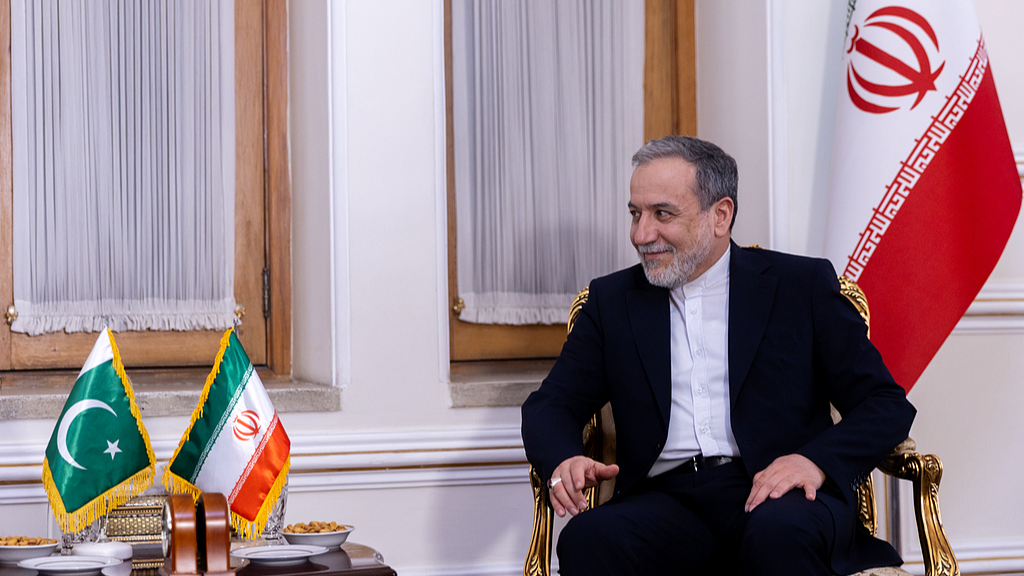
Iranian Foreign Minister Seyed Abbas Araghchi is seen during a meeting with Pakistani Interior Minister Mohsin Naqvi (not in view) in Tehran, Iran, June 7, 2026. (Photo: VCG)
The United States and Iran signaled on Friday that an agreement to end their war was close, with both sides and their mediator Pakistan saying a signing of an initial deal could happen within a few days.
In an interview with Iranian state-run IRIB TV on Friday night, Iran's Foreign Minister Seyed Abbas Araghchi said that the signing of a memorandum of understanding (MoU) with the US to end the war could take place within the next few days.
Once finalized, the MoU will be signed digitally by both sides in their respective countries and then announced, said Araghchi.
The Iranian foreign minister added that following the potential signing, both Iran and the US will commit not to initiate any other war and will begin the second stage of negotiations, scheduled within a 60-day period, to reach a final agreement, focusing mainly on Iran's nuclear program and sanctions removal.
He stressed that Tehran insists that the only acceptable way of dealing with its highly enriched uranium will be diluting it within Iranian territory.
Pakistan's prime minister said "a final, agreed upon text" of a US-Iran peace deal has been reached and that Pakistan, a key mediator in the Iran war, "is now working closely with both sides to finalize the next steps."
Meanwhile, a senior US official told Reuters on Friday that negotiators for the US and Iran are close to the finish line of a deal aimed at ending their war and it could be signed in the coming days.
Once signed, it will begin 60 days of negotiations on the technical aspects of the agreement, said the US official.
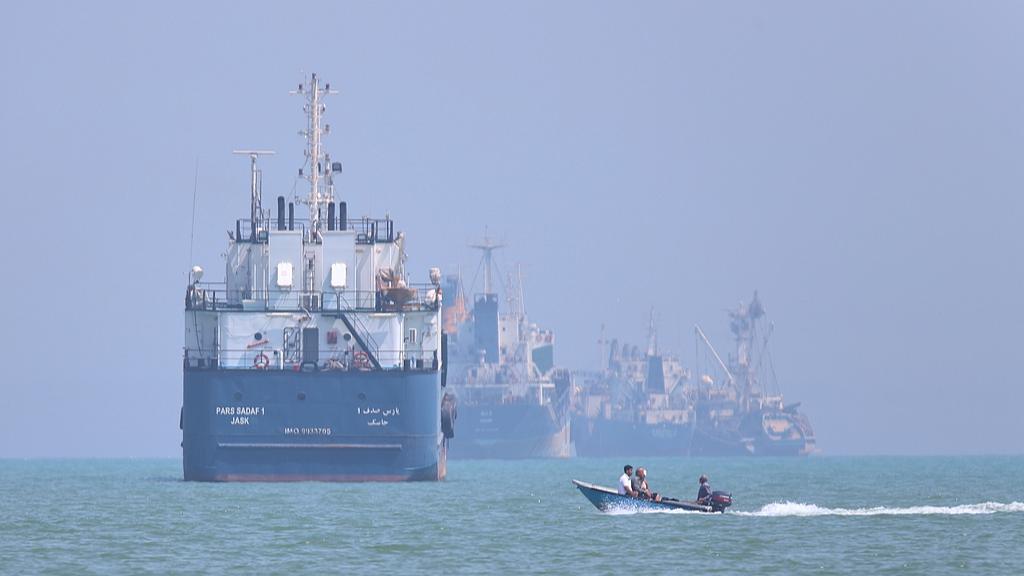
A small motorboat passes anchored vessels in the Strait of Hormuz off Bandar Abbas, Iran, June 11, 2026. (Photo: VCG)
What's in the deal?
Araghchi said that the potential MoU would include provisions for ending the war on all fronts, including Lebanon, and would require Israel to withdraw from occupied areas.
Other key issues in the MoU include the reopening of the Strait of Hormuz, the full lifting of the US anti-Iran naval blockade, and the release of Iran's frozen assets, he noted.
On the Strait of Hormuz, Araghchi said its management would definitely not return to the pre-war era. While Iran would retain sovereignty and a military presence, a legal system consistent with international law would be established, he said.
He ruled out tolls for passage but noted that charging service fees would be reasonable.
The US official said a painstakingly negotiated agreement would include a commitment by Iran to neither develop nor procure nuclear weapons and would reopen the Strait of Hormuz to normal oil traffic and lift the US blockade.
It would only permit the release of frozen Iranian assets based on whether Iranian leaders meet the requirements laid out for them, the official said.
"If we see them honoring their end of the bargain, it's going to be very good for Iran, and if we see them not honoring their end of the bargain, then they're not going to get anything out of it," the official said.
A Western source was quoted by Reuters as saying that the deal could be signed as soon as Sunday by US Vice President JD Vance and Iran's Parliament Speaker Mohammad Bagher Ghalibaf, with Geneva seen as the likeliest venue.
Israel, which launched the war alongside the US, has not been part of the negotiations. Prime Minister Benjamin Netanyahu said on Friday his country would not be party to the agreement, adding that he and US President Donald Trump were in "full agreement" to prevent Iran from obtaining nuclear weapons.
Over recent weeks, Iran and the US have exchanged several peace proposals through Pakistan's mediation and have been working to finalize an MoU to end the war.
(With input from agencies)