


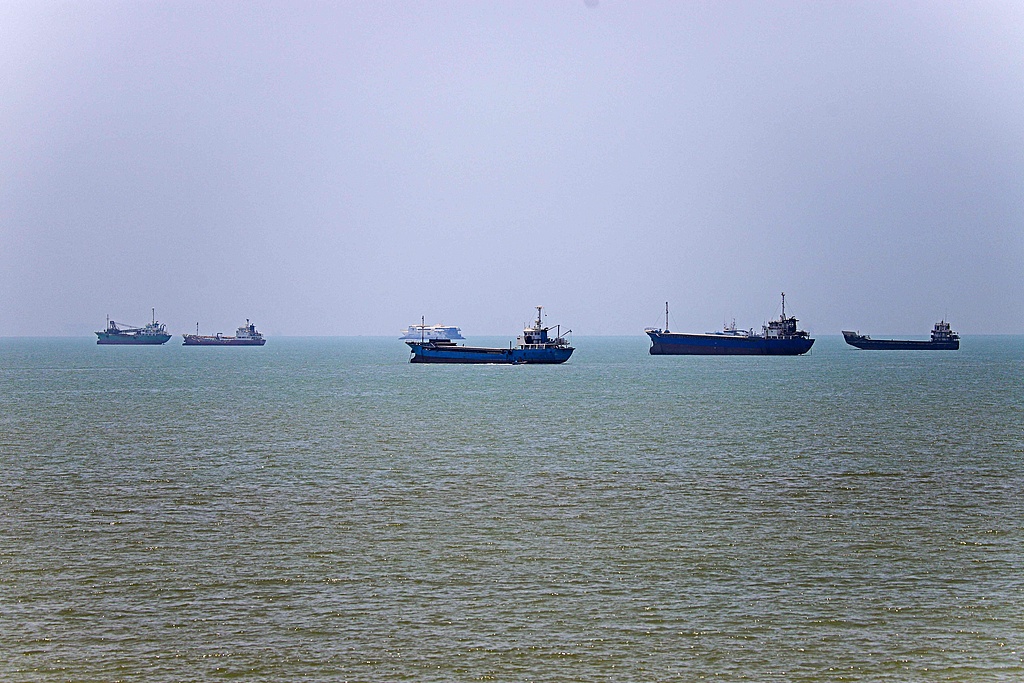
Vessels dock along the coast of the Strait of Hormuz, Abbas Port, Iran, June 18, 2026.(Photo: VCG)
A reopened Strait of Hormuz would be a relief. It would not be reassurance.
Hormuz is not just another shipping lane. According to the International Energy Agency (IEA)'s 2026 factsheet for the Strait of Hormuz, around 20 million barrels a day of crude oil and oil products moved through the strait in 2025, about a quarter of the world's seaborne oil trade. Around 80% of those flows were destined for Asia. The gas exposure is just as striking: just over 112 billion cubic meters of LNG transited Hormuz in 2025, almost one-fifth of global LNG trade, and nearly 90% went to Asian markets.
The alternatives are limited. Saudi Arabia and the United Arab Emirates have some pipeline capacity to bypass the strait, but the IEA puts the usable room at only about 3.5 million to 5.5 million barrels a day. That is meaningful, but it is nowhere near enough to replace Hormuz. Those numbers explain why a threat to Hormuz travels so quickly.
The United States said on Thursday that it had lifted its maritime blockade on Iran, while Tehran announced measures to reopen the Strait of Hormuz following the signing of a memorandum of understanding (MoU) between the two countries, marking a significant step towards easing regional tensions.
Prices should calm with normal passage resuming. Crude and LNG will lose part of their war premium. Freight and insurance costs should ease. Importing economies will get some breathing space. But a strait can be declared open before companies believe it is safe. Tanker schedules, insurance clauses and procurement plans do not reset as quickly as futures prices. A few cargos moving again is not the same as confidence returning.
Nor has the US-Iran conflict disappeared. Sanctions, nuclear disputes, regional influence and military deterrence are still there. A memorandum can lower the temperature. It cannot remove the furnace. Markets know this. The next escalation, if it comes, may be priced faster than the last one. Geopolitical risk is no longer something traders can put in a footnote and call a tail event. It is entering the ordinary calculation of oil, LNG, shipping and insurance.
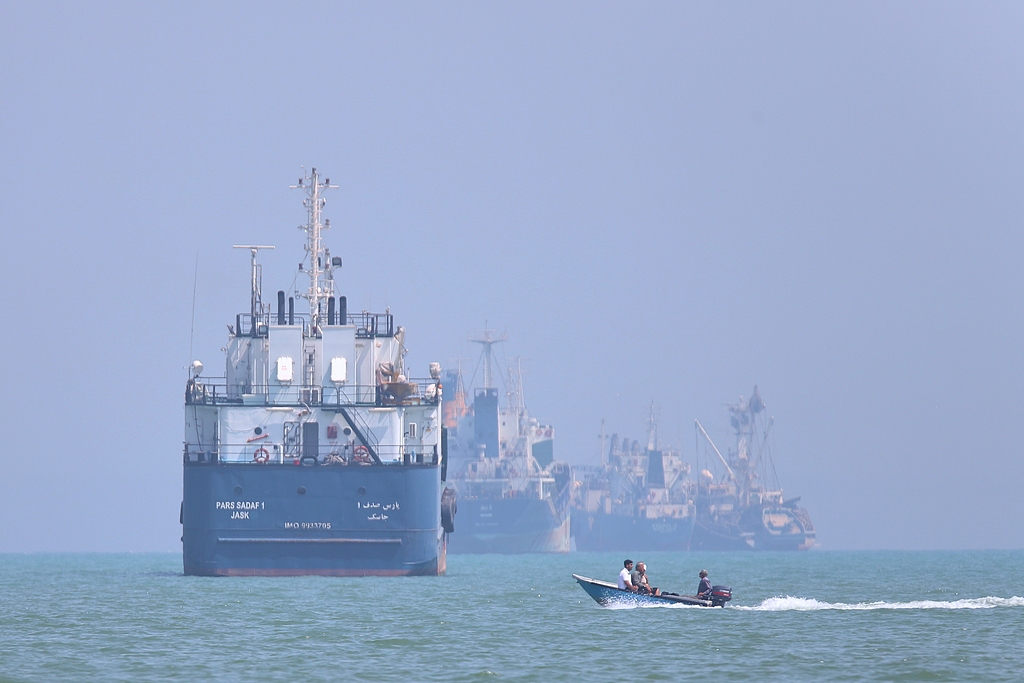
A small motorboat passes anchored vessels in the Strait of Hormuz off Bandar Abbas, Iran, June 11, 2026. (Photo: VCG)
A deeper problem sits behind that lesson. Chokepoints can become bargaining chips. If control over a narrow waterway can move energy prices, raise insurance costs, disturb inflation expectations and unsettle financial markets, then the waterway is no longer just infrastructure. It is leverage. For decades, energy trade was built around one assumption: take the cheapest route and keep inventories lean. The system worked as long as routes stayed open and politics stayed outside the shipping contract. Hormuz shows how fragile that assumption was.
The adjustment will not be elegant. Governments will hold more reserves than accountants would like. Companies will pay for backup routes they hope never to use. Importers will sign contracts that are not the cheapest, but safer. Some of this will look inefficient. However, inefficiency under the old language of globalization turns into insurance under the new language of security.
Asia should pay special attention. The region is both the world's manufacturing center and one of its largest energy-importing regions. A Hormuz disruption does not only mean a higher oil bill. It can raise factory costs, squeeze exporters, lift household prices and reduce the room for monetary easing. For Asia, the strait is not a distant Middle Eastern problem. It is part of the region's economic security map.
Energy transition now has a harder edge as well. Renewable, storage, grids and regional power cooperation are not only climate policies. They are ways to reduce exposure to places where energy can be delayed, priced up or politicized. The aim is not to escape global energy trade overnight. That is impossible. The aim is to reduce the number of points where one crisis can hold an entire economy hostage.
Hormuz may reopen, and the immediate war premium may fall. That is good news. But the higher price has already been paid: the world has seen how easily a transport corridor can become a political instrument. The next phase of energy security will not be about cheap supply alone. It will be about delivery that is reliable, diversified and difficult to weaponize. For Asia in particular, that lesson should not be forgotten once oil prices start to fall.
Li Haoran is an assistant professor at the School of Applied Economics and the associate director of the Center for Research on Global Energy Strategy at Renmin University of China. Ren Wenli is a PhD student at the School of Applied Economics at Renmin University of China.