


LA PAZ, June 20 (Xinhua) -- Bolivian President Rodrigo Paz announced early Saturday the implementation of a state of emergency aimed at restoring road traffic across the country after weeks of nationwide blockades related to protests.
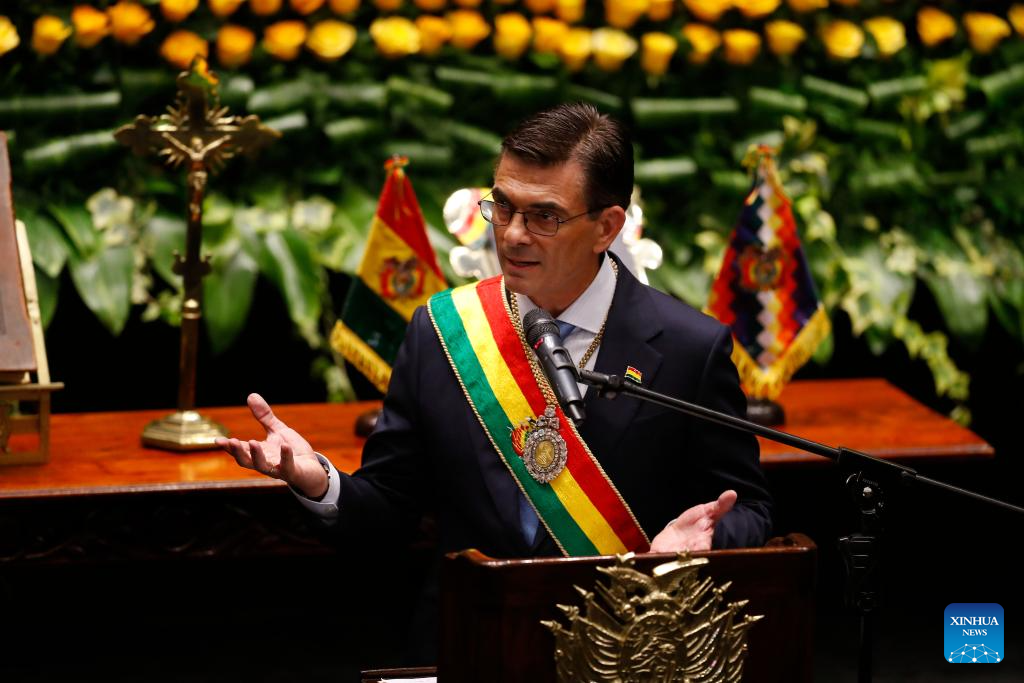
Rodrigo Paz speaks during his inauguration ceremony in La Paz, Bolivia, Nov. 8, 2025. (Photo: Xinhua)
Since early May, road blockades in several parts of Bolivia have disrupted the transportation of fuel, food and medical supplies, causing shortages in some cities and dealing a heavy blow to economic activity.
In a message posted on social media, Paz said Bolivians could no longer remain "hostages" to road blockades that prevent people from working, studying, receiving medical care, obtaining essential goods and supporting their families.
"This state of emergency is not intended to take away normality, but to restore it," the president said.
Paz also stressed that the government's doors would remain open to all those willing to engage in good-faith dialogue.
"Meanwhile, Bolivia needs to recover its roads, guarantee supplies and return to normality," he said.
On Thursday, the Bolivian government signed an agreement with the trade union federation Bolivian Workers' Central, a key participant in the protest movement, committing both sides to address pending demands through dialogue. The agreement has been viewed as an important step toward resolving the country's social unrest, which has lasted for about 50 days.
However, some farmers and indigenous groups continue to maintain road blockades, and transportation networks across the country have yet to fully return to normal.
The protests were initially launched by the trade union group, farmer organizations and indigenous groups over issues including fuel shortages and rising living costs.