


TOKYO, June 23 (Xinhua) -- A complaint has been filed with prosecutors against Japanese Prime Minister Sanae Takaichi and her secretary, Takeshi Kinoshita, alleging violations of Japan's political funds control law, including making false entries in political funding reports.
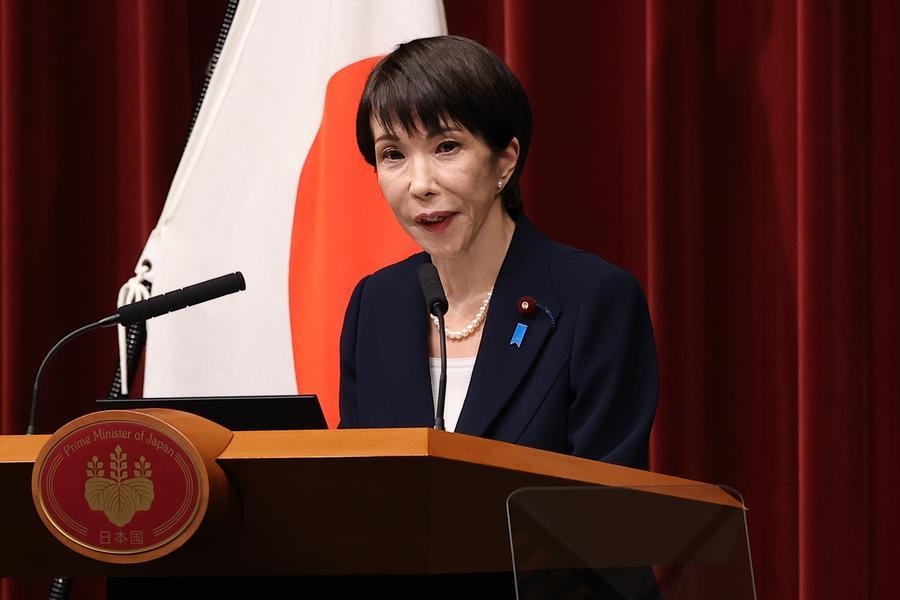
Japanese Prime Minister Sanae Takaichi speaks at a press conference at the prime minister's official residence in Tokyo, Japan, Jan. 19, 2026. (File photo: Xinhua)
The complaint was filed by Hiroshi Kamiwaki, a constitutional law professor at Kobe Gakuin University, who disclosed the matter on the social media platform X on Monday.
Kamiwaki found, after examining the internal accounting records from Takaichi's office, that funds paid by corporate executives for political fundraising party tickets were allegedly recorded as individual political donations, resulting in false entries in political funds reports. Furthermore, since ticket purchasers could claim income tax deductions under the guise of "donations," the conduct is also suspected of constituting tax evasion and aiding tax evasion.
Documents obtained by Kamiwaki indicate that the practice dates back more than a decade and appears to have been carried out on a long-term and systematic basis. In the complaint and accompanying explanatory materials submitted to prosecutors, he described the alleged conduct as "particularly egregious."
The complaint adds to the ruling Liberal Democratic Party's (LDP) slush fund scandal, first surfaced in 2023, in which some party factions of the LDP allegedly instructed member lawmakers to sell political fundraising party tickets beyond their assigned quotas without recording the amount as revenue in political funds reports, and then funneled the surplus back to lawmakers as kickbacks, creating off-the-books funds.
After taking office in October 2025, Takaichi appointed several scandal-tainted figures to key government posts. Takaichi herself was also accused in December last year of accepting a political donation that exceeded the legal maximum, fueling public anger. Critics said her ambiguous stance on the scandal suggests limited willingness to pursue fundamental reform.