


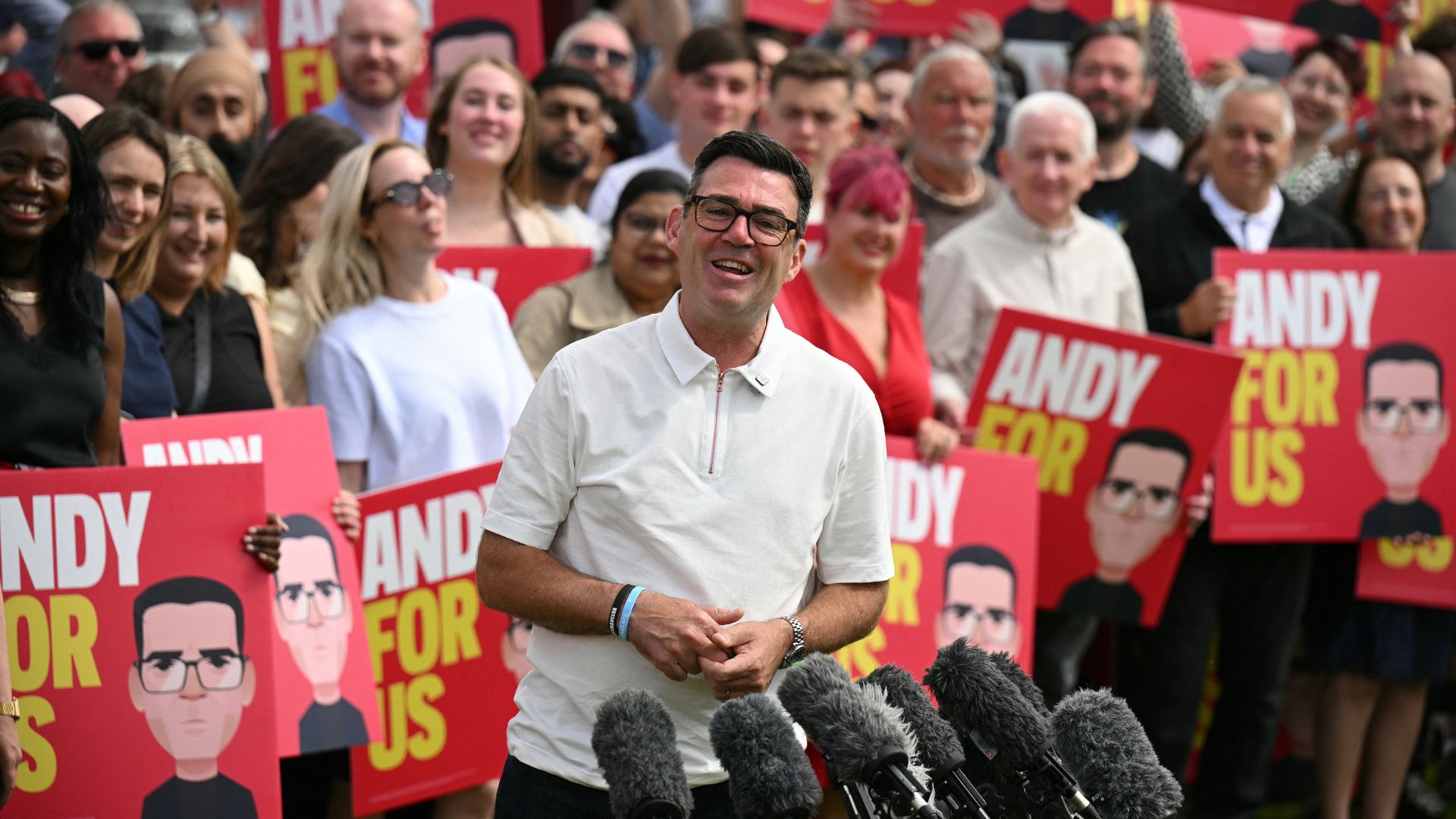
New Labour Party MP for Makerfield, Andy Burnham speaks to supporters and members of the media, the morning after his by-election victory on June 19. (Photo: AFP)
"The first rule of politics is to learn to count." The words of then US President Lyndon B Johnson, 60 years ago.
It was a lesson that British Prime Minister Keir Starmer learned in brutal fashion over the weekend when confronted with the news that more than 200 of his 403 Labour party MPs were prepared to back a leadership bid by rival Andy Burnham.
Now Starmer has bowed to the inevitable and announced his departure, less than two years after delivering a landslide win for Labour following 14 years in opposition.
Nominations for Starmer's replacement as Labour leader will open on July 9, closing by mid-July, and if there is a contest, a new leader will be in place by September.
But with Burnham's only serious rival Wes Streeting backing him for the job within minutes of Starmer's resignation statement, the path appears clear to the 56-year-old becoming the UK's seventh leader in barely 10 years – potentially as early as mid-July.
So, will Burnham automatically become Prime Minister or could there be another contender? Will there be a general election? And what kind of premier would Burnham be if he succeeds?
Could someone other than Burnham become Prime Minister?
Under Labour's rules, its leader must be a sitting member of parliament. Any Labour MP must secure the backing of at least 20% of Labour MPs to enter a contest. That's a total of 81 MPs, a high bar considering the momentum enjoyed by Burnham.
Streeting resigned as Health Secretary in May and was expected to trigger a leadership bid, but that outcome never happened amid reports that he couldn't muster the required support from colleagues. Seeing the writing on the wall for his chances, Streeting has backed Burnham's leadership.
Former Labour leader Ed Miliband, who unexpectedly lost the 2015 general election to David Cameron's Conservatives, is sometimes mentioned as a replacement for Starmer. The Prime Minister's former deputy Angela Rayner and current Home Secretary (Interior Minister) Shabana Mahmood are also potential candidates to become Labour's first ever female leader. Former Marine Al Carns, a political novice, is the contest's dark horse.
However, Burnham may become leader without a contest, allowing him to spend up to ten weeks preparing for power.
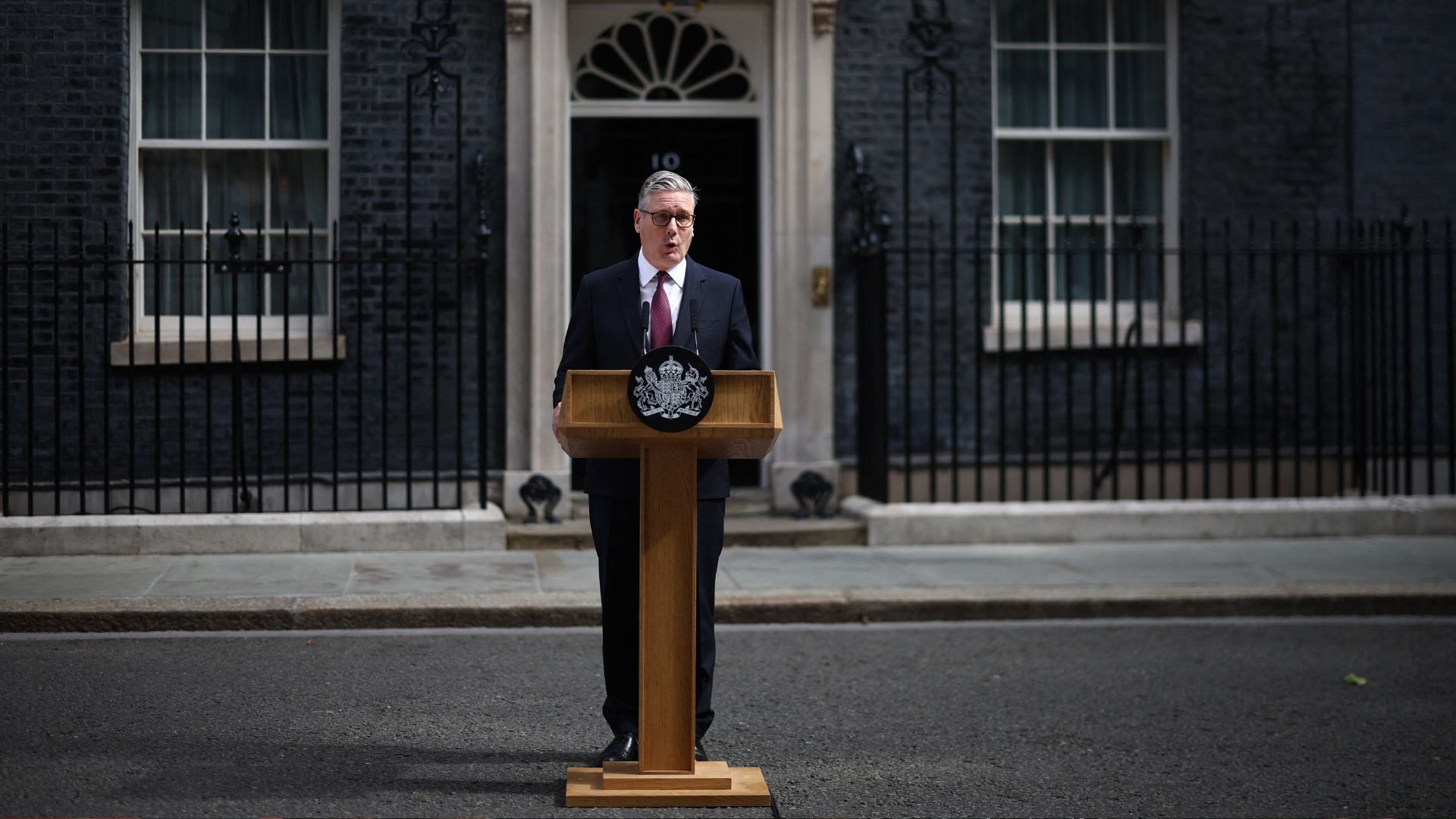
Britain's Prime Minister Keir Starmer announces his intention to resign outside 10 Downing Street on the morning of June 22. (Photo: AFP)
Will there be a general election?
There is no constitutional reason for there to be a general election, even though some opposition politicians have demanded one.
Unlike in presidential systems, electors choose a party rather than an individual when they go to the polls.
Outside of the mandated five-year parliamentary term, the job of Prime Minister belongs to whoever can command a majority in the House of Commons.
With a working majority of 165 seats in the 650-seat House, a new Labour leader will easily pass any hypothetical No Confidence vote.
The Conservatives, who have the next largest number of seats, have made a muted call for a general election - presumably because they themselves changed leaders four times in their final nine years in office without one. Referring to the recent resignation of Defense Secretary John Healey over a military funding row, Conservative leader Kemi Badenoch said: "If Andy Burnham does not have any answers on national security, we should have a general election now."
Reform, which leads the opinion polls, has called for an election – but with just eight MPs it doesn't have the clout to put pressure on a leader, despite its mastery of online messaging and outsized influence on political commentary.
However, there are two uncomfortable truths facing Burnham. Firstly, despite his long political history, including being a Cabinet minister 16 years ago, he wasn't an MP until Monday after last week's byelection victory in the northern English constituency of Makerfield, so was unelected when the government took power.
He is also expected to ditch some of the Starmer government's most unpopular policies and introduce new spending commitments that were not in the 2024 Labour general election manifesto.
Who is Andy Burnham?
Born in 1970, Burnham entered parliament aged 31 in the second Tony Blair election landslide of 2001. Joining the Labour party aged 15, he had worked for seven years before entering Parliament as a parliamentary researcher and governmentary special advisor.
A rising star, Burnham served in two junior ministerial roles following the 2005 election – Blair's third and final victory – before being appointed Chief Secretary to the Treasury by Gordon Brown in June 2007. The following year Burnham took over the Culture, Media and Sport brief and in 2009 became Secretary of State for Health.
After Labour's bruising 2010 election defeat Burnham twice stood for party leader – in 2010 and 2015 – and was heavily beaten both times.
Having surprisingly served in hard-left Labour leader Jeremy Corbyn's shadow administration, he resigned as an MP for Leigh in May 2017 after winning the Greater Manchester mayoralty.
His mayoralty has been judged a success, particularly his public transport reforms which include taking buses and trams into a locally-controlled, integrated, London-style transport system known as the Bee Network.
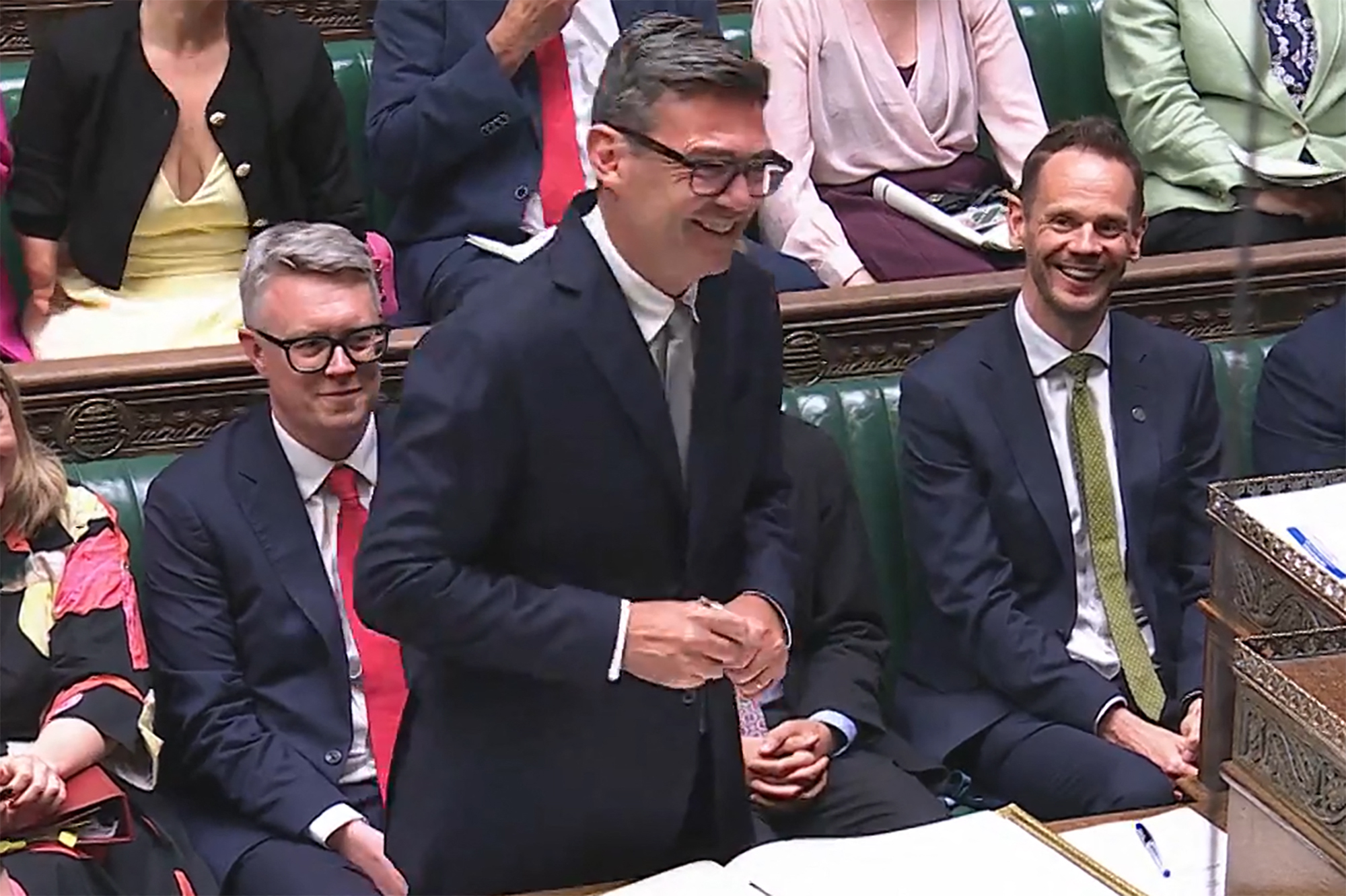
In this video grab taken from footage broadcast by the UK Parliamentary Recording Unit (PRU) via the Parliament TV website on June 22, 2026, new Labour Party MP for Makerfield, Andy Burnham smiles after signing the book having been sworn in after his win in the recent by-election. (Photo: AFP)
What would a Burnham premiership look like?
Having been out of national politics for nine years, it's undoubtedly a risk to hand Burnham the keys to Downing Street but with Labour regularly polling below 20% in opinion polls and Starmer's unpopularity at historic levels there is a sense of desperation within the party.
Burnham scored an impressive win over Reform last week in a byelection specifically designed to bring him back into parliament, surprisingly increasing the Labour 2024 constituency majority. This makes his premiership a near certainty.
Burnham's brand of politics has been dubbed 'Manchesterism', heavily leaning towards devolution and localism. He calls his economic model "business-friendly socialism" but had to row back on comments saying Starmer's government was "in hock to the bond markets".
Details remain sketchy of what his actual program for governing will be. He will have to address that or face the same fate as Starmer who was widely criticized for seeming to have neither a political credo or a plan for what to do in office.
We can, though, offer educated guesses on Burnham's wider plans.
Devolution
Burnham has long championed a radical shift of power away from London. Although some power has been decentralized over the past three decades, economic levers like control over infrastructure spending or taxation have stayed firmly in the hands of central government.
Burnham has vowed to give communities direct control over the things that shape daily life: housing, utilities, transport and education. However, local administrations have suffered from a toxic mix of reduced budgets at the same time as adult social care costs have ballooned. Devolution without fresh funding might not cut it with voters.
Whether Burnham has the political courage to fix the social care system by raising taxes – something that has been beyond his predecessors of all political colors – is another matter.
Electoral reform
Until recently, the UK's first-past-the-post voting system has promoted poltical stability. However, the recent explosion of five-party politics has lead to increased calls for the introduction of a system based on proportional representation (PR), like 40 out of 43 countries in the continent.
Burnham has regularly said he is committed to the introduction of a national PR system.
Tax and spending
Burnham has spent recent weeks encumbered by trying to beat off the Reform challenge in the Makerfield byelection. Perhaps unsurprisingly, with the result in the balance, he avoided searching questions over his economic plan. That won't stay the case for much longer.
However, Burnham has given clues over his likely economic priorities. He has said publicly that decades of privatization and deregulation have stripped the government of control over its costs and services while also saddling it with inefficiencies.
He has also spoken of the chronic shortage of low-cost social housing, which leaves the state paying vast sums in benefits that flow to private landlords.
In addition, The Guardian newspaper on Sunday reported that the Mainstream thinktank, seen as the intellectual vehicle behind Burnham's campaign, is demanding a long-term plan to take failing public utilities in administration back into the public sector.
Burnham has vowed to keep within the existing fiscal rules and stick to Labour's 2024 manifesto promise not to raise taxes on working people. This would preclude increases in the rates of the taxes that raise most government revenue: income tax, employee National Insurance and VAT.
He's also committed himself to keeping the controversial triple lock, a policy that increases the state pension each year in line with inflation, average earnings growth, or 2.5% – whichever is highest – costing the Treasury billions of pounds.
The Times newspaper reported on Monday that Burnham is likely to replace current Chancellor (Finance Minister) Rachel Reeves, whose stint in the Treasury has been widely criticized by politicians and commentators of all hues.
Health and social care
Burnham wants to try to reform Britain's social care sector with the aim of easing pressure on the National Health Service. He told the Guardian newspaper he would consider how changes to inheritance tax could help to fund extensive reforms.
Immigration
This has become the hottest of political potatoes, with a British populace simultaneously overestimating the amount of illegal migration and migrant crime while demanding a crackdown on those crossing the Channel from France in small boats.
Home Secretary (Interior Minister) Shabana Mahmood has introduced tighter immigration policies in recent months, which have angered some on the party's liberal left. Burnham has backed much of her work and is widely believed to want Mahmood to continue in post.
EU membership
On the tenth anniversary of the UK's Brexit vote, the idea of campaigning for re-entry to the European Union is a political no-no, despite polls consistently showing the British people's regret at their decision.
Burnham campaigned for Britain to stay in the EU, but during the Makerfield byelection he said seeking EU membership was not a priority.
What kind of political honeymoon will Burnham enjoy?
In a poll taken in May by YouGov, Burnham was the most popular politician in the country, with a 35% favorability rating. However, in a social media age where politicians are genuinely loathed, it's likely that this figure will fall within weeks.
Keir Starmer would certainly agree. His own public support evaporated soon after he took office in July 2024, and his favorability score in the same YouGov poll was minus 56%.
In addition to his various policy own goals, u-turns and poor presentation skills, Starmer has governed during arguably the most difficult period in the UK since the 1940s – with the economic chaos caused by US President Donald Trump reverberating through an already exposed British economy.
Burnham will need a sizable degree of good fortune to govern more successfully than the previous six Prime Ministers of the past decade.
He'll be well aware of the prescient warning from history provided by former British Prime Minister Harold Macmillan, who led the country from 1957-63. Asked what was the greatest challenge for a statesperson, he replied simply "Events, dear boy, events."
Burnham will be desperately hoping that events won't undermine his premiership and that he gets the chance to end the political 'permacrisis' that has held Britain in its grip since the vote to leave the EU 10 years ago.