


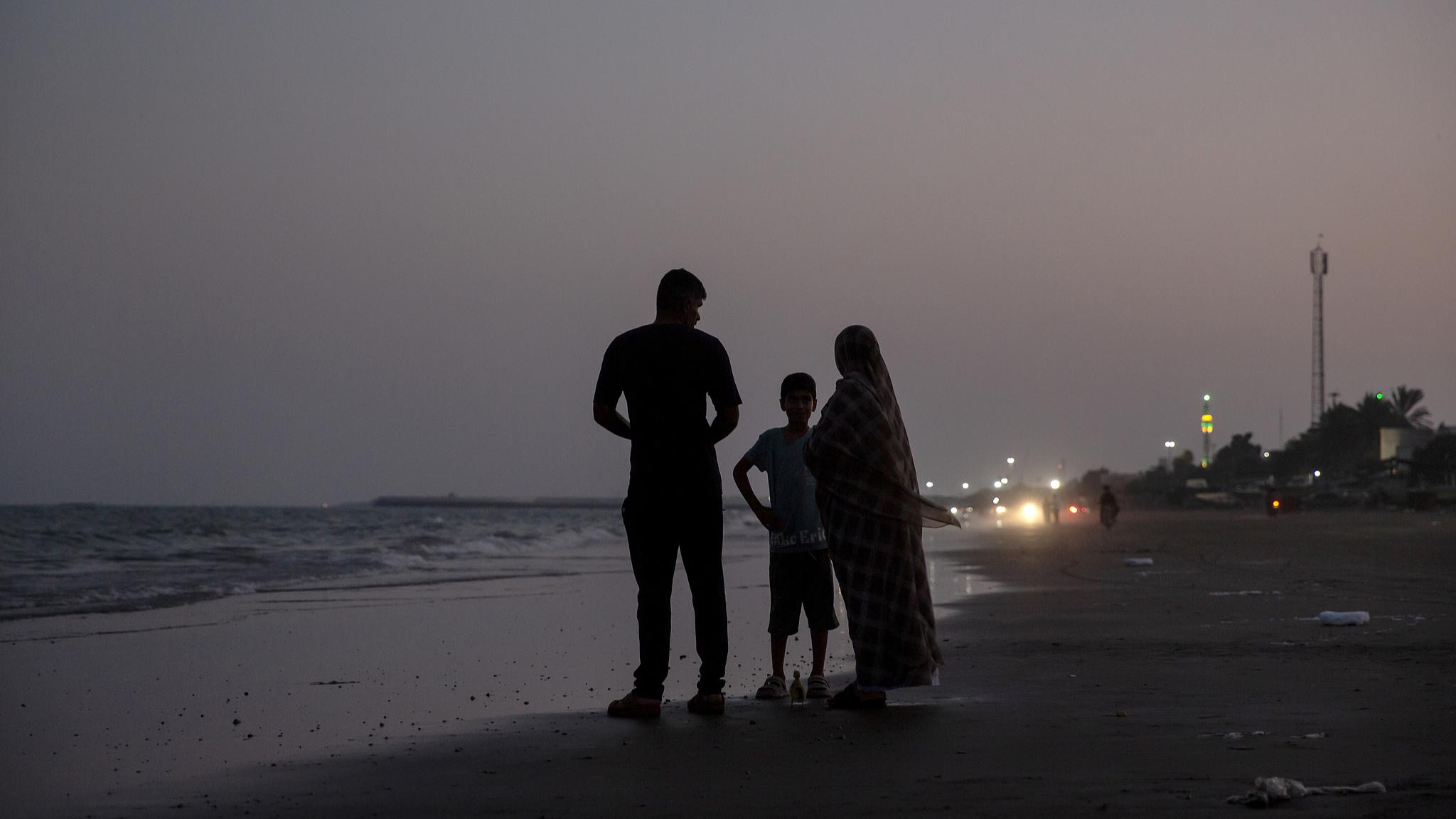
People spend time by the sea as daily life returns to normal in Bandar Abbas, Iran, June 22, 2026. (Photo: VCG)
The International Maritime Organization (IMO) is preparing an operation to evacuate more than 11,000 seafarers stranded in the Persian Gulf region following months of disruptions linked to the US-Iran conflict.
IMO Secretary-General Arsenio Dominguez said the "large-scale operation" will be carried out in close coordination with Iran, Oman, all other coastal states in the region, the United States and the maritime industry. According to navigation notices issued through Oman, two temporary routes through the Strait of Hormuz have been designated, and vessels will be notified individually as part of the evacuation plan.
The development came as differences persisted over the implementation of the memorandum of understanding (MoU) that de-escalated the conflict.
Iran's permanent mission to the UN in Geneva said on Tuesday that the Strait of Hormuz is fully open to commercial shipping and that no fees are being charged for passage.
However, US Secretary of State Marco Rubio, who has began a visit to Gulf allies, said on Tuesday that no country has the right to impose tolls on vessels transiting the strait, calling it an international waterway governed by international law.
"It's an international waterway. No country is allowed to charge tolls or fees on an international waterway. That's existing international law," Rubio told reporters upon arrival in Abu Dhabi.
Differences have also emerged over nuclear-related provisions.
US President Donald Trump said on Monday that Iran had agreed to what he described as the "highest level" of nuclear inspections "long into the future." Writing on Truth Social, Trump said the inspections would ensure "nuclear honesty" and added that there would be no further negotiations if Iran did not agree to such inspections.
Iranian Foreign Ministry spokesperson Esmaeil Baghaei said on Tuesday that there are no plans to allow the International Atomic Energy Agency (IAEA) to inspect Iran's nuclear facilities.
Meanwhile, Pakistani Prime Minister Shehbaz Sharif said the memorandum does not address Iran's ballistic missile program.