


Germany's railway was running largely as normal Wednesday after a late-night communication system outage left trains and travelers stranded around the country, but the main rail operator faced criticism and questions over the chaos.
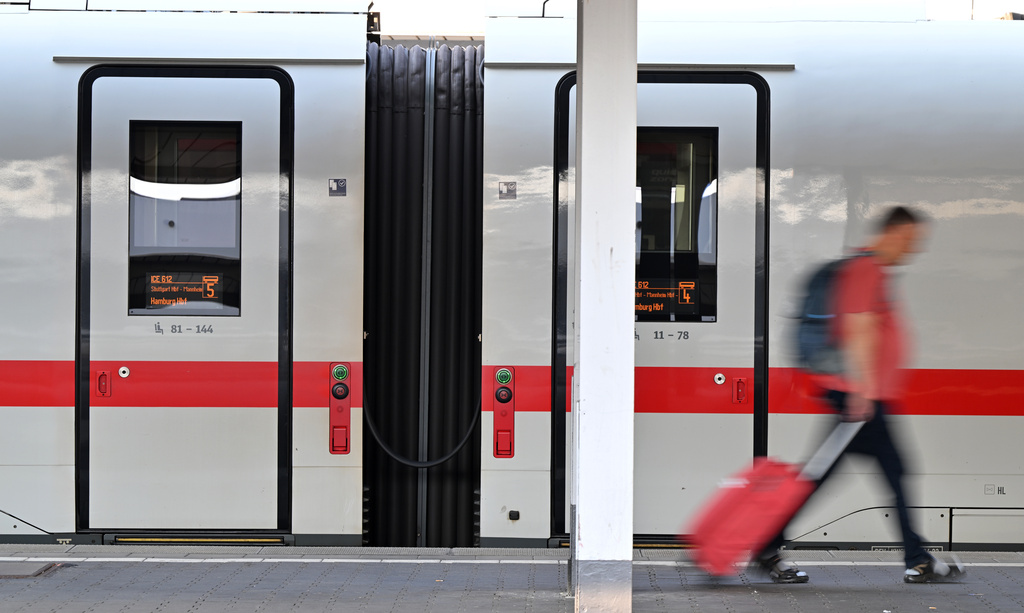
A passenger walks past an ICE train at Munich Central Station in Munich, Germany Wednesday, June 24, 2026, following the nationwide service disruption on the Deutsche Bahn network. (Photo: AP)
Trains were halted abruptly across Germany late Tuesday and service resumed gradually about two hours later, after midnight. Long lines formed at information desks as travelers tried to figure out how to reach their destination and where to spend the night.
The main railway operator said it was offering taxi and hotel vouchers and, where possible, putting trains in place for would-be travelers to sit in while they waited. But passengers complained of a lack of information.
The outage was the result of a problem with the GSM-R digital communication system used for internal communication on the railway network.
The main railway operator, federal government-owned Deutsche Bahn, said trains started running "largely seamlessly" on Wednesday morning, though there may be isolated service reductions.
There was no official word on what caused the system failure, though German media reported that a faulty software update was suspected rather than sabotage.
Federal Transport Minister Patrick Schnieder told news agency dpa that if the cause was a problem with hardware components or a software update, Deutsche Bahn must set up a system so that it doesn't happen again.
The breakdown came after years of increasingly frequent complaints about train delays and service interruptions.
Deutsche Bahn is conducting thorough though disruptive overhauls of major routes after years of underinvestment in a bid to improve its performance, but any significant improvement is expected to take time.
The European Union's most populous country has a railway network totaling some 33,400 kilometers (20,750 miles) in length, with 5,400 train stations.
"That all rail traffic in Germany comes to a halt because of a technical defect is a new low in already poor operating quality," Oliver Krischer, the regional transport minister in North Rhine-Westphalia state, Germany's most populous, told dpa.
He said there need to be "emergency mechanisms that prevent such a disaster in the future. People rely on reaching their destination at least somewhat punctually by rail."