


The US-China Business Council (USCBC) recently released its 2026 Member Survey, revealing compelling insights into corporate sentiment. Eighty percent of surveyed American companies now regard the Chinese market as either "very important" or "important" to their global competitiveness—a notable increase from 66 percent in 2025. Moreover, 95 percent asserted that their Chinese operations are integral to maintaining their global edge.
This aligns with an earlier report issued by the American Chamber of Commerce in South China, which found that 75 percent of US firms plan to reinvest in China throughout 2026. These figures underscore a crucial truth: For American businesses, the Chinese market is not an optional side venture, but a strategic pillar essential to global performance. Against this reality, the political narratives of economic "decoupling" remain entirely disconnected from where companies are actually placing their money.

Consumers experience the iPhone 17 series at an Apple Store in Jing'an in Shanghai. (Photos provided to People's Daily)
Four core strengths explain China's enduring appeal for US corporations.
Market scale and economies of scale
Multinational corporations deploy capital globally on comparative advantage. Tesla's Shanghai Gigafactory accounts for over half of the company's global production capacity and serves as its largest international export hub. Meanwhile, Apple draws significant profits from China through both its industrial presence and local sales. Consumer giants like Nike and Walmart similarly depend on the country for substantial revenue.
With a population of over 1.4 billion people—including more than 400 million middle-class consumers—and steady economic growth, China remains the world's most promising consumer market and a resilient engine of global development. Exiting China would not only mean losing a market but also weakening American companies' economies of scale and peeling away a primary source of global profitability.

A Tesla experience center in North China's Tianjin municipality.
A comprehensive industrial ecosystem
China is unique globally in possessing every industrial category designated by the United Nations, spanning 41 major sectors, 207 medium sectors and 666 subcategories. This advanced infrastructure and mature supply chain network enable US firms to reduce production costs, shorten delivery times and maintain robust operational performance.
Despite supply chain realignment pressures, more than 80 percent of US businesses in China remain profitable. The reason is simple: Manufacturing in China offers competitive advantages—speed to market, consolidated logistics and integrated industrial networks—that cannot be easily replicated elsewhere. Any alternative sourcing or relocation efforts would sacrifice efficiency without securing comparable capacity at scale.
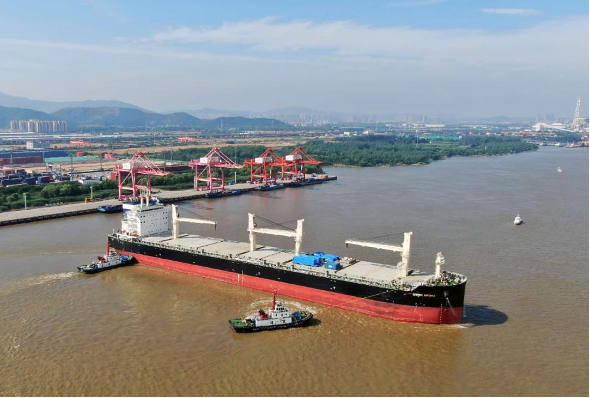
A cargo vessel departs from a port in Nanjing, East China's Jiangsu Province, bound for Houston, United States, June 5, 2026.
A collaborative innovation ecosystem
According to the World Intellectual Property Organization's Global Innovation Index 2025, China ranks 10th worldwide, making it one of the fastest-rising innovators over the past decade. Its openness to new technologies, rapid consumer adoption and scalability make it an indispensable testing ground for cutting-edge industries.
This ecosystem fosters a strong collaboration with international technology companies. For example, while the US leads in foundational AI models, China excels in hardware manufacturing, energy efficiency and large-scale applications. The growth of the global AI industry hinges on Chinese talent, markets, and supply chains. US companies routinely pair the upstream technology from their home laboratories with localization teams in China to roll out globally scalable products.
China also accounts for more than 60 percent of the global market share in its "new three" export pillars: electric vehicles, lithium-ion batteries and solar cells. Furthermore, its abundant renewable energy resources provide solid infrastructure support for computational power.
By combining foundational technologies, global ecosystems and sector expertise, American companies are pursuing a model of "local R&D and local application” in China. In doing so, they not only generate profits but also refine technologies in a hyper-competitive market before exporting those successful experiences and products worldwide.
Stable expectations and business confidence
The push toward constructive China-US strategic stability has provided a more predictable foundation for bilateral ties—one defined by cooperation as the mainstay, managed competition, controllable differences and a shared interest in peace.
Newly established dialogue channels, including the China-US commerce and investment working groups, have further reassured American businesses.
The rational business community has already voted with its investments. For many American companies, "In China, for the world" is not a corporate slogan, but a pragmatic strategy for maintaining a global competitive edge.
(The author is a researcher at the Academy of China Open Economy Studies at the University of International Business and Economics.)