


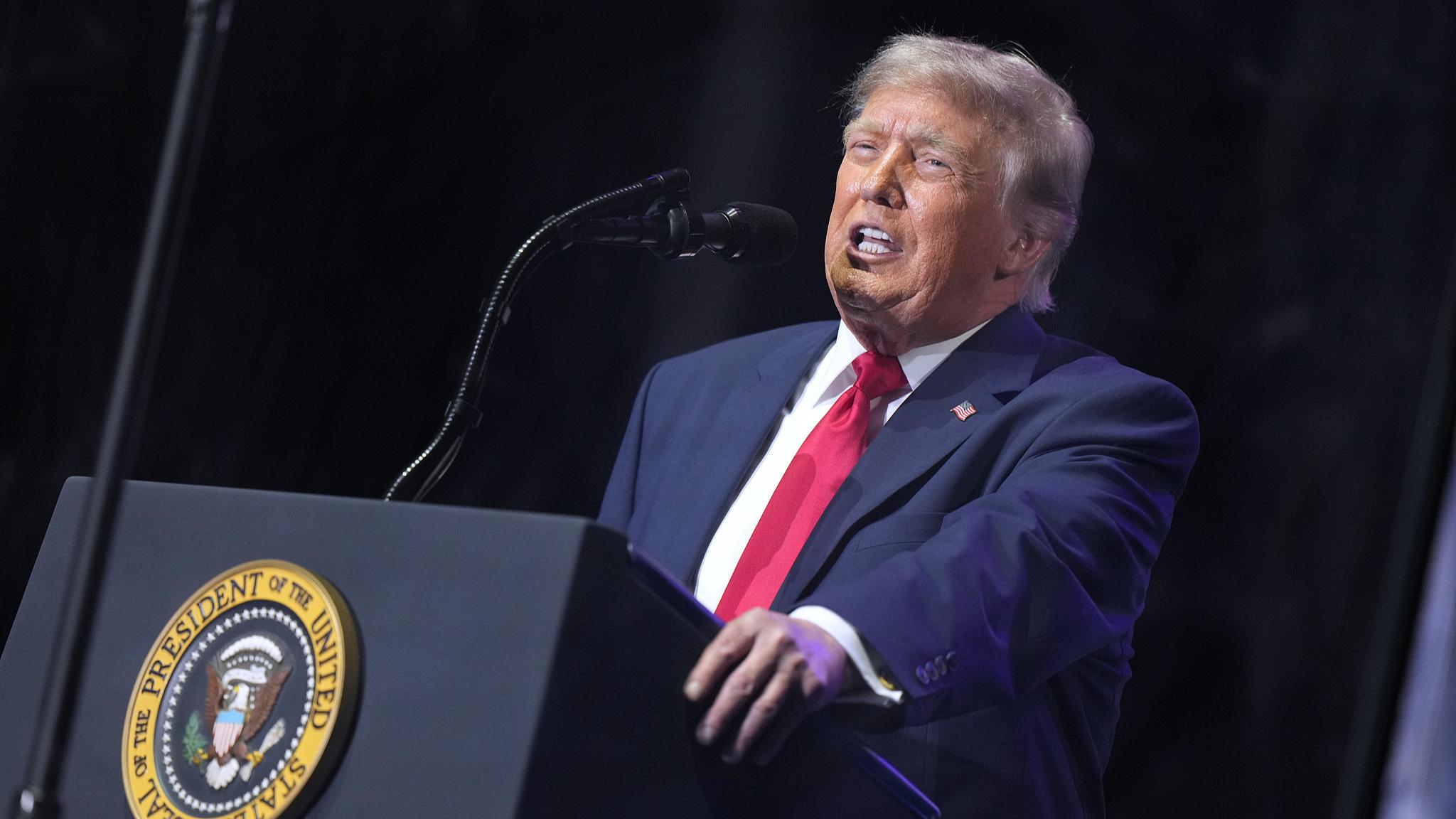
US President Donald Trump speaks at an event in Washington, DC, US, June 24, 2026. (Photo: VCG)
US President Donald Trump on Wednesday canceled a planned signing ceremony for a bipartisan housing bill that aims to boost housing supply and lower costs, saying he would not approve the legislation until Congress passes a separate voter-ID measure.
The legislation, known as the 21st Century ROAD to Housing Act, passed both chambers of Congress with overwhelming bipartisan support. The Senate approved the bill 85-5, followed by a 358-32 vote in the House of Representatives. It is widely regarded as one of the most significant federal housing packages in decades.
Trump announced the cancellation of the signing ceremony on social media just hours before it was scheduled to take place at the US Capitol. He said he would delay action on the housing bill until lawmakers pass the SAVE America Act, which would require proof of citizenship and voter identification for federal elections.
The housing bill seeks to address affordability challenges by encouraging home construction, streamlining permitting processes and expanding housing supply. It also includes provisions aimed at limiting the number of single-family homes that large institutional investors can own.
Several lawmakers from both parties expressed surprise at the move. Senate Majority Leader John Thune said he hoped Trump would eventually sign the bill, while Democratic Senator Elizabeth Warren, one of the bill's co-sponsors, questioned the decision to delay legislation focused on housing affordability.
Under the US Constitution, a bill passed by Congress can become law without the president's signature if no action is taken within 10 days, excluding Sundays, provided Congress remains in session.
Housing affordability has emerged as a major issue for US voters amid elevated home prices, high mortgage rates and a nationwide housing shortage. Supporters of the legislation say it is intended to increase supply and help ease long-term cost pressures in the housing market.