


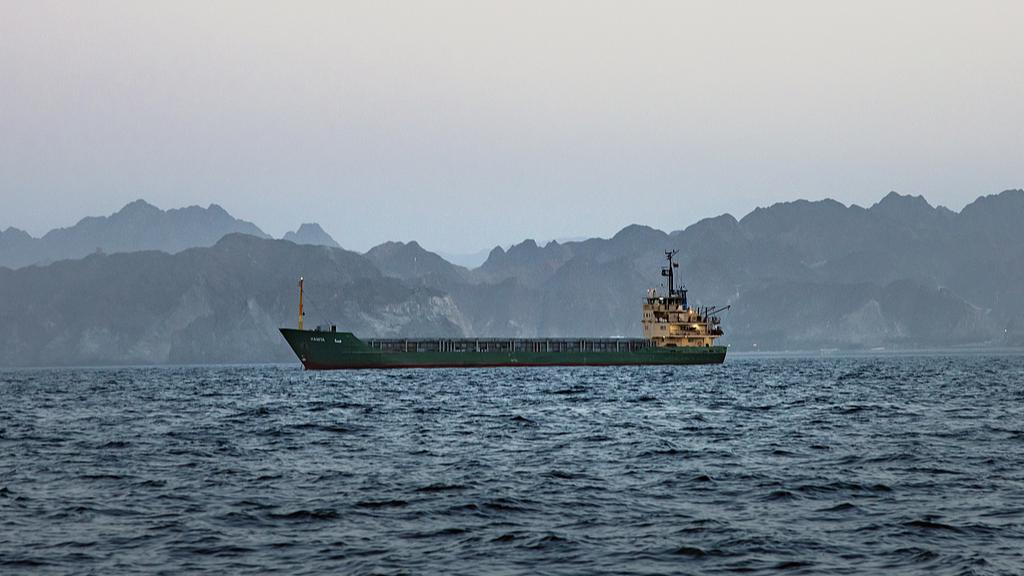
A cargo vessel is anchored off the coast of Oman after being stranded for days, June 23, 2026. (Photo: VCG)
The UN International Maritime Organization (IMO) paused its operation to escort ships through the Strait of Hormuz on Thursday after a vessel reported an attack, reigniting concerns about whether a preliminary deal to end the Iran war will hold.
The cargo ship said it was hit by a projectile near Oman, the British navy agency UKMTO said, hours after Tehran warned vessels against taking routes it had not approved.
The IMO was helping hundreds of stranded ships and thousands of seafarers leave the strait, where they had been stranded for months since the start of the joint US-Israel strikes on Iran in late February.
It decided "to temporarily pause the initiative in order to reconfirm that the necessary safety guarantees continue to be in place for the ships on our evacuation list and all those in the region," IMO Secretary General Arsenio Dominguez said in a statement.
The initiative, which was launched on Tuesday, was a voluntary option for ships and their crews to sail out of the Gulf using two routes – one via Iranian waters and the other via Omani waters, with US oversight, the IMO said this week.
Two US officials told Reuters that Iran had fired on the ship, while Iran's Persian Gulf Strait Authority, which Tehran established to manage requests for ships to travel through the strait, said vessels outside the routes it has set will not be guaranteed safe passage.
"Consequences arising from passage through unauthorized routes shall be the responsibility of the owner, operator, and vessel commander," the Iranian authority said.
There was no immediate comment from the US government. US President Donald Trump warned earlier this month that if Iran did not honor an agreement aimed at ending the war and reopening the strait, the US would probably resume bombing the country.
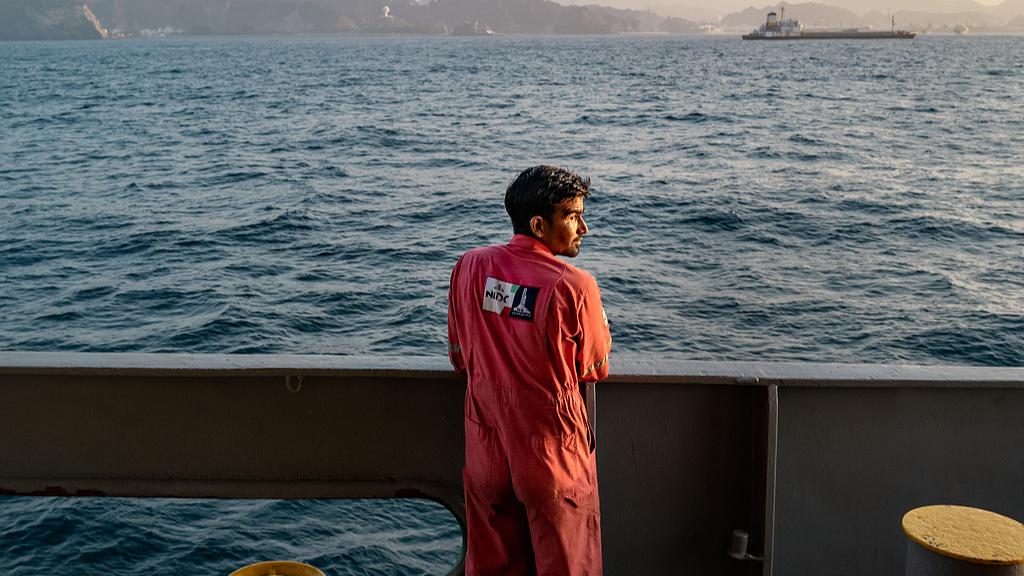
A sailor stands on a vessel anchored off the coast of Oman, June 23, 2026. (Photo: VCG)
The Oman incident is likely to refocus attention on the extent of Iran's future control over the Strait of Hormuz, which, before the conflict, handled a fifth of the world's daily oil and liquefied natural gas supplies.
Before the incident, US Secretary of State Marco Rubio – wrapping up a tour of the Gulf to reassure states about the interim pact – told reporters that if Iran threatens or blocks ships in the strait, "then we're going to have a problem."
Crude shipments through the Strait of Hormuz rose this week to their highest level since the war began in February, Reuters reported, citing shipping data.
Iran, though, has signaled it would continue to assert control over the strait.
Iran's Revolutionary Guards said on Thursday that safe passage through the strait would only be possible via routes designated by Iran, adding that they would take action against vessels that failed to comply.
On Thursday, Iranian Foreign Minister Seyed Abbas Araghchi and his Omani counterpart, Sayyid Badr bin Hamad bin Hamood Albusaidi, discussed the administration of maritime traffic in the strait during a phone call.
The two ministers highlighted the importance of continuing technical and expert interactions on the matter, according to the Iranian Foreign Ministry.
The two diplomats discussed a mechanism for joint cooperation to achieve the objectives of the US-Iran peace memorandum of understanding regarding freedom of navigation in a manner consistent with international law and respect for state sovereignty, according to Oman's Foreign Ministry.