


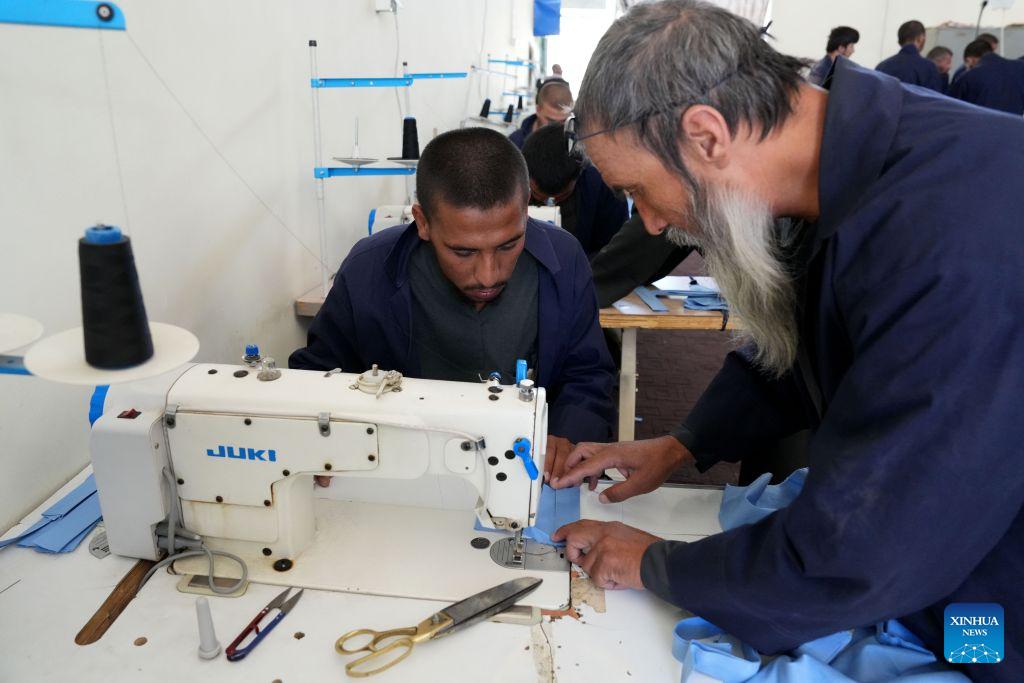
Recovering drug users make clothes at a vocational training workshop in Kabul, Afghanistan, June 24, 2026.(Photo: Xinhua)
KABUL, June 26 (Xinhua) -- The steady hum of sewing machines fills a vocational training workshop in Kabul as rows of trainees concentrate on stitching fabric, repairing electrical equipment and crafting leather shoes.
Only months ago, many of those same hands trembled from years of drug addiction. Today, they are learning practical skills that offer something many once believed they had lost -- a second chance.
Among the trainees is 22-year-old Mohammad Zia, whose dream of becoming an engineer was derailed after six years of addiction to methamphetamine and hashish.
"When I arrived here, I couldn't even thread a needle," he said with a smile while carefully guiding fabric beneath the needle of a sewing machine. "Now, thanks to my teachers, I have mastered many new skills."
For him, recovery has meant much more than acquiring a trade.
"On my first day, I was weak, underweight and constantly in pain," he recalled. "Today, my appetite has returned, my health has improved, and I finally have a skill that gives me hope for the future."
Inside the vocational training center, recovery is measured not only by overcoming addiction but also by preparing people to rejoin society with confidence and practical skills.
The center offers former drug users four months of classroom instruction combined with hands-on vocational training. Trainees can choose from five trades, including tailoring, shoemaking and electrical equipment repair.
For Mohammad Wasil Wisal, director of the center's vocational training programs, stories like Mohammad Zia's demonstrate the lasting value of rehabilitation.
"This is our seventh training cycle," Wisal told Xinhua. "More than 4,000 people are currently enrolled, and over 12,000 have graduated since the program began. Many of them are now employed and able to support themselves."
Employment, he said, remains one of the most effective safeguards against relapse.
"Our goal is to help recovering addicts become self-reliant," he said. "We hope to expand these programs in the future so that more people can earn a living instead of returning to addiction."
Across the workshop, 28-year-old Khalid from Laghman province concentrates on sewing a shirt.
After seven years of addiction, vocational training has given him renewed confidence.
"I came here because I wanted to learn a profession," he said. "When I leave this center, I want to open my own tailoring shop."
Although he has been in training for only six weeks, Khalid says he has already developed practical skills that will help him earn a living after graduation.
He also hopes society will show greater understanding toward people recovering from addiction.
"When people see an addict, they often judge him," he said. "Children make fun of them in the streets, and sometimes even family members lose hope."
He urged young people to stay away from narcotics, saying addiction destroys not only individuals but entire families.
Walking between workbenches lined with leather shoes awaiting their final polish, 33-year-old Mustafa carefully observes his students.
As the shoemaking instructor, he understands their struggles firsthand.
Before joining the training center, he spent 12 years battling addiction.
"Shoemaking is my profession, and now I teach others what I have learned," he said. "My goal is to open my own shoe workshop one day."
He still remembers how addiction shaped the way people treated him.
"People didn't see addicts as ordinary members of society," he recalled. "They looked at us with disappointment."
Today, he says, everything has changed.
"I have changed physically, mentally and emotionally. Most importantly, I can finally see a future for myself." ■
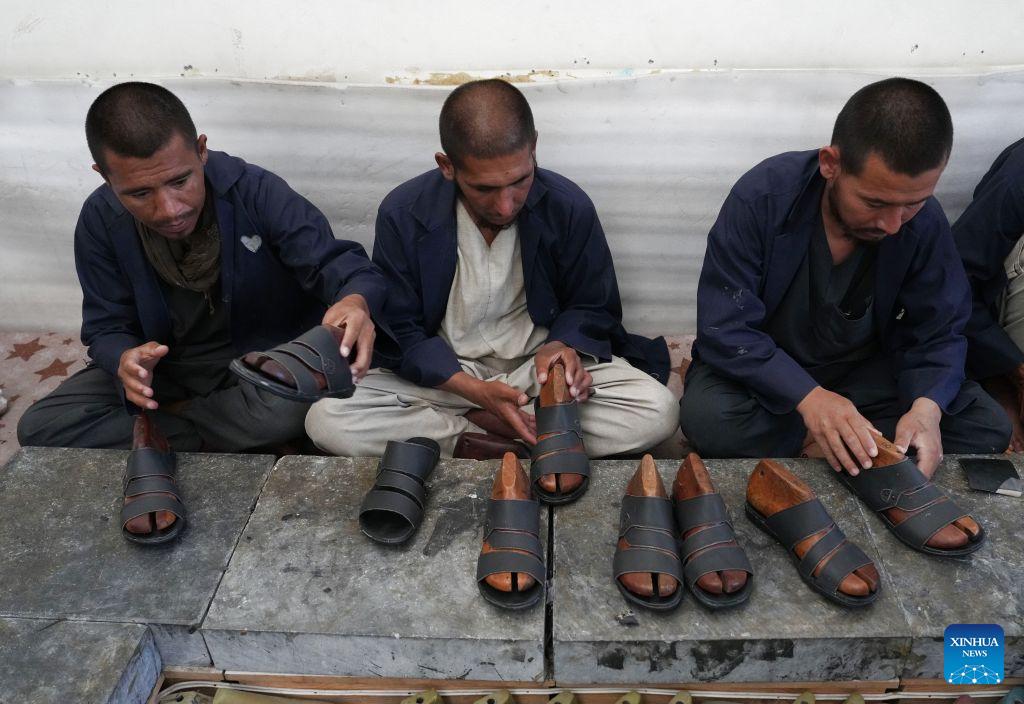
Recovering drug users make shoes at a vocational training workshop in Kabul, Afghanistan, June 24, 2026.(Photo by Saifurahman Safi/Xinhua)