



People cool off as a police water cannon sprays water at Potsdamer Platz, Berlin, Germany, June 27, 2026. (Photo: VCG)
Tens of millions are braving a weekend of extreme temperatures in Europe as a deadly heatwave moves eastwards, with some countries announcing rising death tolls and health services warning of saturation.
While some mild relief is expected Sunday in western Europe, German forecasters are warning that more temperature records could still be broken over the weekend as eastern countries issue a slew of red alerts for the coming days.
AFP analysis suggested almost 200 million people faced temperatures of more than 35 degrees Celsius on Saturday as an unprecedented hot spell that has already broken records in Britain, France and Switzerland drags on.
France is seeing "a higher than normal number of deaths" due to the heatwave baking the country, Health Minister Stephanie Rist said Saturday.
Spain had already said on Thursday that the heatwave could be linked to 212 deaths over a four-day period.
Paris' hospitals said that visits to emergency rooms were 36% higher than normal on both Friday and Saturday, while Vienna said its emergency services were 15% busier and that they had put on extra staff.
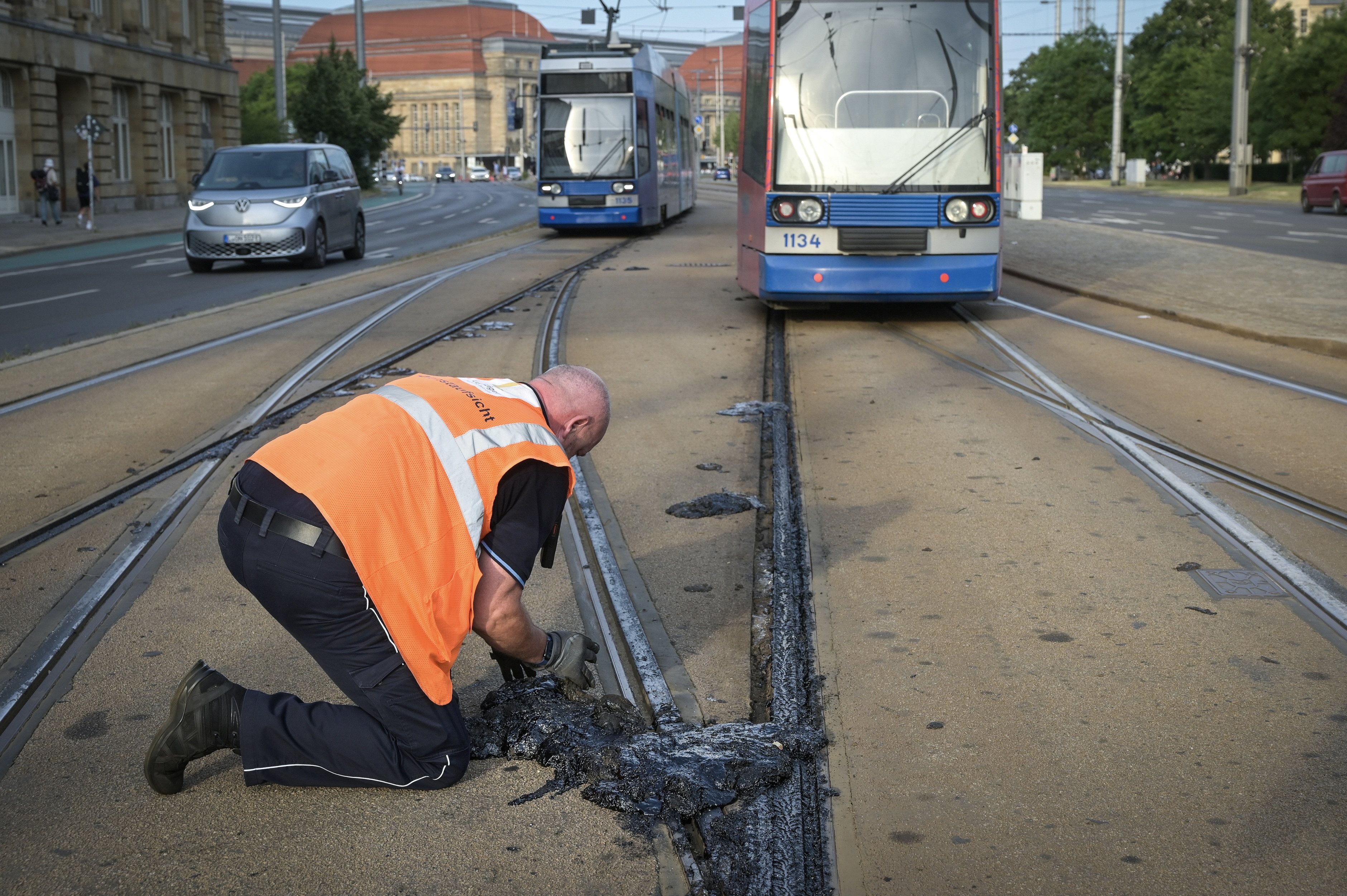
Prolonged temperatures above 40 degrees Celsius caused the bitumen to melt and damaged the track bed, Leipzig, Saxony, Germany, June 27, 2026. (Photo: VCG)
The German Weather Service (DWD) issued a red alert for most of the country on Saturday, and said late afternoon that it had recorded its highest ever temperature, with 41.5 degrees Celsius registered in eastern Germany.
Denmark's weather service said early afternoon Saturday that the country had recorded its highest temperature ever, and then an hour later said the record had lasted just an hour, with the mercury hitting 37 degrees Celsius in two places near Aarhus.
The Czech Republic also recorded its highest-ever temperature, with a reading of 40.8 degrees Celsius just north of Prague, but the country's weather service said the heat would peak on Sunday with temperatures expected to get close or even exceed 41 degrees Celsius.
Switzerland broke the record for its hottest-ever June day for the third day in a row on Saturday, with the mercury rising to 39 degrees Celsius in the northern city of Basel.
In France, the number of departments under the highest red alert will fall to 24 on Sunday morning from 37 on Sunday. The Paris region, for instance, will be downgraded from red to orange alert for Sunday.
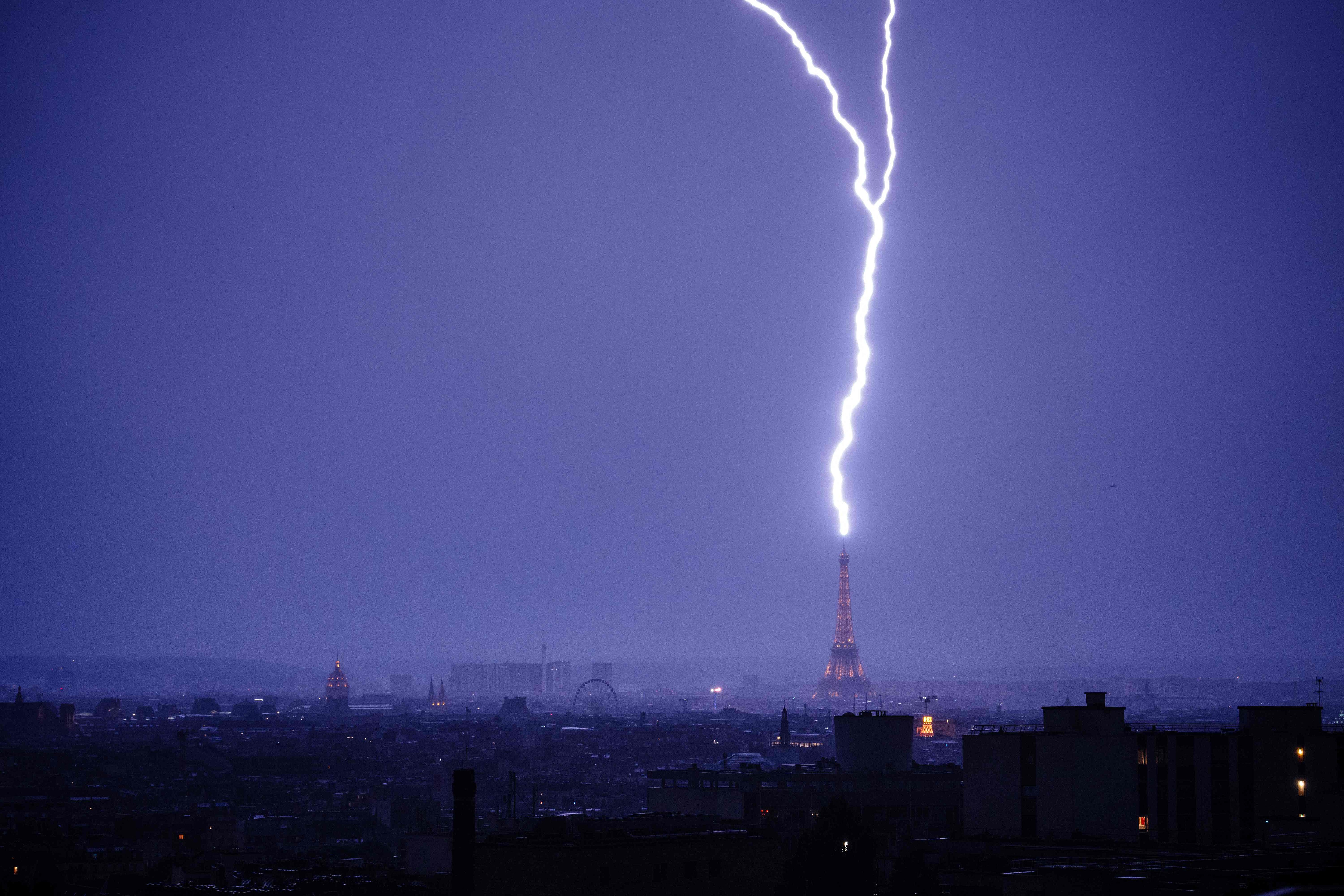
Lightning strikes the Eiffel Tower during a thunderstorm, Paris, France, June 27, 2026. (Photo: VCG)
But the cooler weather was accompanied by thunderstorms, and over 800 flights out of London's Heathrow and Gatwick airports were delayed and scores more canceled on Saturday, according to tracker FlightAware.
Scientists have shown that recurring heatwaves are a clear marker of global warming driven by humans burning fossil fuels – and are set to become more frequent, longer and more intense.
Experts said a "heat dome" of trapped air from North Africa was causing the intense weather, and although the phenomenon was not unprecedented, the temperatures were.
Romania was the latest country to issue a red alert, putting out a warning that almost the entire country would face extreme heat from Monday to Wednesday. Slovakia had issued a similar warning. The Czech Republic, Hungary, and Moldova were also on the highest alert for the weekend, with Balkan countries also bracing for a tough few days.
Although a slew of events were cancelled, such as the Hamburg half-marathon, many in Germany were soldiering on.
The Berlin Philharmonic said it would continue with its traditional end-of-season outdoor concert in Berlin, but men would not need to wear jackets, and ladies' tops did not necessarily have to be long-sleeved.