


BANGKOK, June 30 (Xinhua) -- Thailand's industrial output fell for a second straight month in May, driven by lower automotive output, elevated inflation, and rising production costs linked to the Middle East conflict, official data showed on Tuesday.
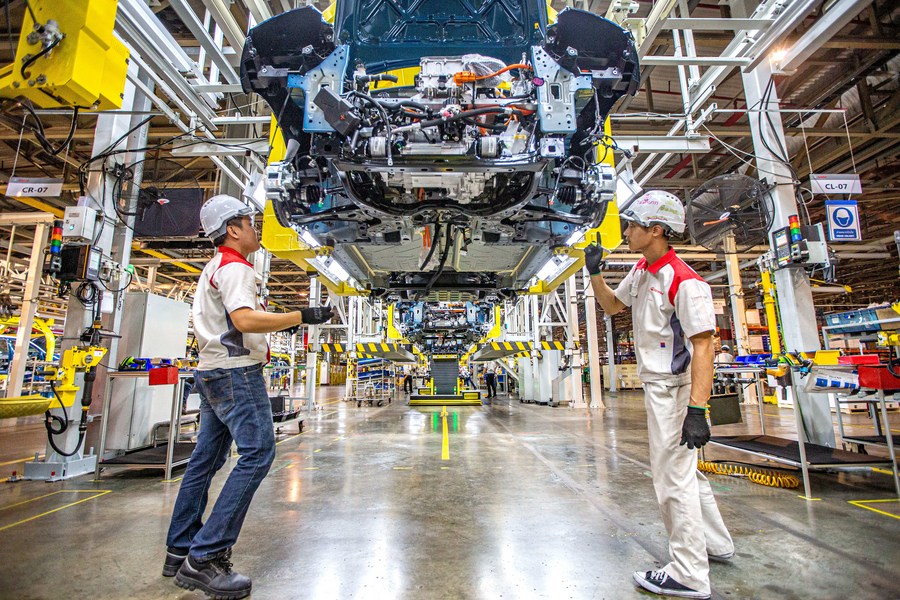
Workers work at the Great Wall Motors (GWM) manufacturing plant in Rayong, Thailand, Jan. 12, 2024. (Photo: Xinhua)
The Southeast Asian country's manufacturing production index (MPI) contracted 0.8 percent last month compared to a year earlier, decelerating from a revised 0.94 percent decline in April, according to the Ministry of Industry.
Despite the downtick, the industrial sector still benefited from government economic relief measures, particularly the co-payment program, which stimulates spending and strengthens household purchasing power, said Supakit Boonsiri, director general of the ministry's Office of Industrial Economics.
Additional support to the May reading was 22 consecutive months of industrial-goods export growth and a continued rebound in international tourist arrivals, Supakit told a news conference.
Looking ahead, the official noted that domestic factors requiring close monitoring include the slowdown in vehicle-category investment and reduced confidence in food and beverage orders in response to growing packaging costs.
External pressures also warrant attention, as manufacturing in major economies shows signs of weakening, while soaring energy prices amid regional geopolitical tensions remain a concern, he added.
Last month, the ministry downgraded its 2026 MPI growth forecast to 1.0 percent to 2.0 percent from the 1.5 percent to 2.5 percent expected earlier.