


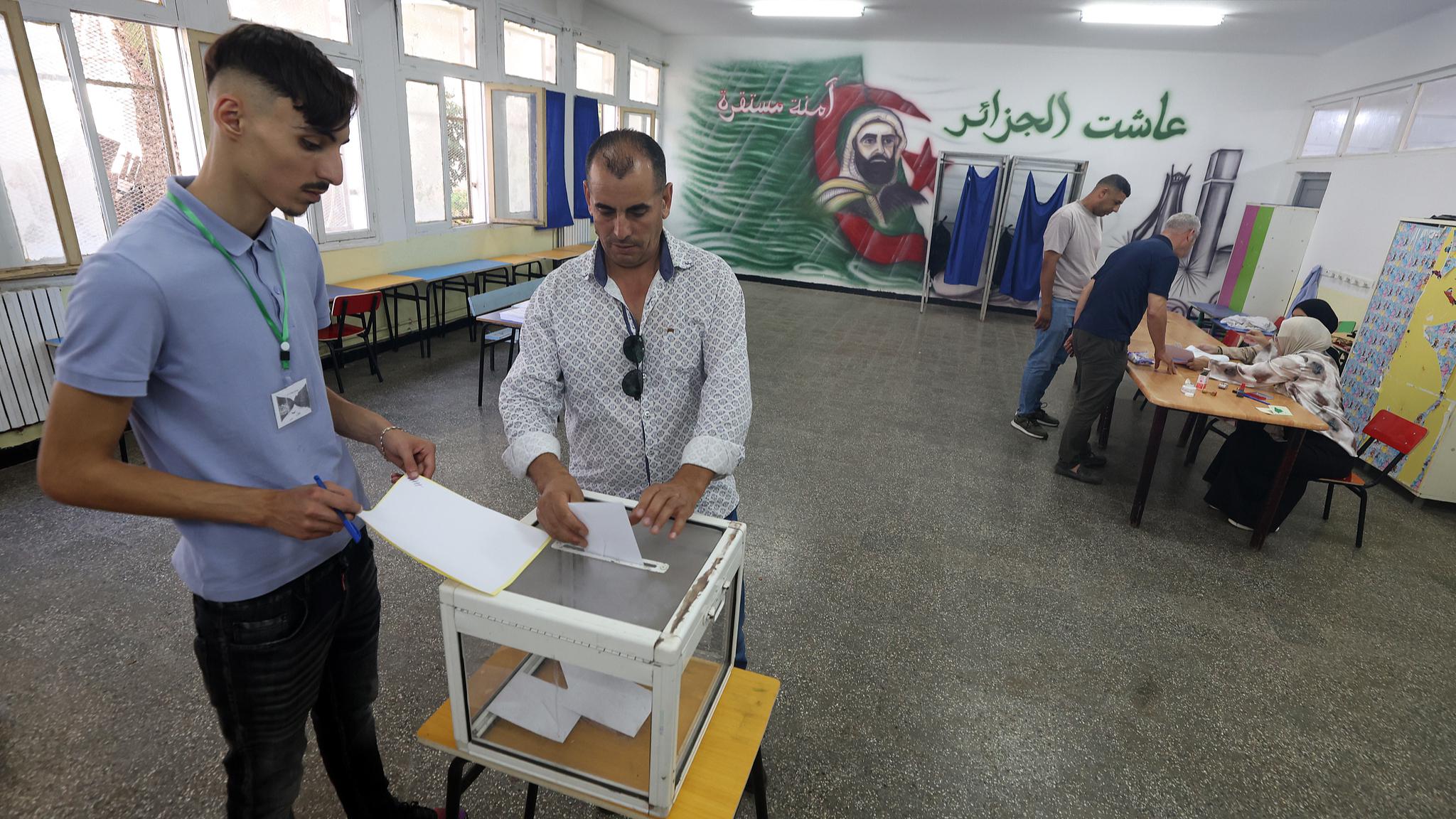
An Algerian man casts his ballot during parliamentary elections in Algiers, Algeria, July 2, 2026. /CFP
Algerians are choosing a new parliament in an election dominated by concerns over the cost of living, low voter enthusiasm and restrictions on opposition candidates.
Nearly 25 million registered voters are choosing among 1,235 candidates contesting 407 seats in the lower house of parliament for five-year terms.
Authorities declared Thursday a paid public holiday to encourage voter participation after campaign events drew sparse crowds. Many Algerians have instead focused on rising living costs, deteriorating public services and the country's World Cup campaign, with the national football team set to face Switzerland in the knockout stage on Friday.
The ruling pro-government coalition currently holds around 300 seats, while the Islamist Movement of Society for Peace is the second-largest bloc with 64 seats.
The election has also been overshadowed by the exclusion of 269 candidates, including several linked to the Hirak pro-democracy movement that helped force the resignation of former president Abdelaziz Bouteflika in 2019. The electoral authority said those barred from contesting had links to illicit financial networks or had engaged in suspicious political activities.
The vote comes amid continued criticism from rights groups over shrinking political, media and trade union freedoms under President Abdelmadjid Tebboune, who secured a second term in 2024.
Special voting arrangements were made in remote southern and Saharan regions, where polling began 48 hours earlier to allow nomadic communities to cast ballots using mobile polling stations escorted by security forces.
Members of Algeria's diaspora, including more than 850,000 registered voters abroad, cast their ballots over the weekend, with polling taking place at consular offices, particularly in France.
Political parties used small community meetings in markets, cafes and neighborhoods to campaign after traditional rallies failed to attract large crowds.