


LOS ANGELES, July 4 (Xinhua) -- Drought, active wildfires and dangerous fire-weather conditions have prompted communities across the western United States to cancel or restrict Fourth of July fireworks displays as the country marks the 250th anniversary of its founding with celebrations planned nationwide.
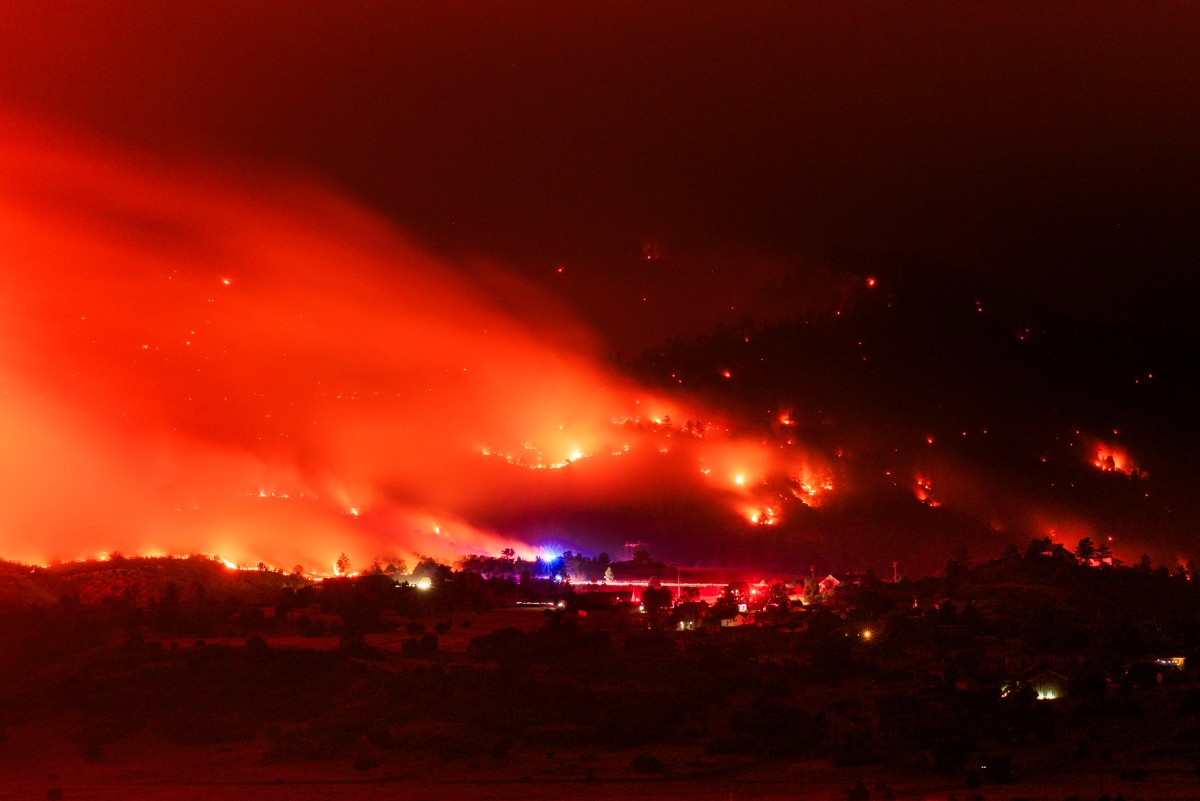
The Aspen Acres fire burns on July 3, 2026 in Rye, Colorado. Over 73,000 acres have burned in the Aspen Acres fire, making it the eighth biggest fire in Colorado history. (Photo: AFP)
A national incident report issued Friday said 41 uncontained large fires remained nationwide, with the country at its second-highest wildfire preparedness level.
Utah Governor Spencer Cox issued a temporary statewide restriction on fireworks in response to wildfire conditions, his office said. The order allows local governments to designate limited areas where fireworks may still be used through July 5.
State drought data show 94 percent of Utah was in severe or extreme drought.
Utah State Forester Jamie Barnes said the wildfire conditions were "unlike anything we've seen in recent memory," with fires spreading faster than in past years. State officials said Utah has already burned more land this year than in the previous four years combined.
The Colorado Division of Fire Prevention and Control reported more than a dozen wildfires burning statewide this week, prompting several cities and counties, including Durango, Vail and Pueblo, to cancel their Fourth of July fireworks shows, local officials said.
Vail has canceled its show six times since 1998 due to extreme conditions, most recently in 2021, while officials said this year's wildfire activity across the state is unusually widespread.
Colorado Springs, Colorado's second-largest city, canceled all of its Fourth of July fireworks shows this week, citing extreme fire danger, according to the city's fire department. City officials said the risk was comparable to conditions before a 2012 wildfire that destroyed more than 300 homes.
"We know this is disappointing, especially as we celebrate the 250th anniversary," Colorado Springs Mayor Yemi Mobolade said in a statement.
Restrictions extended beyond Colorado and Utah. Officials in Wyoming, Nebraska and New Mexico also imposed limits on fireworks because of drought or wildfire danger. Most professional fireworks displays are still expected to proceed as planned.
Friday's national incident report warned that strong winds and very low humidity would elevate fire danger across the southwest. Much of the eastern and central United States faced dangerously high heat this week, with heat indexes topping 46 degrees Celsius in some areas, the National Weather Service said.
Philip Higuera, a fire ecology professor at the University of Montana, told the Durango Herald that fireworks contribute to increased wildfires each Fourth of July. "There are a lot of ignitions added to the landscape on that single day," he said.
Research cited by Wake Forest University associate professor Lauren Lowman found that nearly half of all land burned in the western United States since 2001 occurred during or just after a heat wave.
Citing wildfire records, Lowman said about 15,000 wildfires were recorded on July 4 in the United States between 1992 and 2020. Fireworks caused an estimated 32,000 fires nationwide in 2023, according to Lowman.