


US launches strikes on Iran and reinstates oil sanctions over shipping attacks
Renewed explosions were heard in Iran late on Tuesday and into Wednesday after the US military unleashed a wave of strikes against Iran and revoked a license allowing the country to sell oil after three tankers were hit in the Strait of Hormuz.
Iranian Press TV reported that explosions were heard on Qeshm Island and several blasts were heard on Kharg Island, from which Iran exports 90% of its crude oil.
Late on Tuesday, US Central Command said in a post on X that US forces "have begun launching a series of powerful strikes against Iran to impose heavy costs for targeting and attacking commercial shipping crewed by innocent civilians in an international waterway."
"The US strikes are in response to Iranian attacks on three commercial vessels that were transiting the Strait of Hormuz," it added.
Explosions were also heard near the port cities of Bandar Abbas and Sirik, according to Press TV.
The US strikes targeted Iranian air defense systems, coastal surveillance systems, surface-to-air missiles, anti-ship cruise missiles and drone launch sites, Reuters reported, citing a US official.
Iranian President Masoud Pezeshkian, who was in Iraq for Iran's late Supreme Leader Ali Khamenei's funeral after the late leader's body arrived in Najaf on Tuesday night, left for Iran after the US strikes, according to Iranian state news agency IRNA.
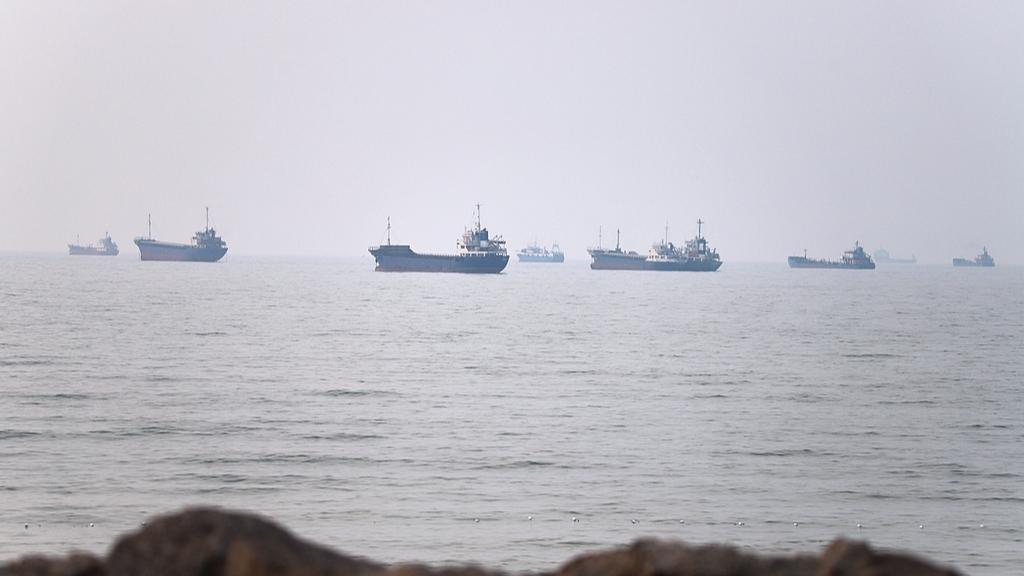
Commercial vessels are seen in the Strait of Hormuz off Bandar Abbas, Iran, June 30, 2026. /VCG
The incidents were only the latest threat to the ceasefire agreement the US and Iran struck last month. In a potentially major blow to that agreement, the US moved on Tuesday to withdraw a key concession that had allowed Iran to sell oil on international markets.
Oil prices rose more than 3% after the US announced the move.
Under the interim US-Iran agreement, the US Treasury issued a June 22 general license to allow the sale of crude oil and petrochemical and petroleum products of Iranian origin through August 21. In revoking that license on Tuesday, it gave Iran until July 17 to wind down any transactions.
The Iranian Foreign Ministry condemned the move as a breach of the framework agreement to end the war and said Washington would bear responsibility for the consequences.
The ministry said early on Wednesday that Iran would take any measure it deemed necessary to safeguard its interests and national security.
The United Kingdom Maritime Trade Operations on Tuesday reported three separate attacks involving tankers transiting the Strait of Hormuz, with no casualties reported.
Earlier on Tuesday, Iran's semi-official Fars news agency reported that the Navy of Iran's Islamic Revolution Guard Corps targeted two tankers attempting to cross the strait via a US-backed Omani route on Monday night after they failed to heed warnings. Several media reports identified the two vessels as a Qatari liquefied natural gas tanker and a Saudi-flagged crude oil tanker, both of which were reportedly damaged.
Qatar on Tuesday condemned the Iranian attack and summoned Iranian deputy ambassador in Doha over the incident.
The Iranian Foreign Ministry said Qatar's accusations were perplexing and that Tehran was diligently fulfilling its commitments but asserted that commercial vessels faced risks for using routes not coordinated with Iran.