


June 2026 was the hottest June on record for Western Europe and the second-warmest June globally, said the European Union (EU)'s Copernicus Climate Change Service in a report released on Thursday.
The report said Western Europe experienced record-breaking heatwaves during the month, with an average temperature of 20.74 Celsius, more than 3 Celsius above the 1991-2020 average, surpassing the previous record set in June 2025.
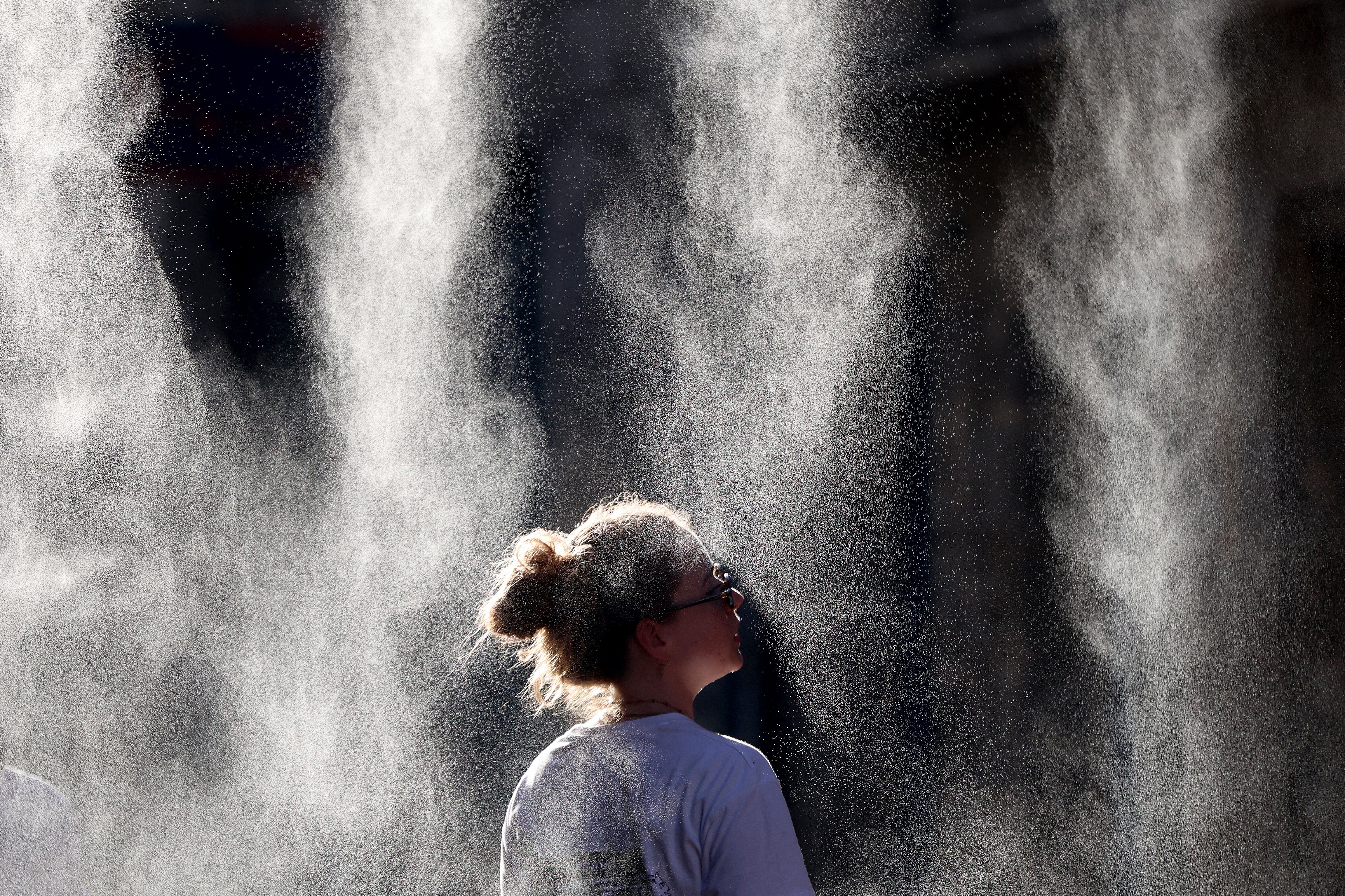
A woman cools off under a mist sprayer during the annual street music festival 'Fete de la Musique' while taking part in a heatwave in Bordeaux, southwestern France on June 21, 2026. (Photo: AFP)
According to Copernicus, the widespread heatwave that swept across Europe in late June came only weeks after an intense heatwave in May, with another heatwave emerging in early July. The June heatwave shattered monthly and all-time temperature records in several European countries and contributed to heat-related deaths, underscoring the increasing frequency and severity of extreme heat events in Europe and around the world.
Globally, June 2026 ranked as the second-warmest June on record, with an average surface air temperature of 16.54 degrees Celsius, 0.56 degrees Celsius above the 1991-2020 average for the month and second only to June 2024.
The global average sea surface temperature between 60 degrees south and 60 degrees north reached 20.86 degrees Celsius in June, the highest ever recorded for the month. The figure was 0.01 degrees Celsius higher than the previous June record set in 2024, partly reflecting the development of strong El Nino conditions in the equatorial Pacific.
Samantha Burgess, strategic lead for climate at the European Center for Medium-Range Weather Forecasts, said June 2026 highlighted the continued accumulation of heat in the climate system.
Record warmth in Western Europe and persistently high ocean temperatures have intensified heatwaves and further warmed the oceans, increasing risks to people, ecosystems and infrastructure, she said.