


Bangkok (People's Daily) - The APEC Business Advisory Council (ABAC) finalized its 2026 Report to APEC Economic Leaders at a meeting in Bangkok on Thursday, calling for greater openness, stronger regional connectivity and closer public-private cooperation to address evolving economic challenges in the Asia-Pacific.
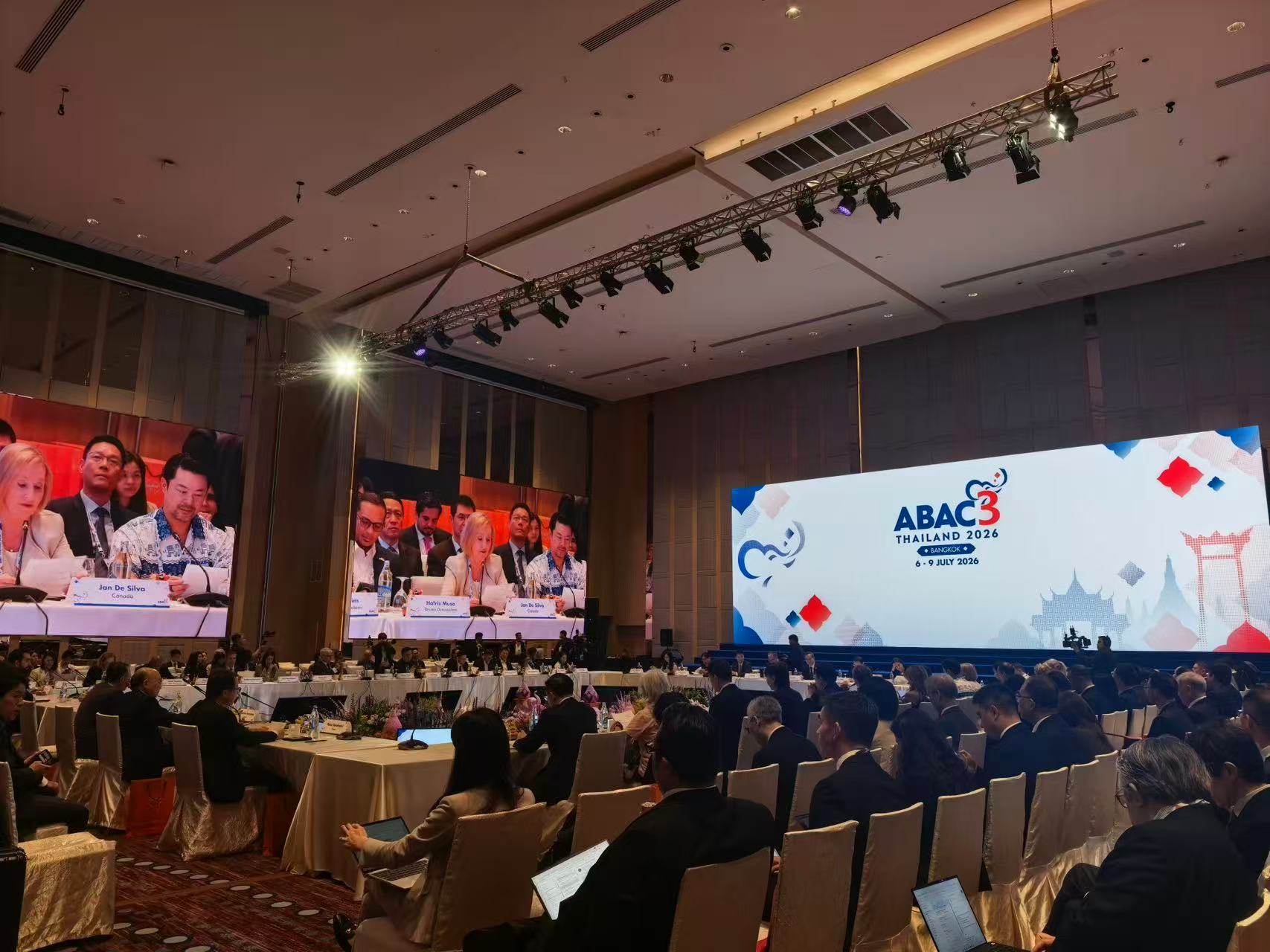
Photo: Yang Yi/People's Daily
Sustained regional prosperity would depend on economies working together, said council chair Li Fanrong.
"Our region's long-term prosperity will depend on economies working together to preserve an open and predictable environment for trade and investment while harnessing the opportunities presented by artificial intelligence and other frontier technologies," Li said.
Under the theme "Openness, Connectivity and Synergy," ABAC will recommend that APEC – the 21-member Asia-Pacific Economic Cooperation forum – reaffirm its commitment to free, open, fair, non-discriminatory, transparent and predictable trade and investment.
It will also call for practical, business-led progress toward the Free Trade Area of the Asia-Pacific, with a focus on addressing non-tariff barriers affecting food trade, promoting coherent digital trade rules and expanding women's economic participation and leadership.
On regional connectivity, ABAC will recommend greater investment in disaster-resilient and low-carbon transport infrastructure, stronger supply chain resilience, improved logistics and wider adoption of paperless trade. The report will also call for greater transparency across regional supply chains, renewed efforts on aviation connectivity and expanded people-to-people exchanges.
"Connectivity today extends beyond infrastructure," Li said. "It is about building resilient supply chains, reliable digital systems, skilled work forces and stronger human connections that enable businesses and communities to prosper together."
ABAC will also recommend mobilizing more private investment through innovative public-private partnerships to support infrastructure, energy, healthcare, water security and climate resilience.
In the field of emerging technologies, the council will call for innovation-friendly governance frameworks that support the responsible development and deployment of artificial intelligence and quantum technologies.
The recommendations will also emphasize the need to ensure that developing economies and micro, small and medium-sized enterprises have access to the digital infrastructure, skills and financing required to participate fully in the digital economy.
"Artificial intelligence and quantum technology have the potential to transform productivity, competitiveness and sustainable development across our region, but the benefits of innovation must be widely shared," Li said.
The report will further recommend stronger regional cooperation on food and energy security, public health, pandemic preparedness, disaster resilience and sustainable and responsible mining development, noting that these interconnected challenges require closer collaboration between the public and private sectors.
ABAC stood ready to work closely with APEC economies to translate these priorities into practical outcomes, Li said.
"By advancing openness, connectivity and synergy, APEC can reinforce confidence in an increasingly uncertain global economy while delivering tangible benefits for businesses and communities throughout the Asia-Pacific," he said.
Thai Prime Minister Anutin Charnvirakul welcomed ABAC members to Bangkok and reaffirmed Thailand's support for stronger regional economic cooperation through APEC, while highlighting the role of the business community in the process.
During the meeting, ABAC also finalized letters to APEC ministers responsible for digital affairs and AI, small and medium-sized enterprises, energy, food security, transport and finance ahead of sectoral meetings in the coming months. Statements on quantum technology, health and mining were also endorsed.
ABAC is scheduled to hold its final meeting of the year in Shenzhen, China, from November 14 to 16.