


TEHRAN, July 10 (Xinhua) -- Iranian Foreign Minister Seyed Abbas Araghchi is scheduled to visit Oman on Saturday for consultations on the Strait of Hormuz, as part of efforts to facilitate safe maritime traffic in the strategic waterway, Iranian Foreign Ministry spokesman Esmaeil Baghaei said on Friday night.
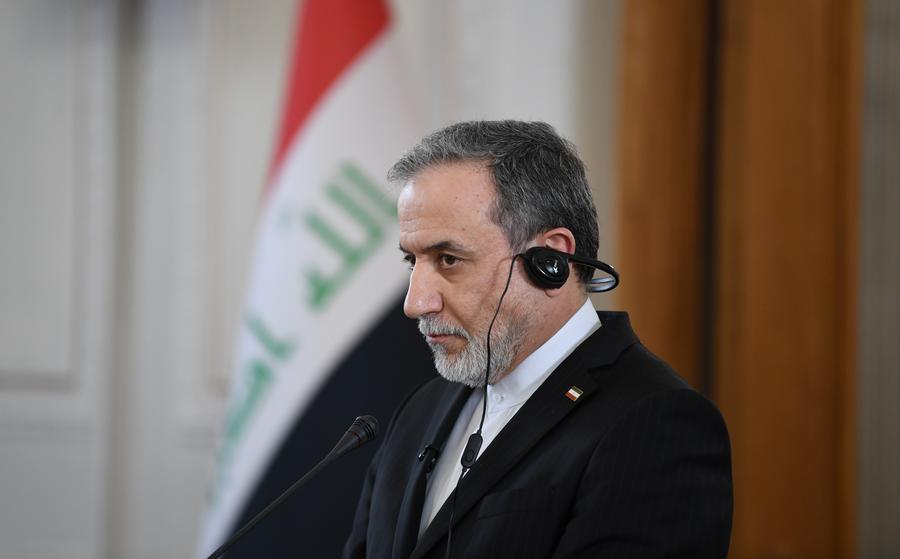
Iran's Foreign Minister Seyed Abbas Araghchi attends a joint press conference in Tehran, Iran, Jan. 18, 2026. (File photo: Xinhua)
In an interview with state-run IRIB TV, Baghaei said that under the recently signed Iran-U.S. memorandum of understanding (MoU), Iran and Oman should cooperate and consult on maritime issues regarding the strait, and several rounds of technical talks have been held over that both in Tehran and Muscat.
Baghaei said Iran has "accepted a clear responsibility" for establishing normal maritime arrangements and services in the strait, and has acted with determination on that matter.
The spokesman rejected U.S. claims that Iran had requested negotiations with Washington, saying no such request had been made. Yet he noted that Iran did not turn down the request of Qatar, a regional mediator, to visit Iran on Friday for discussions.
"We conveyed our points of view to the Qatari side," he said.
Baghaei accused the U.S. of repeatedly violating the MoU's provisions, citing U.S. strikes on several Iranian cities on Wednesday and Thursday.
The United States said that the attacks were an immediate response to "Iran's latest attacks on commercial vessels transiting the Strait of Hormuz." In retaliation, Iran struck U.S. military bases and facilities in Kuwait, Bahrain, Qatar, and Jordan with missiles and drones.
Baghaei also pointed to Washington's revocation of a license authorizing the sale of Iranian-origin oil until Aug. 21 and newly announced sanctions against Iran as additional "blatant violations" of the MoU.
He reaffirmed Iran's policy of "commitment for commitment," saying that any U.S. violation will be met with reciprocal action.
Also on Friday, Iranian President Masoud Pezeshkian held a phone call with Pakistan's Prime Minister Shehbaz Sharif.
Pezeshkian said mutual respect and practical commitment to obligations are the main prerequisites for any sustainable agreement, accusing the United States and Israel of violating their obligations.
Pezeshkian expressed hope that all parties would adopt a responsible approach and maintain the opportunity to promote peace, security and stability in the region.
Sharif, for his part, expressed concern over the recent developments and the possibility of escalation of tensions in the region, highlighting the necessity to continue diplomatic efforts and exercise restraint to prepare the ground for the consolidation of the ceasefire and establishment of lasting peace.
He said Pakistan would continue its role in advancing diplomatic processes and reducing tensions alongside other regional mediators, including Qatar.
On June 18, Iran and the United States signed the MoU on ending the war in the region on all fronts, including Lebanon. Under the MoU, the two countries were scheduled to hold negotiations within a 60-day period to reach a final agreement.