


Trade barriers have a habit of returning as a supposed panacea whenever an industry comes under competitive pressure.
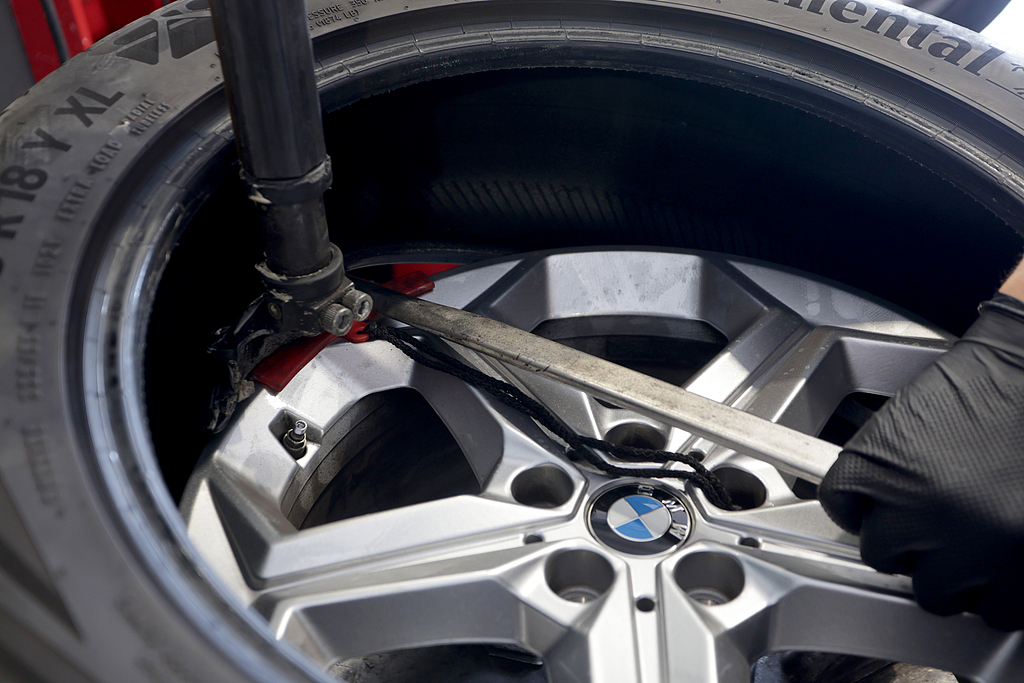
A car tire is changed in Bari, Italy, July 11, 2026. (Photo: CFP)
The latest example arrived on July 8, when the European Commission imposed anti-dumping duties of up to 45.3% on passenger car and light lorry tires from China, citing "injury" to the EU's tire industry.
The rationale behind is all wearily familiar. So, too, will be the consequences.
The cost comes home
Tires are not a niche product, but a critical component of one of Europe's largest industrial ecosystems. They supported over €18 billion GDP contribution to the EU economy in 2024. As they are deeply embedded in the automotive value chain as an upstream input, any modest increase in costs is rarely confined to the tire industry itself.
Higher duties on Chinese tires, therefore, will not stop at the customs gate. They will work their way through the supply chain.
Importers will face higher procurement costs. Distributors will see margins squeezed. Vehicle manufacturers and fleet operators will pay more for a key component. Eventually, the bill will reach consumers through higher vehicle ownership and maintenance costs.
Ironically, Europeans spent much of the past year warning that American tariffs would hurt both sides of the Atlantic. They were right. Analysts projected significant damage to Europe's automotive sector across the board following Washington's 25% tariff on imported vehicles, a reminder that trade barriers often reverberate throughout integrated supply chains.
And the European Central Bank has reached a similar conclusion from a different angle. Examining US tariff measures, it found that foreign exporters absorbed only around 5% of the additional costs, while the overwhelming majority fell on domestic importers and consumers. Put differently, tariffs may change who pays the bill, but they do not make the bill disappear.
Which makes Brussels' latest move all the more puzzling: If European policymakers recognize that tariffs disrupt integrated supply chains and that much of the resulting cost is ultimately borne by the importing market, why, then, should the outcome be any different when Europe itself imposes the tariffs?
A solution in search of a problem
The tire dispute also reflects a broader question confronting European policymakers: How much of the competitive pressure facing Europe's industry can genuinely be attributed to Chinese imports?
Much of the current debate rests on the assumption that rising Chinese exports are displacing European industry. Evidence from the broader auto sector, however, suggests the picture is more nuanced. According to latest data cited by Financial Times, Chinese passengerv ehicle exports to the EU increased from roughly 750,000 units in 2023 to just over one million in 2025. Yet total car shipment to the continent stayed flat over the same period, indicating that Chinese imports are primarily displacing other non-EU suppliers rather than flooding the market or driving overall import-led damage.
This distinction matters as it points to an uncomfortable reality for politicians in Europe: Not every competitive challenge can be explained by external competition alone.
The same applies to the tire industry. According to Tyres Europe, a leading trade association for tire manufacturers in Europe, consumer tire sales in Europe fell by 5% year-on-year in the last quarter of 2025, a decline the industry association attributed primarily to weak consumer confidence and limited growth in vehicle mileage.
Chinese tires, by contrast, have surged in popularity in the global market over the past decade through sustained investment in technology, compliance with international safety standards and improving product quality. Their share of the European market, as a result, has risen steadily from 18% to 28% between 2021 and 2024.
On top of that, Europe's own production bases have struggled to keep pace with market demand. In an interview with Messe Frankfurt, a consulting company in the auto industry, Rutger Veerman, a European tire buyer with more than two decades of industry experience, pointed out that more than 100 million passenger car tires were imported from China into Europe in 2025, accounting for roughly a quarter of the EU market. He argues that no alternative production base currently has the capacity to replace such volumes, while European manufacturers alone would be unable to meet demand.
Taken together, these facts suggest that the pressures facing Europe's tire industry cannot be simply explained by imports alone. Declining demand, competitiveness and limited manufacturing capacity all play a role – challenges that tariffs alone are unlikely to resolve.
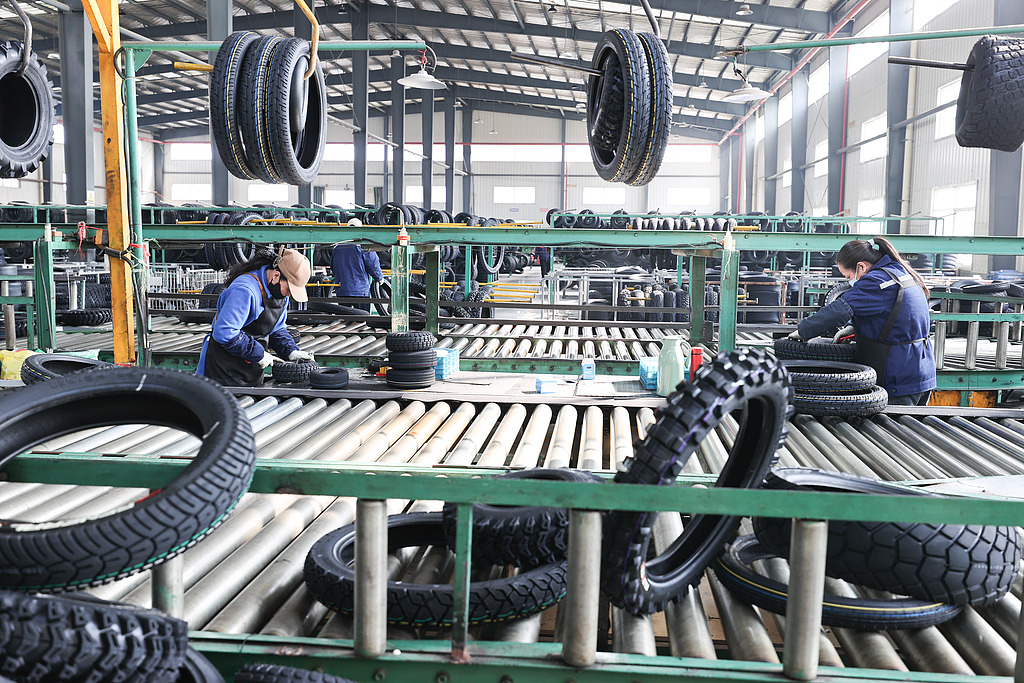
Workers manufacture tires for export to Germany at a workshop in Lianyungang City, east China's Jiangsu Province, March 9, 2026. (Photo: CFP)
A better alternative
This is actually where cooperation between China and Europe may prove more valuable than confrontation.
From a broader perspective, Chinese automakers have emerged as some of the world's most dynamic players in electric mobility, not simply because of lower costs, but because of their ability to shorten development cycles, innovate and respond swiftly to changing consumer preferences. At a time when European manufacturers are searching for new sources of competitiveness, these capabilities can complement rather than undermine Europe's industrial transition.
European car companies are recognizing this. In its latest annual results, Stellantis, the second largest carmaker in Europe, emphasized the need to "reset business" to better meet customers' evolving demand. The company is enhancing cooperation with China by helping Chinese electric vehicle (EV) makers like Leapmotor expand into overseas markets.
In May this year, it has also announced to establish a new Europe-based joint venture with China's Dongfeng Motor Corporation to manufacture, sell, and distribute Dongfeng's premium EVs in Europe. The partnership involves localized EV production at the Stellantis plant in France, to comply with EU manufacturing regulations.
These arrangements reflect a more pragmatic view taking hold inside the industry. Faced with mounting competitive pressure, some European manufacturers see cooperation with Chinese partners as a way to adapt to the market.
And this logic extends well beyond the automotive sector. As each other's second largest trading partner, China and Europe see their interests increasingly converge in a whole range of areas.
Take green energy cooperation for example. As two major economies with the most complete global green industry chains and robust manufacturing capabilities, China and Europe have developed deep linkage across key components such as photovoltaic, wind power, and energy storage, thereby building a cooperation network that encompasses policy synergy, technological integration, and market integration. As both sides are pursuing ambitious climate goals, such complementarities are essential to ensuring an affordable and efficient global energy transition.
Indeed, trade disputes are nothing new. But when tariffs are banked on as a cure-for-all solution to address structural challenges, they more often end up raising costs without restoring competitiveness.
For China and Europe, the more durable path lies in cooperation, not confrontation. After all, if recent experience has shown anything, it is that trade barriers seldom stay confined to their intended targets. When tire tariffs roll, the costs tend to roll with them.