


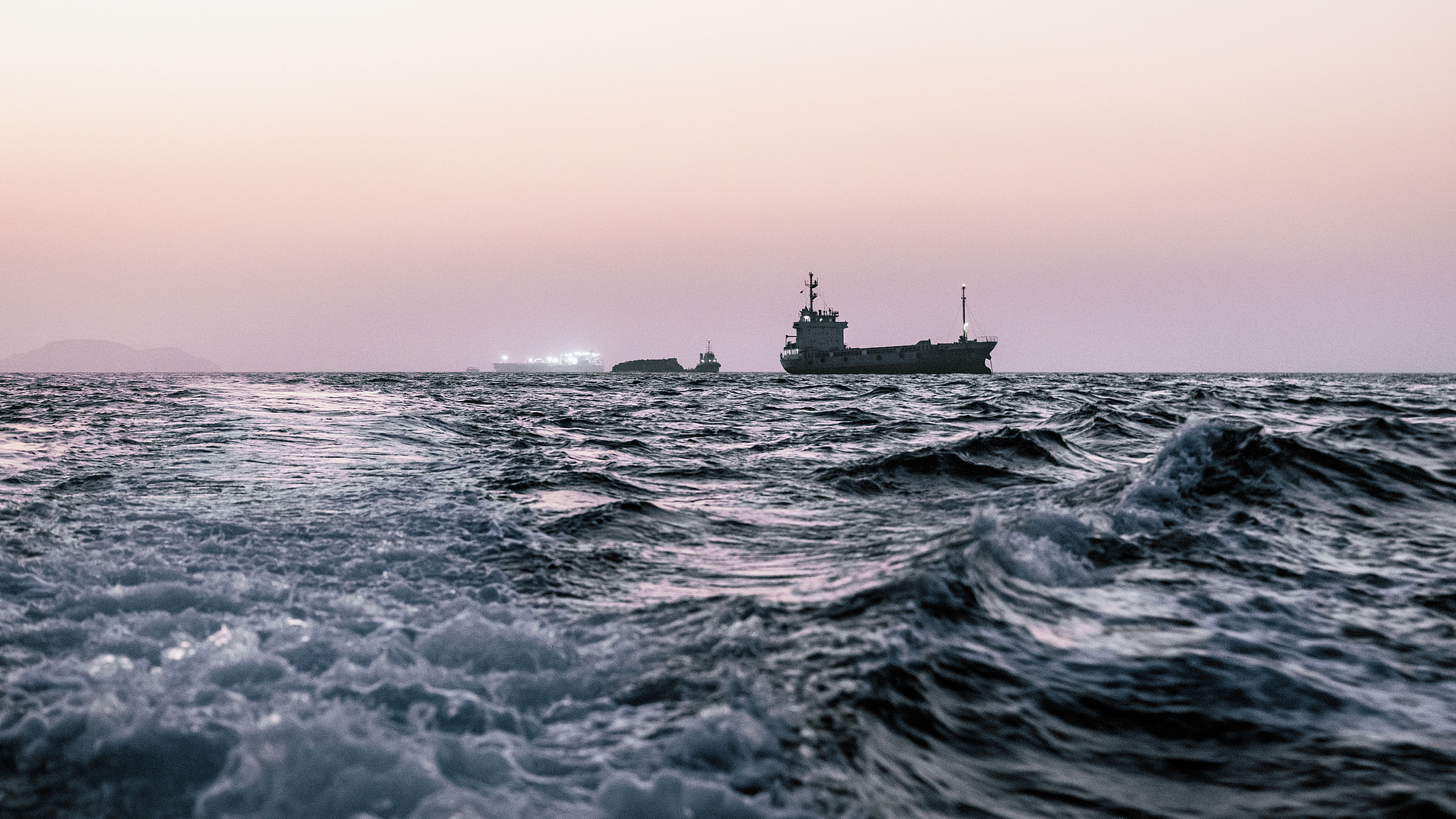
Oil tankers and cargo vessels remain anchored off Port Sultan Qaboos on June 21, 2026 in Muscat, Oman. (Photo: VCG)
US and Iranian forces exchanged heavy missile and drone attacks over the weekend, with Tehran targeting US facilities in states across the Gulf and saying it had again closed the vital Strait of Hormuz, sending oil prices higher.
US Central Command (CENTCOM) said US forces launched a new round of strikes against Iran on Sunday evening aimed at further degrading Tehran's ability to target civilian mariners and commercial vessels transiting the Strait of Hormuz.
Several areas in southern Iran's Hormozgan Province came under attack, with one person killed and two others wounded on Farur Island, the semi-official Tasnim news agency reported.
Iran retaliated by targeting US bases and facilities across the Gulf. Iranian media said the strikes targeted US military facilities in Kuwait, Bahrain and Qatar, while Iran's Revolutionary Guards said on Monday they had also destroyed radar systems in Oman and struck fuel tanks and ammunition depots at Prince Hassan Air Base in Jordan.
The latest barrage marked an escalation in the pace and geographical range of the attacks, casting further doubt on the future of an interim US-Iran agreement signed last month that sought to reopen the Strait of Hormuz and end the conflict after a further 60 days of negotiations.
US President Donald Trump, who has said over the past week that he considers the ceasefire over while leaving the door open to further talks, told Reuters in a brief phone interview on Sunday: "We're beating them up."
Iran's top negotiator, Mohammad Bagher Ghalibaf, wrote on X on Sunday: "The era of one-sided deals is OVER. We told you: keep your word or pay the price. Reality is knocking."
Tehran said it had again closed the Strait of Hormuz, although Trump insisted on Sunday that the vital waterway was "open." US officials said around 20 vessels had been escorted through the strait in the previous 24 hours, though ship-tracking sites showed little traffic moving.
Iran has sought to establish a permanent system for collecting fees in the strait, which carried one-fifth of the world's oil and liquefied natural gas shipments before the conflict, and has warned vessels not to sail without its authorization.
Iran's recently created Persian Gulf Strait Authority said passage through the strait was not currently possible because of "recent illegal movements of the United States military forces in the region," adding that permits would be issued "as soon as stability and calm are restored."
The Revolutionary Guards said on Monday that the only way to restore regular shipping through the strait was to end US military interventions in the waterway, warning that "continued interference could lead to greater incidents in the global oil and gas sector."
The US, which revoked a license waiving sanctions on the sale of Iranian crude on Tuesday following earlier attacks on shipping, said its forces were positioned to safeguard freedom of navigation. The US Navy-led Joint Maritime Information Center said an "expanded" southern route near Oman remained available for two-way traffic despite a severe security threat.
The turmoil has pushed energy prices higher, with Brent crude climbing 4.3% to $79.31 a barrel on Monday, although it remained well below peaks reached earlier in the conflict.
Egypt, Iraq and the United Arab Emirates condemned the Iranian attacks on Sunday. Egypt described them as a "flagrant violation" of the sovereignty of the countries affected, while Iraq warned of risks to regional security and called for dialogue. The UAE also denounced the missile and drone attacks and reaffirmed its support for the countries targeted.