


WASHINGTON, July 18 (Xinhua) -- U.S. housing starts surged in June, but not enough to fix the nation's housing affordability crisis.
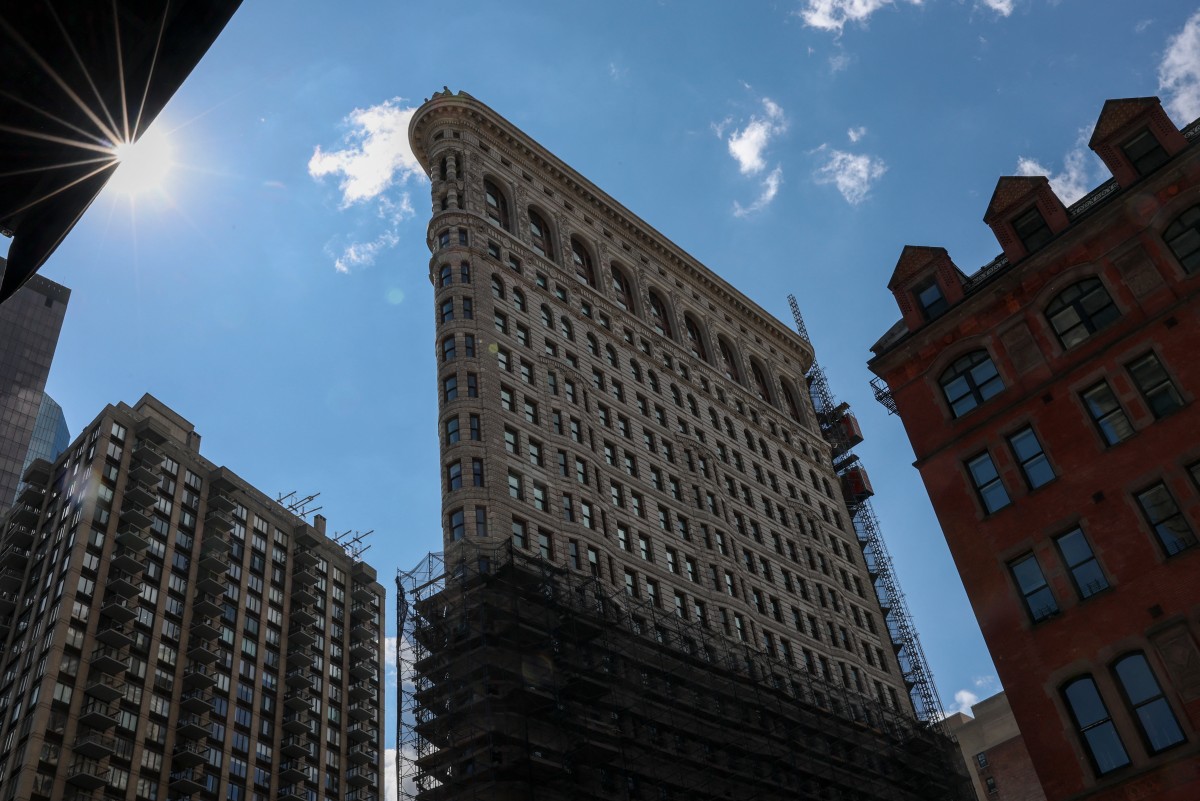
The Flatiron Building is seen as scaffolding removal began during its conversion from office to residential use in New York, on April 17, 2026. (File photo: AFP)
Starts jumped 19.0 percent to a seasonally adjusted annual rate of 1.427 million units, following a sharp drop in May that sent construction activity to a six-year low, according to data released Friday by the U.S. Census Bureau.
Multifamily construction soared 76.3 percent to an annualized pace of 513,000 units, with the segment being the primary catalyst driving June's overall rebound.
Single-family home building edged down 0.2 percent to an annualized rate of 895,000 units, marking the third consecutive monthly decline for single-family structures, which were heavily pressured by elevated mortgage rates.
Data varied from region to region.
In the Midwest, housing starts jumped 33.3 percent to 248,000 units. In the South, starts increased 15.2 percent to 741,000 units and in the Northeast starts increased 10.3 percent to 129,000 units.
All this occurs amid the surging cost of purchasing a home, both because of a sharp uptick in prices in recent years and due to high interest rates.
The stock of unsold new single-family homes remains at the highest level since late 2007, a trend that has made homebuilders cautious about taking on speculative new builds.
U.S. housing starts remain far lower than what is required to reduce home prices.
While June's bump to a 1.427 million annualized pace looks strong on paper, it is a brief spike in an otherwise sluggish building environment.
According to research released this month by housing app Zillow, the United States is facing a massive housing deficit of 4.74 million units.
Some experts noted that housing costs are lowering, but only moderately.
Dean Baker, co-founder of the Center for Economic and Policy Research, told Xinhua: "Housing costs actually are declining in real terms, both rent and sales price, the latter more than the former. We can expect to see modest price declines continue with current levels of construction."
"If interest rates ever fall -- no more tariffs and the Iran War ends -- we can see construction get up to 1.7 to 1.8 million units, which will lead to faster (price) declines. But for the near-term future, we will have just modest real declines," Baker said.
Current building levels have merely caused the housing deficit to hold flat. Economists note the country has stopped digging its housing hole, but is not yet building its way out.
The critical single-family sector -- the homes most buyers want -- edged down again to an 895,000 annualized rate in June.
Economists project it will barely reach 940,000 to 960,000 units for the full year, which is well below the historical levels needed to absorb population growth and create real price relief.
The COVID pandemic era has played a major role in the surge in housing prices, as droves of Americans fled U.S. cities to work remotely and seek safety after the 2020 pandemic ravaged urban areas and terrorized residents. Also to blame is high inflation in recent years, which has spiked interest rates.
Housing affordability is a hot-button issue in the lead up to November's midterm elections, and it is expected to pose a significant challenge for Republicans.