


TEHRAN, July 29 (Xinhua) -- A brief pause in the U.S.-Iran conflict ended on Wednesday as Tehran launched missile attacks against U.S. forces and regional defenses.
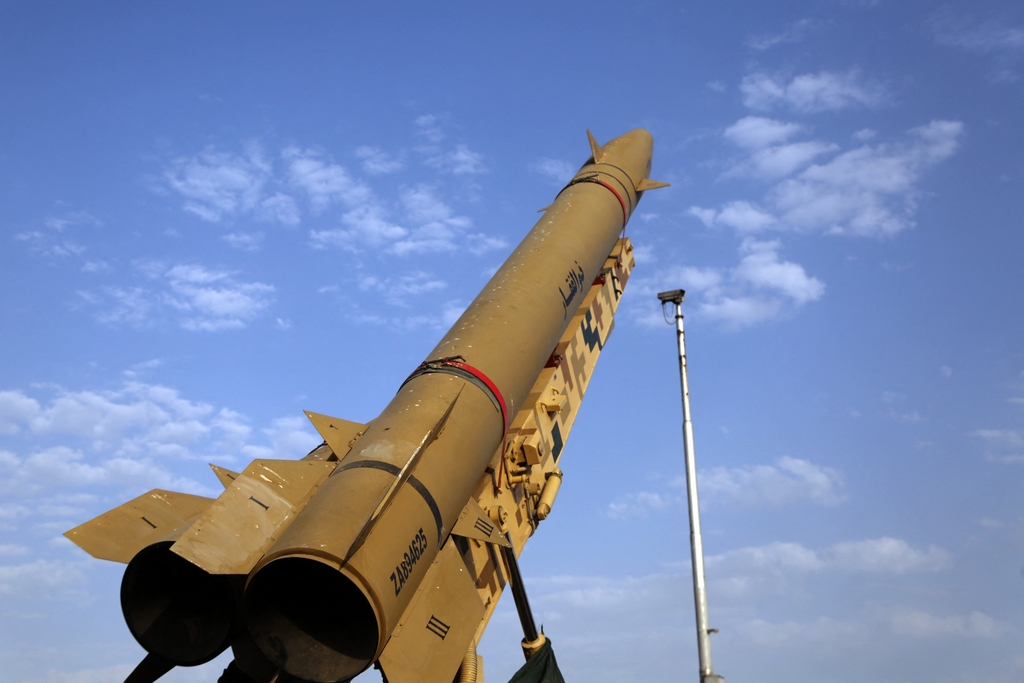
File photo: IC
The attacks were followed by coordinated strikes by Washington and Riyadh on Iran-backed groups in Iraq, with tensions over the Strait of Hormuz adding to regional uncertainty.
NEW ATTACKS RESUME
The U.S. military said its forces had intercepted an attempted Iranian missile attack targeting American troops in the Middle East. Jordan's armed forces later said their air defenses detected and destroyed five missiles launched from Iran toward the kingdom.
Iran's Islamic Revolution Guard Corps (IRGC) later confirmed that it had launched ballistic missiles at U.S. military installations in Jordan, saying the actions were part of its response to continued U.S. threats and military pressure.
The latest developments followed a short period of relative calm after Washington halted its bombing campaign and Tehran appeared to suspend retaliatory strikes.
STRIKES IN IRAQ
Hours after the Iranian missile attacks, the United States and Saudi Arabia carried out coordinated airstrikes against Iran-backed militia targets in eastern Iraq.
Washington and Riyadh said the operation targeted sites used by Iran-aligned groups to launch drone attacks against U.S. forces and Saudi oil facilities.
Saudi Arabia said its air defenses had recently intercepted drones targeting energy infrastructure in the kingdom's Eastern Province and Riyadh, accusing Iran-backed groups operating from Iraqi territory of being responsible.
The Popular Mobilisation Forces (PMF), an Iraqi paramilitary alliance containing some Iran-backed factions, said several of its bases were hit. PMF sources reported that at least 10 members were killed and described the strikes as a violation of Iraq's sovereignty.
HORMUZ TALKS FACE HURDLES
Alongside military escalation, negotiations over the Strait of Hormuz remained stalled.
Oman proposed a Gulf-backed plan to establish a joint management mechanism for the strategic waterway, including voluntary contributions from ships to support navigation and maritime safety.
Iran rejected the proposal, saying a shared control arrangement with Oman would not serve its interests and reiterating that it should retain a central role in managing key shipping routes through the Strait.
The United States opposed any arrangement that could restrict international shipping, insisting that the Strait of Hormuz should remain open for free navigation.