


Spain and Morocco reinforced the border fence of a Spanish enclave on Friday and appeared to have halted mass crossings, after around 60,000 people arrived by sea and land in a single day, with at least 34 dead bodies found in the water.
The mass crossing into Ceuta, a Spanish-held spit jutting into the Mediterranean from Morocco, caused division in Europe, with Italy threatening to suspend the EU's internal open border scheme.
At the gates into Ceuta, Moroccan authorities had deployed water cannon trucks and pushed people back. The charred remains of a bus and seven cars could be seen nearby from clashes with the crowds.
Spanish authorities said they would try to expel those who had entered illegally as quickly as possible, despite a court ruling that has put some new restrictions on special "border rejection" rules that allow immediate expulsions.
Rachid Sbihi, who leads a local workers association representing Civil Guard officers called the situation a "serious humanitarian crisis", saying thousands of migrants, including unaccompanied children, were left sleeping in parks and sidewalks, while others roamed the streets aimlessly.
"People are still entering. The reinforcements that have arrived are only helping the injured and other humanitarian efforts," he said. "It's chaotic."
Among the 19 who died, many drowned, Sbihi said, but some were also killed in a stampede to cross the breakwater fence at Tarajal, an urban beach near a border checkpoint with Morocco.
Ahmed Karim, a 33-year old Moroccan, said he had crossed into Ceuta because of the lack of jobs in his country. "Many people want to go to Europe, America, but they don't have the opportunity," Karim said.
On Friday morning, the waters near the border fence were littered with buoys as crowds of mostly young men were amassed near the crossing.
Spanish Prime Minister Pedro Sanchez visited Ceuta on Friday with Interior Minister Fernando Grande-Marlaska and called the mass crossings a "violation of Spain's territorial sovereignty."
French Interior Minister Laurent Nunez said France would strengthen border checks with Spain, writing on X that he had activated the Rapid Intervention Border Force.
Moroccan authorities have not publicly commented on the crossings.
It was not immediately clear what prompted so many people to cross to Ceuta.
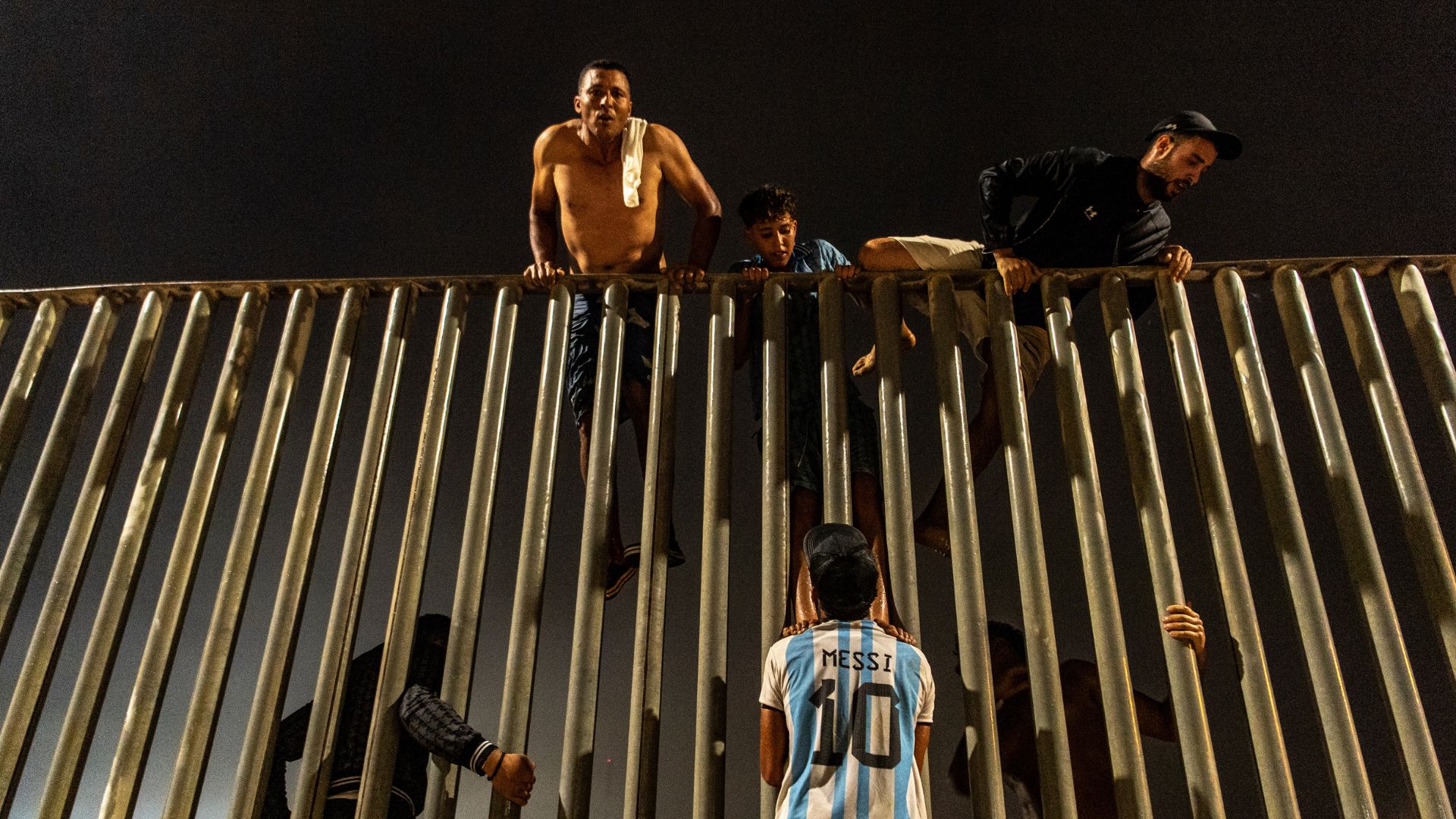
Migrants try to cross from Morocco into the Spanish enclave of Ceuta, Friday, July 31, 2026. (Photo: AP)
Illegal crossings are not new, but the amount is unprecedented
Spain is a main point of arrival into Europe for migrants seeking better economic opportunities or an escape from violence in their home countries.
To reach Ceuta, located on the northern African coast, migrants often swim from the Moroccan town of Fnideq, covering about 5 kilometers to reach Spanish territory.
Others attempt the crossing from the nearby town of Belyounech, where the distance is shorter.
Migrants from Morocco also attempted to cross into Melilla, Spain's other territory at the tip of north Africa.
There was widespread chaos in Bni Nsar, the Moroccan town bordering the Spanish territory, where migrants clashed with police, throwing rocks and setting police vehicles ablaze, according to local media and rights groups.
They reported injuries among security forces and the arrest of dozens of people attempting to cross.
Migrants often try to enter Melilla by scaling the 6-meter fence separating the enclave from Morocco. In 2022, thousands of sub-Saharan migrants attempted to cross the border that way, and dozens died in one of the deadliest such incidents on the route.
Ceuta and Melilla have the European Union's only land borders with Africa. The two cities are each home to around 85,000 people.
Both cities periodically experience surges in attempted crossings by migrants seeking to reach Europe, but nearly 50,000 crossing in a single day appears to be unprecedented. Spain described it as the biggest crisis since at least 2021.
That year, more than 10,000 migrants reached Ceuta from neighboring Morocco over the course of two days, taking advantage of a loosening of border controls by Rabat during a crisis between the two countries.
Territorial Policy Minister Angel Victor Torres said on Friday that among factors contributing to the surge may have been a ruling by Spain's Supreme Court earlier this month that migrants intercepted at sea while attempting to reach Ceuta or Melilla cannot be summarily returned under special rules.
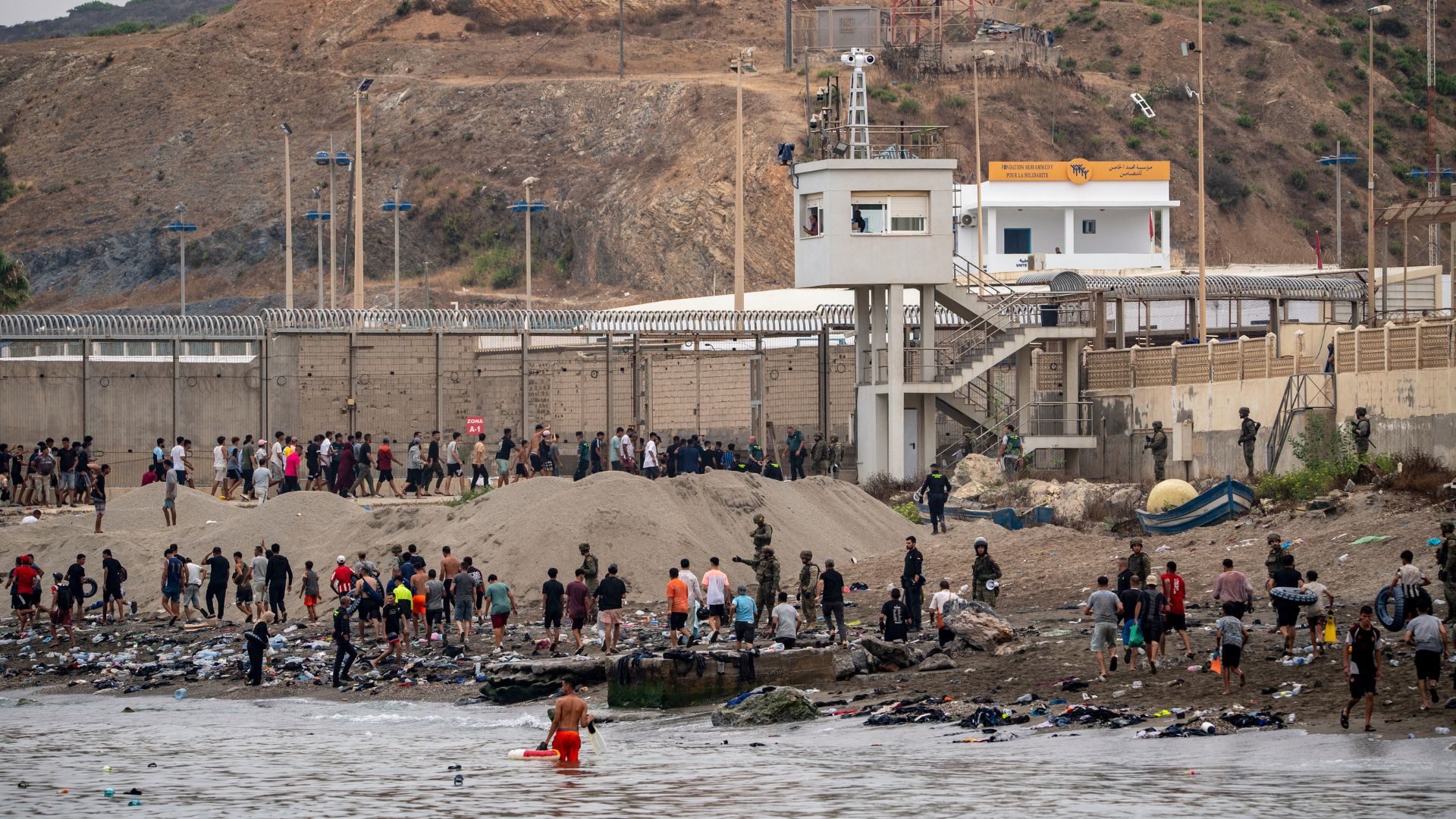
Migrants return to Morocco from the Spanish enclave of Ceuta. (Photo: AP)
Migrants stream into town on Moroccan side of border
Torres told a local radio station the Spanish government had reacted immediately to the surge and would proceed to eventually return the migrants, while respecting court rulings and migrants' rights.
On the Moroccan side of the border, thousands of migrants streamed into the town of Fnideq overnight despite a reinforced deployment of security that foiled most attempts to cross.
Although the crossing appeared blocked, groups moved along the coast seeking routes around the fence. Some prepared to swim.
"I was late," said Brahim, 32, who gave only one name. He said he had arrived from Tangier hoping to cross through the gate but found it effectively shut.
Among those hoping to cross were women and children, from both Morocco and Sub-Saharan African countries further south.
In a post on X, Spain's Guardia Civil police association AUGC said there had been too few police in place to monitor the fence during the surge on Thursday, making them unable to stop it.
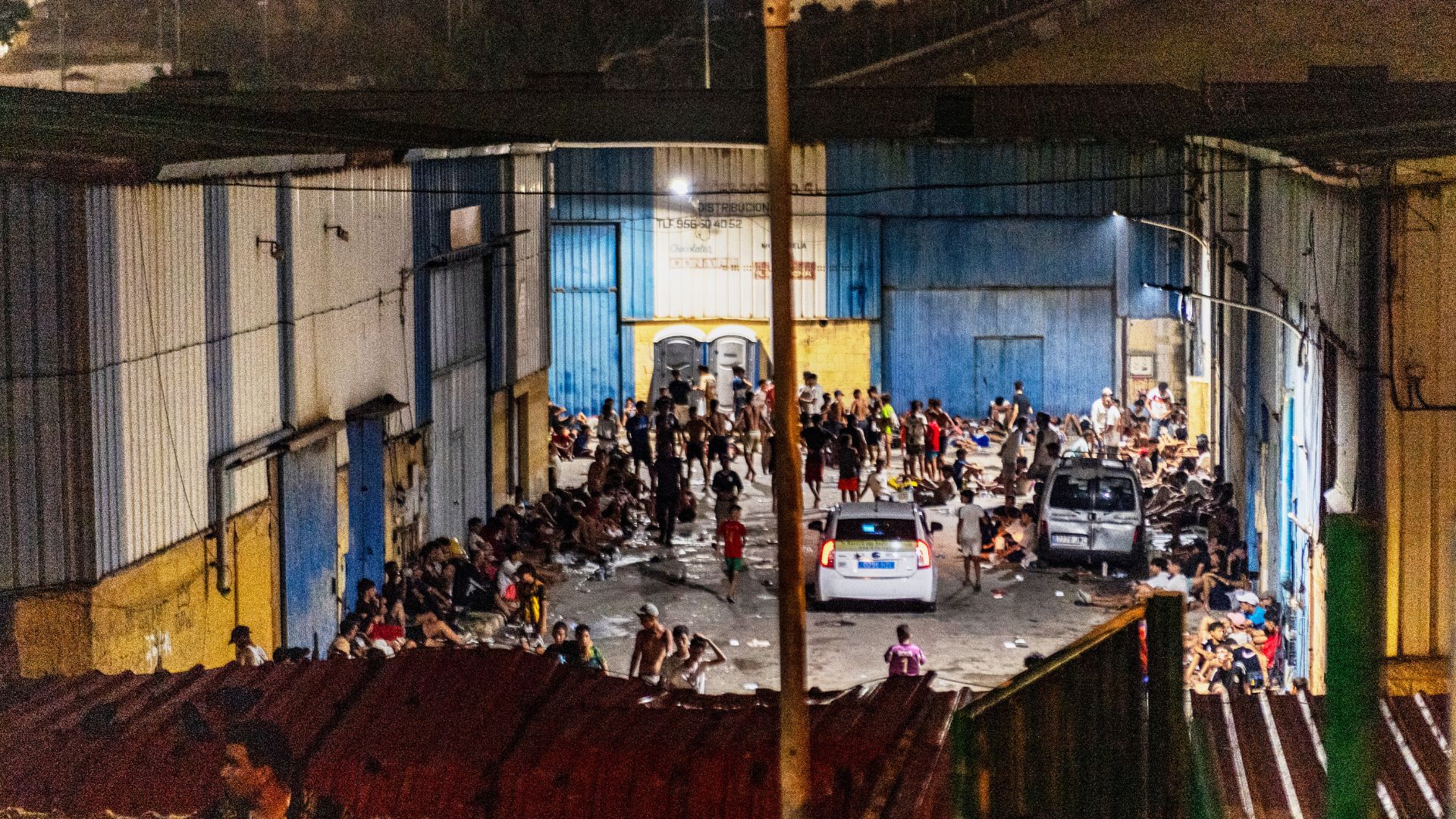
Migrants spend the night on the streets after crossing from Morocco into the Spanish enclave of Ceuta. (Photo: AP)
Migrant influx sparks reaction from abroad
Migration is a sensitive issue across Europe, where right-wing parties have surged in the decade since a 2015 crisis when more than a million people crossed the continent mainly on foot and sought asylum, most fleeing war in Syria.
Italy's right-wing Prime Minister Giorgia Meloni said her country was prepared "to intervene with extraordinary measures to defend the borders and the safety of citizens, including the suspension of the Schengen Area with Spain," referring to the EU's internal border-free zone.
While Spain's Socialist government says it remains firm over illegal crossings, it says immigrants help strengthen the economy and has offered a mass amnesty that saw hundreds of thousands of people seek citizenship over the past year.
"The images coming from Ceuta show how the Madrid Government's decision to grant Spanish, and therefore European, citizenship to over 500,000 irregular immigrants is profoun dly wrong and encourages human trafficking," Italy's Foreign Minister Antonio Tajani wrote.
Spanish Foreign Minister Jose Manuel Albares replied that Tajani's message was "inappropriate", and said Spain expected "solidarity and not partisan demagoguery" from its partner. He added he would summon the Italian ambassador to protest.
Chinese Foreign Ministry spokesperson Mao Ning said on Friday that "China opposes all forms of illegal migration".
"At the same time, we believe that all parties should strengthen coordination and properly handle the relevant issues."
Ceuta authorities ask Madrid to declare emergency, send army
Juan Jesús Vivas, the head of Ceuta's regional government, had called for the national government to declare an emergency on grounds of national security, asking for more police and for the army to be deployed on the border "to guarantee the inviolability of the frontier and citizen safety".
He had warned that migrant reception centers were already overwhelmed on Wednesday, with hundreds of people sleeping on the streets.
Spain's Interior Ministry, which tracks irregular migration, would not confirm the number of migrants who had made it to Ceuta in the past few days but said it would publish its next migration report on Monday.
Legislation covering a declaration of national emergencies does not consider migration flows as a risk to national security, according to the ministry, which said government agencies are "coordinating to respond with speed and efficacy to the situation in Ceuta".
Ceuta, which is perched on a historical isthmus, has been a Spanish possession since 1580.
Its mixed population of Christians and Muslims, Spanish and Moroccan residents and day workers, lives in relative harmony behind a border fence that many migrants from across Africa attempt to cross for a better life in Europe.