


U.S. President Donald Trump said Thursday that although overall U.S. ammunition stockpiles remain sufficient, supplies of certain types of ammunition are seeing increased strain.
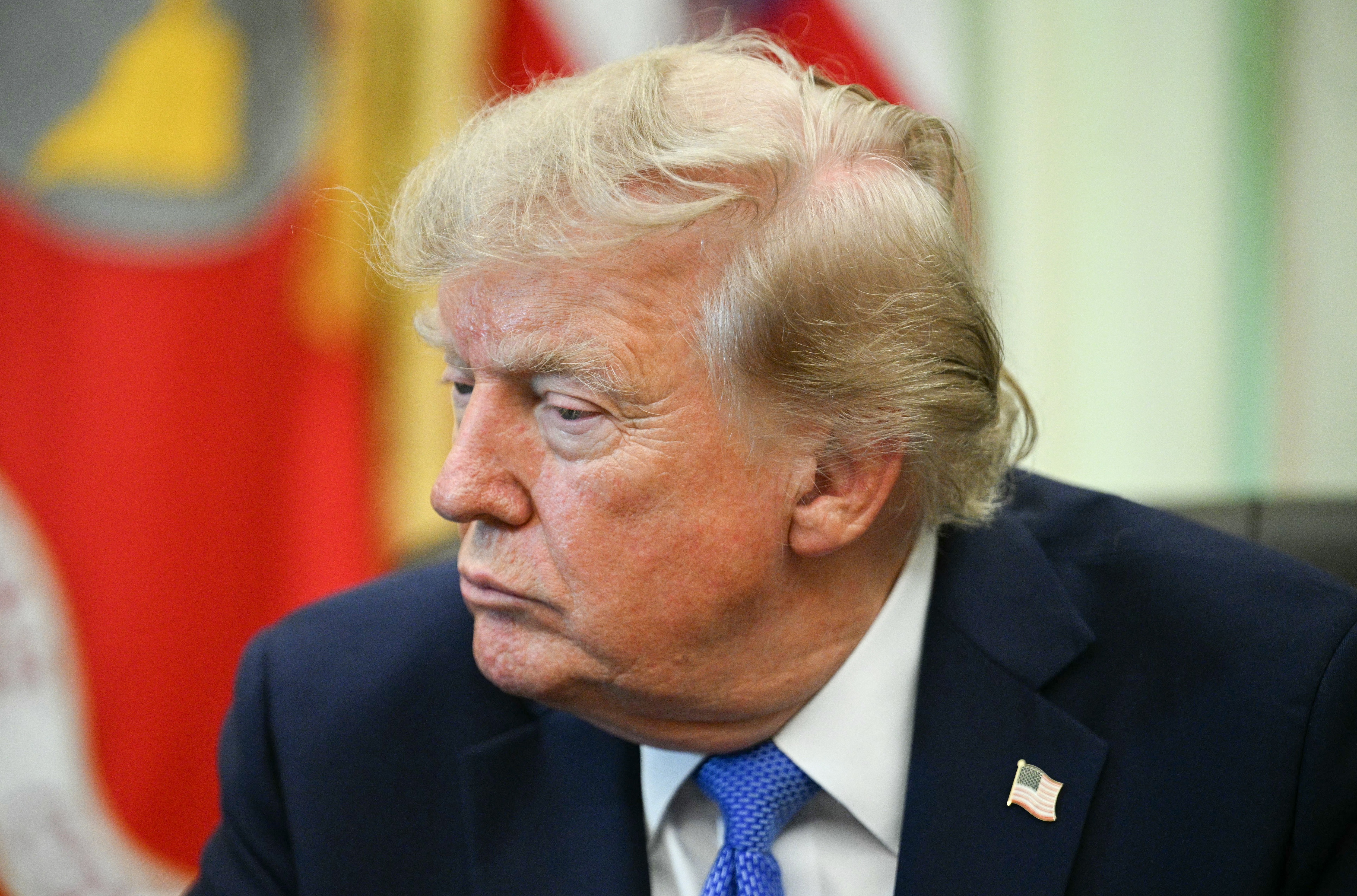
US President Donald Trump looks on after signing executive orders in the Oval Office of the White House in Washington, DC, on August 6, 2026. (Photo: AFP)
Speaking to reporters at the White House Oval Office, Trump said that the United States has a "virtually unlimited supply" of some types of munitions, while supplies of others are "a little bit tighter," without elaborating.
Trump's remarks came two days after media reports said the U.S. military had exhausted nearly 80 percent of the interceptors for a key missile defense system during the ongoing war with Iran, as military commanders warned that the army's munitions stockpile was "dangerously low."
The Atlantic reported the severe depletion, citing current and former U.S. defense officials who warned that remaining supplies of long-range weapons and sophisticated interceptors, such as Patriots and Terminal High Altitude Area Defense (THAAD) missiles, have dropped to as low as 20 percent of desired levels.
Five months into the war with Iran, the U.S. public has grown increasingly wary of the protracted overseas conflict.
According to a new joint poll by Reuters and Ipsos, Americans who believe the Middle East will slide toward chaos outnumber those who see the war will bring more stability by three to one.
Another poll released Wednesday by Marquette University Law School found that the cost of living and inflation ranked as the public's top priority, followed by the broader economy, while the conflict with Iran placed third among the issues respondents considered most important.
Concerns over inflation and living costs have consistently dominated public attention since January, with 56 percent of Americans identifying the issue as either their primary or secondary challenge.
Public anxieties have been fueled by worsening economic realities. Data from the U.S. Department of Labor showed that the Consumer Price Index surged to 3.3 percent in March following the outbreak of war with Iran. It hit 4.2 percent in May, the highest in over 3 years, and moderated to 3.5 percent in June, remaining well above the Federal Reserve's 2 percent target.
Meanwhile, tensions surrounding the Strait of Hormuz continue to pose risks to energy security.
The geopolitical turmoil has already disrupted global energy trade. In July, U.S. crude oil imports from Saudi Arabia plunged to zero, marking the first full month without imports from the kingdom since 1985.
Trump said Thursday that a deal to reopen the Strait of Hormuz has not yet been finalized, but indicated that negotiations with Iran were continuing, and an agreement could come in the near future, Fox News reported.
According to reports Thursday from Saudi-based Al Hadath news channel and Al Arabiya news channel, both citing high-ranking sources, Iran and Oman have reached an understanding on the outlines of an agreement to reopen the Strait of Hormuz for 60 days.
The sources said the agreement, which still requires approval from Iran's Supreme National Security Council and could be announced within days, aims to resume navigation through the waterway.