


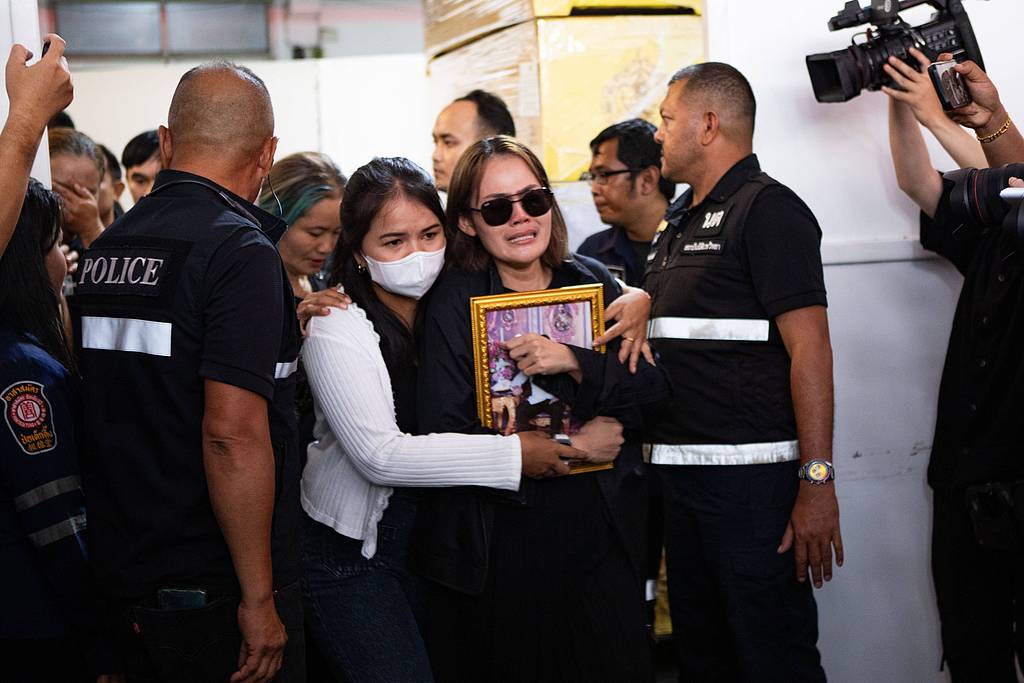
Family members of a teacher killed in a deadly shooting at Debsirin Nonthaburi School, react as they receive the body at Police General Hospital, Bangkok, Thailand, August 8, 2026. (Photos: VCG)
The death toll from a school shooting in Thailand rose to nine on Saturday, after police said a 12-year-old girl caught up in Friday's incident had died.
Police at the Plai Bang Police Station in Nonthaburi Province said the girl, who had been treated at hospital with critical wounds, had died on Saturday, a day after a 14-year-old boy allegedly shot his grandparents and then killed more people at his school before turning the gun on himself.
The 14-year-old suspect wounded more than 30 people in the shooting at Debsirin Nonthaburi School, located northwest of Bangkok. As of Saturday evening, 14 victims remained in hospital, including seven who were in critical condition.
As police are questioning witnesses as part of the investigation, including the suspect’s parents, more details about the suspect’s background and the circumstances surrounding the shooting have emerged.
The shooter had watched violent content online, police say
The teenager had been living with his grandparents for 12 years following his parents' separation, Atthapol Anusit, deputy commissioner of Provincial Police Region 1, said on Sunday.
The suspect used a gun belonging to his grandfather, firing at least 26 rounds and carrying an additional 34 rounds of ammunition.
"According to witness interviews, the perpetrator had begun showing interest in studying the use of firearms for some time, about one to two years," said Atthapol.
The police have so far interviewed 17 witnesses, and found a knife in the boy's bag and other evidence at the crime scenes included a firearm, spent cartridge cases and a personal computer.
"After examining the PC, it was found that the child had watched social media content involving violence," Atthapol said, but added there was no evidence yet that he had practiced shooting.
He said that last year a teacher had confiscated a BB gun, a type of air gun, that the boy took to school.
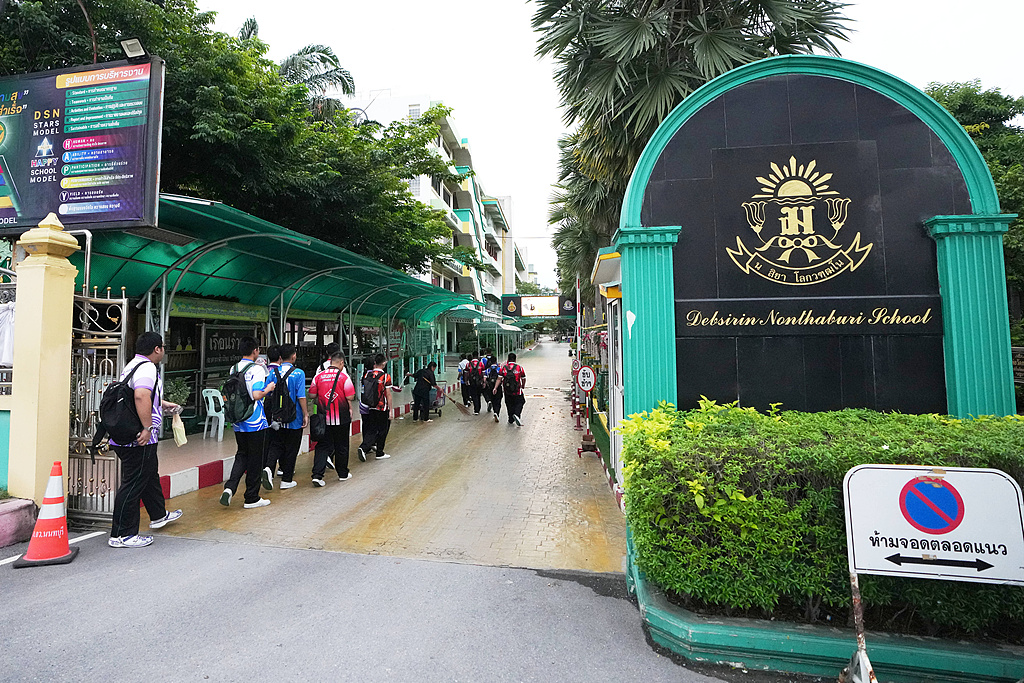
Students arrive at Debsirin Nonthaburi School, a day after the shooting, Thailand, August 8, 2026.
The Ministry of Education said it would develop new safety protocols over the next three months, including mental health screenings and a system to refer at-risk people to specialists, drills for emergency response plans, a drive to stamp out bullying and better detection to stop items from being taken into schools.
As Thailand's worst mass shooting since 2022, it has reignited debate over firearms control in Southeast Asia's largest gun-owning nation.
Thai PM vows new gun law after the shooting
Within hours of the shooting rampage, Thailand's Prime Minister Anutin Charnvirakul, who previously tightened gun laws when he was interior minister, vowed to introduce a new law to restrict the carrying of firearms by the public.
"The new law will only allow government officials on duty to carry guns," he told reporters on Friday, but did not provide any specifics for the envisaged legislation, including whether it will tighten gun ownership requirements.
Under Thai rules, there are separate licenses issued for owning and carrying firearms.
Thailand had an estimated 10.3 million firearms in civilian possession, equating to around 15 guns per 100 residents – the highest rate in the region by a wide margin, according to a 2017 estimate by the Small Arms Survey.
Of these, a little more than 6 million were registered firearms, with another 4 million comprising unregistered weapons, the Geneva-based group estimated.
Mass-shootings have also regularly occurred in Thailand, including incidents at schools, a major Bangkok mall and a 2022 killing spree in the country's northeast that killed 36 people including 22 children.
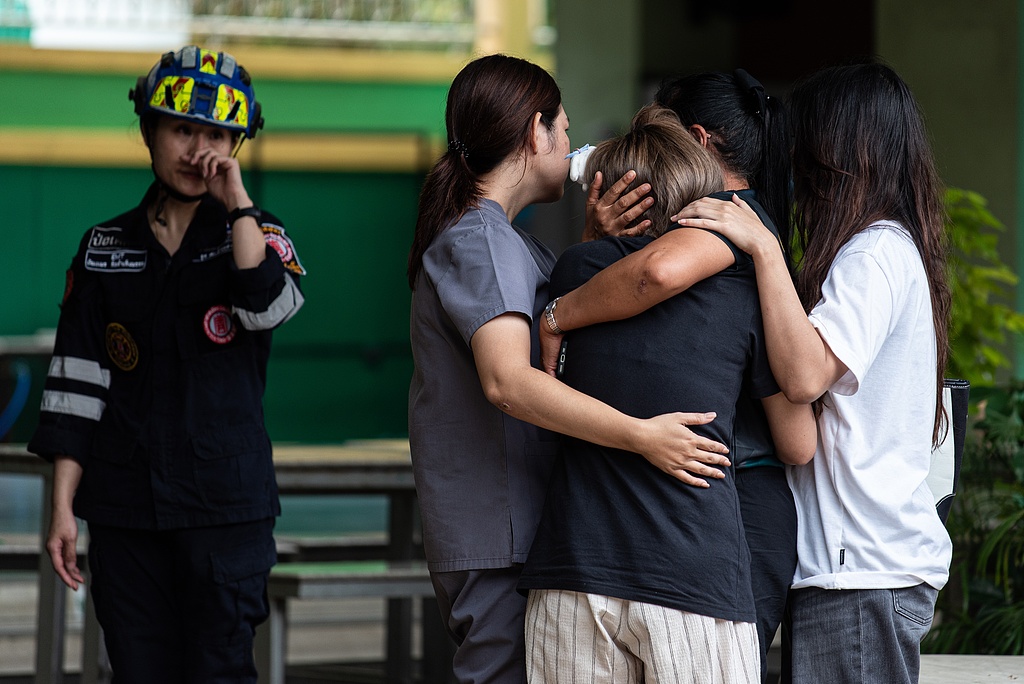
Relatives of the victims who were killed in the school mass shooting seen crying at the scene, Bangkok, Thailand, August 7, 2026.
Expert warns against loosening gun control measures
In the wake of an October 2023 shooting at a Bangkok mall, Anutin — then serving as interior minister – ordered a raft of gun control measures, including a short-term ban on new licenses, import restrictions, and the banning of people under 20 years old from shooting ranges.
Longer-term measures proposed included a medical certificate assessing the mental health and psychological condition of gun owners as well as a specified validity period for some gun licenses.
Thailand's current licensing regime still lacks mental health screening for people applying to possess a gun, allows people as young as 20 to hold weapons and does not require periodic reassessments for licence holders, said Piyaporn Tunneekul, an associate professor at Nakhon Pathom Rajabhat University.
"We only look at things like: Do you have money? Do you have a necessary reason to protect your property? Do you want it for self-defence? But in other countries, authorities say those are not good reasons," she told Reuters.
"We need intervention, a process like other countries have. There are red-flag laws abroad," Piyaporn said, referring to legal provisions that allow for the removal of a firearm from the environment of a person deemed at risk of harming themselves or others.
"So these events repeat, but the state does nothing."
(With input from agencies)