


WASHINGTON, Aug. 11 (Xinhua) -- U.S. President Donald Trump signed on Monday an executive order seeking to narrow the list of vaccines recommended for all American children, a move that has drawn sharp criticism from medical groups and public health experts.
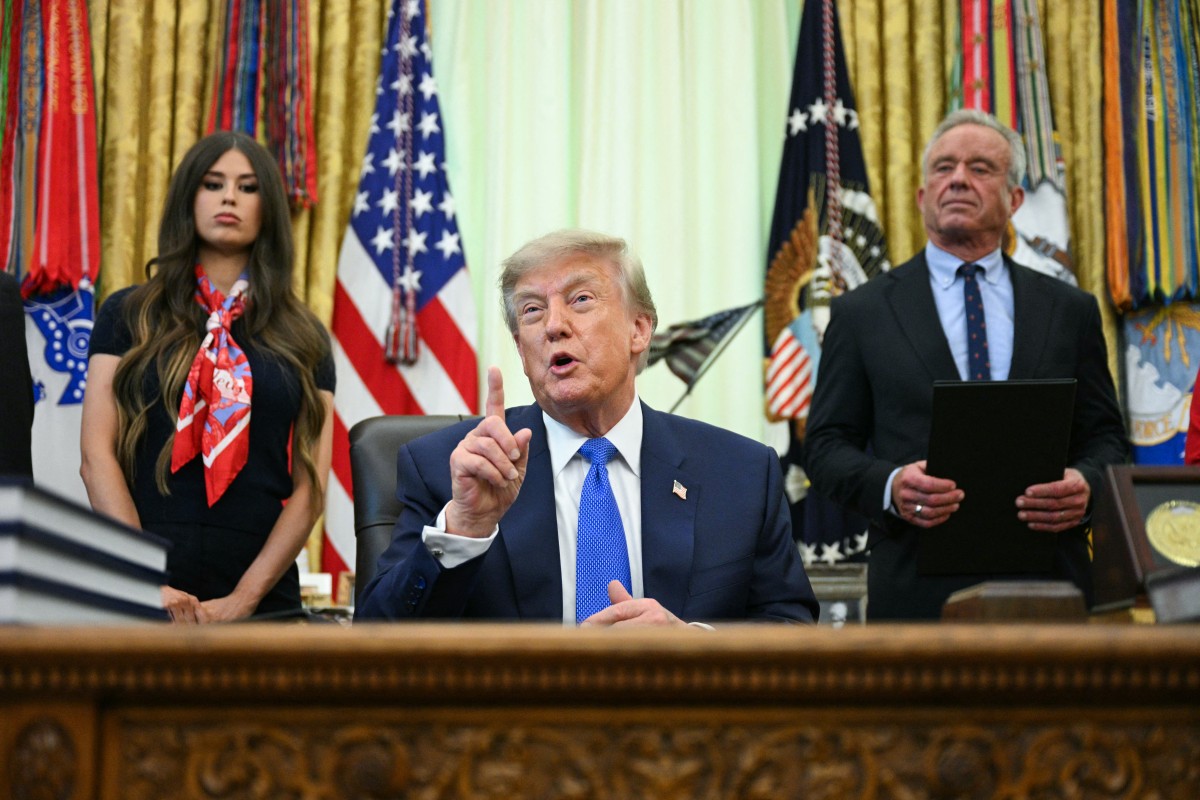
US President Donald Trump speaks after signing an executive order calling for more research and flexibility on vaccines, alongside US Secretary of Health and Human Services Robert F. Kennedy Jr. (R) and Jayme Leagh Franklin (L), founder of The Conservateur, in the Oval Office of the White House in Washington, DC, on August 10, 2026. (Photo: AFP)
The order established what the administration calls "Gold Standard Childhood Vaccine Recommendations," under which 11 vaccines, instead of the existing 18 recommended by the American Academy of Pediatrics, would be recommended for all children, while several others would be reserved for certain high-risk groups or recommended based on shared decision-making between parents and doctors.
WHAT IS CHANGING?
The 11 vaccines to remain recommended for all children include those against measles, mumps, rubella, diphtheria, tetanus, pertussis, polio, Haemophilus influenzae type B, pneumococcal disease, human papillomavirus and varicella.
Vaccines against respiratory syncytial virus, hepatitis A and B, meningococcal disease and dengue will instead be recommended for certain high-risk groups or populations. Vaccines against influenza, COVID-19, rotavirus, hepatitis A and B and meningococcal disease will, in some circumstances, be subject to "shared clinical decision-making."
The order also calls for childhood vaccines, "to the maximum extent feasible," to be administered at separate medical visits. It specifically directs the Department of Health and Human Services (HHS) to develop options for administering measles, mumps and rubella vaccines separately rather than as the combined shot.
The White House said the changes are based on scientific evidence, international comparisons and parental choice. It cited an HHS assessment that the United States currently recommends more childhood vaccines than its peer developed countries, with some European countries recommending less than half as many vaccine doses.
The administration argued that the United States should align its recommendations with "best practices" in comparable countries while giving parents greater choice. It also said many peer countries maintain high vaccination rates through public trust and education rather than mandates.
HHS Secretary Robert F. Kennedy Jr. has been a major force behind the effort to overhaul the vaccine schedule. Earlier this year, HHS attempted to remove several vaccines from the list recommended for all children, but the changes were blocked by a federal court.
WHY THE CONTROVERSY?
Medical organizations and public health experts said there is no new scientific evidence supporting the changes and warned that a narrower schedule and more vaccination visits could increase the risk of delayed or missed shots.
Trump has repeatedly questioned whether children receive too many vaccines and has linked the growing number of autism diagnoses in the United States to childhood vaccinations. At the signing ceremony, he again raised concerns about the number and timing of childhood shots.
"Decades ago, children received only a small fraction of the vaccines required today," Trump said. "In those times, people were much healthier, and of course, the high rates of autism now observed did not exist."
However, decades of research across countries have found no causal link between vaccines and autism. The American Academy of Pediatrics said more than 40 well-designed studies involving millions of children have examined the issue without finding such an association.
"There is no new evidence to justify significant changes to childhood immunization guidance. Dozens of studies involving millions of people show there is no link between vaccines and autism, and yet federal leaders continue to promote this outdated, disproven idea to scare families," Andrew Racine, the academy's president, said in a statement.
Jan Carney, president of the American College of Physicians, said in another statement that spreading vaccinations over more appointments could create additional burdens for families, including additional copays and more time away from work and school.
The proposed separation of the measles, mumps and rubella vaccine has drawn particular criticism. Merck, which manufactures the combined vaccine, said it is supported by decades of evidence and warned that separating the three components could result in delayed or missed immunizations.
Experts also disputed the administration's comparison with other developed countries, noting differences in disease burdens, population structures and health-care systems.
The controversy comes amid renewed measles outbreaks and declining childhood vaccination rates in the United States. As of Aug. 6, the United States had reported 2,465 confirmed measles cases in 2026, the highest annual total in 35 years, according to the U.S. Centers for Disease Control and Prevention. During the 2024-2025 school year, vaccination coverage among U.S. kindergartners declined for all routinely reported vaccines from the previous year, the center said.
Against this backdrop, public health experts warn that reducing the number of vaccines universally recommended for children could further undermine vaccination coverage and increase the risk of outbreaks of preventable diseases.