


BRASILIA, Aug. 12 (Xinhua) -- A top Brazilian official warned that a recently released U.S. government video claiming dominance over the Americas is an implicit threat to the sovereignty of Brazil and other regional countries.
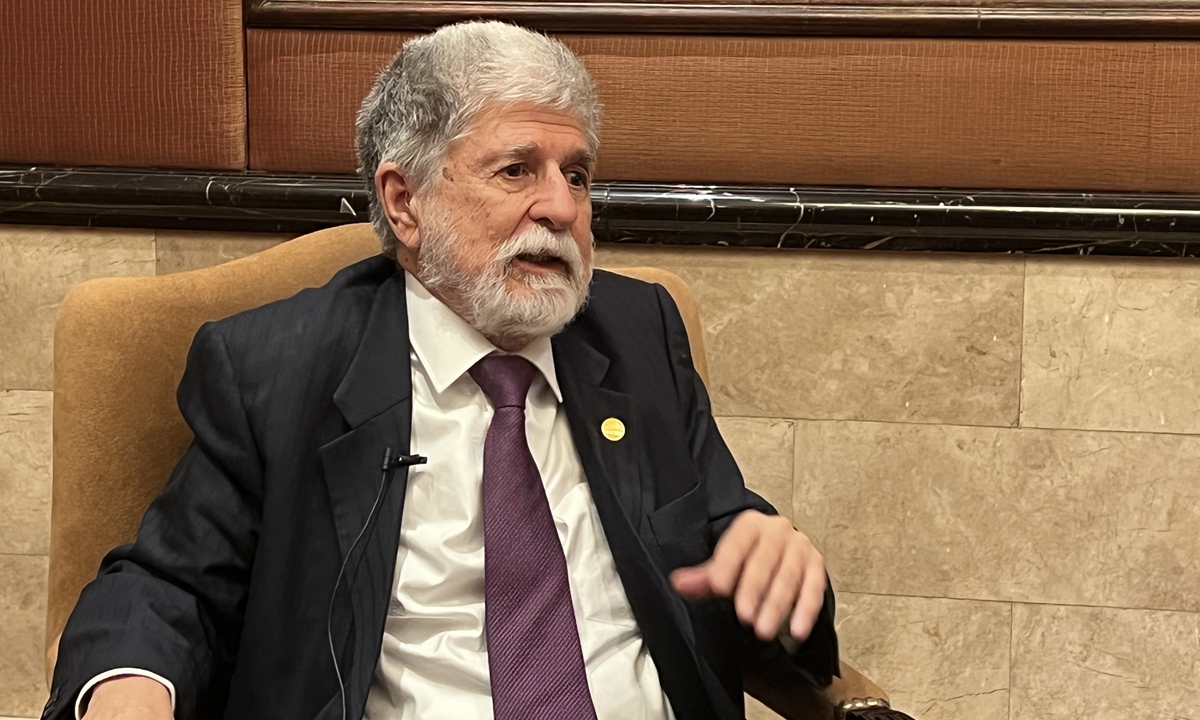
Celso Amorim, a top adviser to Brazilian President Lula (Photo: Global Times)
Celso Amorim, who is Brazilian President Luiz Inacio Lula da Silva's chief advisor on foreign policy, said the video, which touts the 200-year-old expansionist Monroe Doctrine as a guiding principle for present-day foreign affairs, trivializes his country's independence.
"Anyone who has seen the video that was released yesterday (Tuesday) by the State Department will see that what is being done is just to relativize the sovereignty of Latin American countries in general, including, of course, Brazil," Amorim told a committee of the Chamber of Deputies on Wednesday. "It is not specifically mentioned, but that's how it is."
The video praises the Monroe Doctrine and announces that "American dominance in the Western Hemisphere will never again be questioned."
According to Amorim, who twice served as foreign minister, the Trump administration is attempting to subordinate Latin America to U.S. interests.
"President Lula has been firm in reiterating that we will not accept unilateral measures used as a pretext to relativize national sovereignty or impose economic restrictions on our country," he said.
In a bid to safeguard the upcoming elections from foreign meddling, Brazil has decided not to grant diplomatic visas to foreign representatives from any country until October, Amorim said.
"The United States has been without an ambassador here for more than a year and a half since the ambassador of (Joe) Biden's government left. Suddenly, with the election approaching, they want to accredit another ambassador in a hurry without our consent," he said.
Amorim was invited by the chamber to comment on a U.S. decision to classify Brazilian criminal groups as terrorist organizations, among other matters.
The measure, he explained, must be understood within the current global and regional context, especially in light of actions taken by the United States.
"It can not be ignored that certain extreme interpretations of the classification as terrorist or narco-terrorist have already been used to justify military operations in other international contexts," he said.
The classification can be manipulated geopolitically to interfere in Brazil's internal affairs, said Amorim.