


SINGAPORE, Aug. 13 (Xinhua) -- "More than 80 years have passed, and only now are we beginning to realize how much Japan still hasn't told us," said Lim Shao Bin, a Singaporean historian who has spent decades tracing Japan's biological warfare activities in Southeast Asia, in a recent interview with Xinhua.
File photo: IC
As each new discovery serves as a reminder of how much remains undocumented, Lim said that filling those gaps would require broader international cooperation among governments and scholars -- not only to advance research across disciplines, but also to encourage the release of more historical records.
Since the 1980s, Lim has collected wartime Japanese documents from secondhand bookstores and government archives in Japan. Over the past decade, his research has focused on Unit 9420, a lesser-known biological warfare unit of the Japanese Imperial Army that operated in Southeast Asia.
Unit 9420 was built as part of Japan's broader biological warfare network, with personnel drawn from established units including Unit 731 in Harbin, and other units in Nanjing and the Japanese homeland.
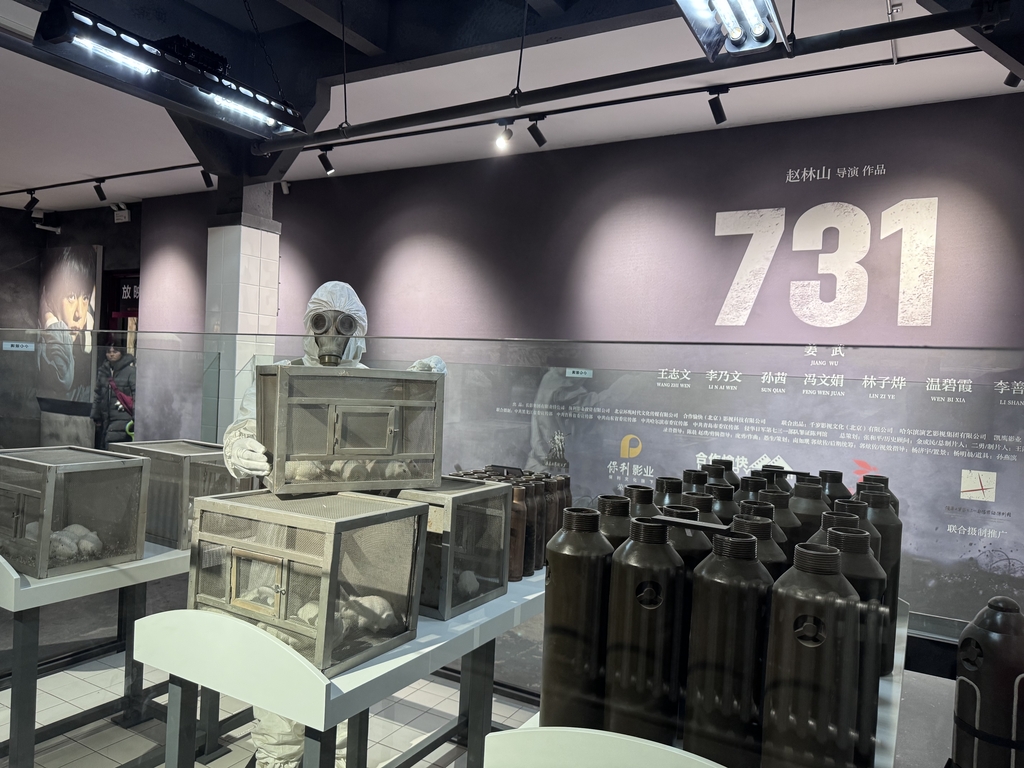
According to Lim, Unit 9420 "created an entire production line for germ bombs in Singapore and what is now Malaysia." Vegetables were cultivated to feed rats. Rats were bred to produce fleas. The fleas were then infected with plague bacteria before being packed into glass bombs and transported to battlefields.
Headquartered in Singapore, the unit maintained branches across present-day Malaysia, Indonesia, the Philippines, Thailand, Vietnam and Myanmar.
"The Japanese military came to Southeast Asia because the climate was ideal," Lim said. Japanese researchers had concluded that fleas reproduced most efficiently at temperatures between 27 and 30 degrees Celsius and humidity levels of around 90 percent.
Many of these findings appeared in "Oka 9420 Unit, Japanese South Army BW Troop," a book Lim co-authored with Chinese scholar Wang Xuan and published in 2025.
Yet new evidence has continued to emerge.
Among the most significant is a recently disclosed testimony preserved at Britain's National Archives from a former prisoner of war identified as W. B. Williams, which may offer new clues that British prisoners were also subjected to human experimentation.
Captured in Singapore in February 1942, Williams wrote that he and many other prisoners were vaccinated and inoculated. Blood samples were taken, and "a glass tube was inserted in the back passage."
Within days, he recalled, large numbers of prisoners, including himself, developed severe headaches, diarrhea, dysentery and abdominal symptoms.
According to his testimony, similar procedures were repeated three times over three years at different camps, each followed by the same symptoms.
"If that is not experiments, I don't know what else you call it," Williams wrote.
"Before this, we had not come across any records indicating that British nationals were also subjected to human experimentation," Lim said.
The possibility, however, did not come entirely as a surprise to Lim. In his 2025 book, he had already raised questions about whether Unit 9420 conducted human experiments on British nationals.
In June 1944, he noted, 17 British prisoners of war held in Singapore contracted scrub typhus -- a disease that was not endemic to Singapore at the time -- and three died.
Separately, a medical report produced by Unit 9420 recorded that military doctors had successfully isolated the related pathogen from wild rats and transported it back to "Syonan-to," the name used by Japan for occupied Singapore.
"The disease wasn't native here," Lim said. "It was brought in."
Lim also pointed to another unresolved chapter.
After Japan's surrender, the United States dispatched several teams to investigate Unit 731. The unit reportedly handed over roughly 8,000 pathology slides to the American side. But the materials were never disclosed to the public, nor were any war responsibility proceedings ever brought against members of the unit.
"International cooperation is essential," said Lim, noting that only coordinated efforts by governments and research institutions can encourage Japan, the United States and other countries to release additional archival materials.
"If it's only individual scholars or universities asking for disclosure, it's very difficult to make progress," he added.
For Lim, international cooperation extends beyond opening archives. Understanding the surviving evidence increasingly requires expertise from multiple disciplines.
He recalled discovering a 1942 inventory listing hundreds of chemical agents transferred from Unit 731 headquarters to Unit 9420 for six months of use. Every entry was recorded in Japanese katakana. "If you don't have specialists from that field, it's almost impossible to interpret."
"We need people from many different fields if we are to fully expose this historical malignancy," he said.
In June this year, Singapore's Channel NewsAsia released the documentary Inside Unit 731: Japan's Secret Human Experiments. Lim said many viewers in Singapore were shocked to learn that the country had been connected to Japan's biological warfare program.
"Many people assumed Unit 731 was only a story about China," he said. "Now that Singapore's broadcaster has told this history, audiences, including many in Europe and North America, are realizing that it involved much more."
For Lim, documenting the history of Unit 731 and its affiliated units is not simply an exercise in reconstructing the past. It is also about understanding the warning signs that precede future conflicts.
Japan's history of military expansion, he argued, demonstrates that preparations for war often begin years before open hostilities.
"The international community must remain vigilant," he said. "There should be more effective supervisory mechanisms for former aggressor states to prevent similar tragedies from happening again."