


Daylight turned to moonlight earlier than usual in Spain on Wednesday as the country witnessed its first total solar eclipse in more than a century, plunging it into eerie darkness in one of nature's greatest spectacles.
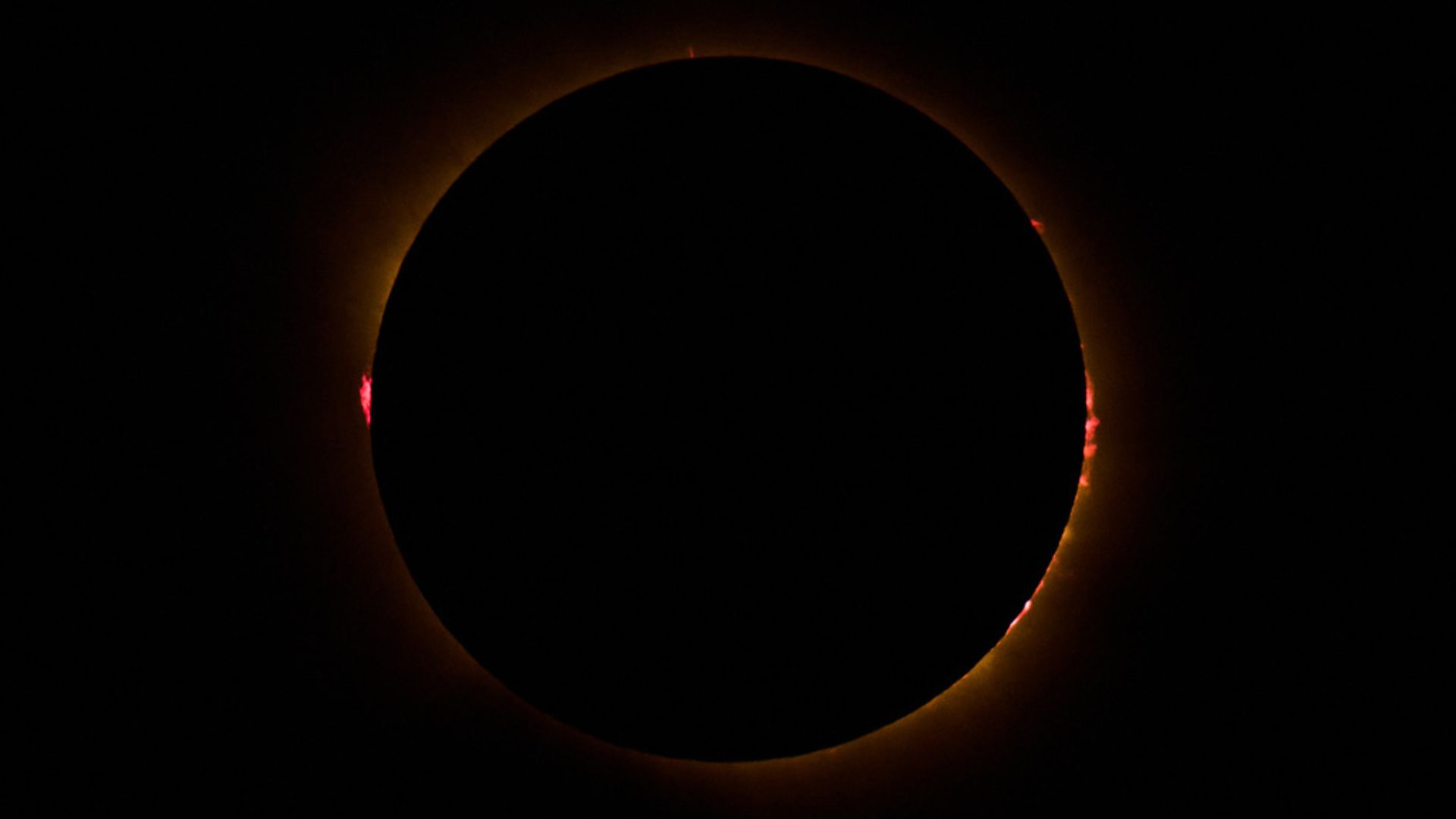
A total solar eclipse, as seen from Berlanga de Duero in central Spain. (Photo: AP)
The spectral glow of the Sun's outer corona, shimmering out of the edges of the shadowy Moon, drew gasps and cheers from huge crowds, just 90 minutes after it first appeared in the remote Arctic region of northern Russia.
"It's a sight I never would have imagined seeing," said Isabel Troyano, a 56-year-old homemaker, watching with her son in Tarragona, on Spain's Mediterranean coast. "I got goosebumps."
Alejandro Cuesta, a 30-year-old nanoscience researcher, called it "incredible... I almost burst into tears. I got chills all over my body," he said.
"It was magnificent... the most beautiful thing I've seen in my entire life."

Huge crowds gathered at London's famous viewpoint, Primrose Hill. (Photo: AP)
The eclipse – a first in mainland Europe since 2006 – cast its shadow through parts of Greenland, racing south to smother Keflavik, some 50 kilometers from Iceland's capital, Reykjavik, before arcing across the Atlantic Ocean towards northern Spain.
Reykjavik had not seen a total solar eclipse since 1433, with the next one not due until 2196.
In Spain, the lunar shadow moved diagonally in a narrow path from the northern coast and across to the Mediterranean Balearic Islands, where tourists and locals, many dressed in swimming costumes accessorized with protective glasses, gathered to watch on the beach.
Supplies of special viewing glasses were in high demand, as a partial eclipse was visible across Europe, as well as in Canada, the northern United States and northwest Africa.
On the summit of the Pic du Midi, in the French Pyrenees, heavy clouds parted minutes beforehand, allowing visitors to see the spectacle, which also drew crowds in London, Paris and across the continent.
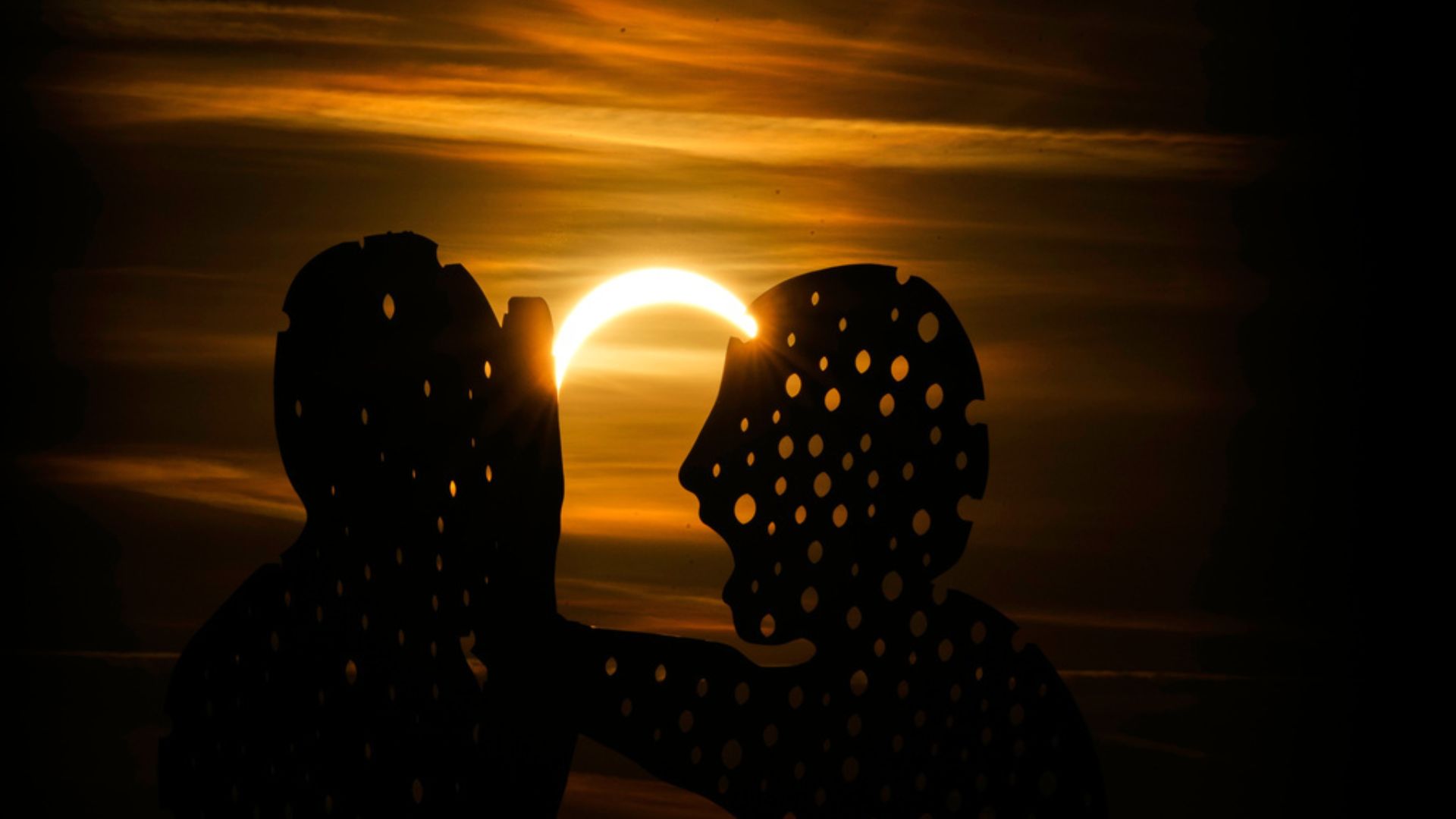
The Molecule Man sculpture in Berlin, Germany. (Photo: AP)
Throughout human history, eclipses have stirred amazement, fear and reverence, as they appear to momentarily halt the normal course of nature.
The shadow or "umbra" cast by the alignment of Sun and Moon creates a strange twilight during which temperatures drop, shadows appear at strange angles and some animals go to sleep.
But the phenomenon is fleeting, lasting just minutes, with the lunar shadow moving across the surface of the Earth at some 3,430 kilometers per hour, according to the Paris Observatory.
The partial eclipse – which occurs as the Moon starts and finishes crossing the Sun's path, dimming its light – lasted around one hour and 45 minutes.
The event, livestreamed by both NASA and the European Space Agency, presents scientists with a rare opportunity to study the Sun's atmosphere and its outermost layer, as they seek to uncover secrets about solar winds and our star's magnetic field.

People gather at a viewpoint to watch the eclipse in Portugal's capital city, Lisbon. (Photo: AP)
There were fears that rain could spoil the occasion in the Westfjords region of northwest Iceland.
But tens of thousands of tourists and locals were rewarded as the country – known for its rugged landscape of active volcanoes, lava fields, glaciers and the Northern Lights occasionally above – went dark.
Glenn Rosa, a 44-year-old retail manager from Houston, Texas, said he shed "a tear or two" when the darkness passed over Keflavik and its lighthouse.
"It was an amazing experience," he said, while Mylisha Lanegan, a 34-year-old teacher from Washington state in the United States, said it was "almost indescribable".
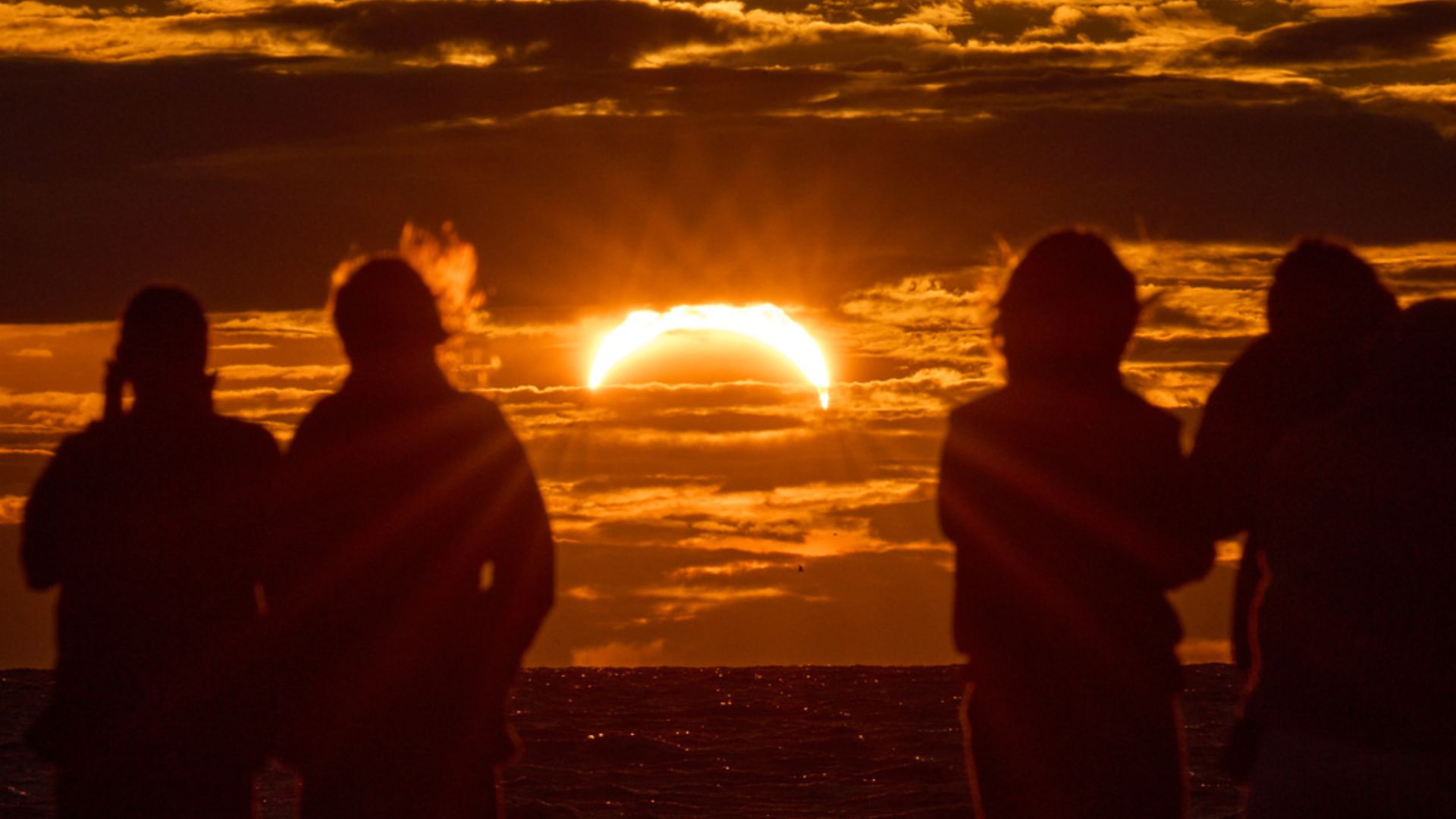
Watching on the shore of the Gulf of Finland in St. Petersburg, Russia – the first European country to witness the eclipse. (Photo: AP)
Clear skies helped visibility in Spain, although there were concerns due to high temperatures and the continued risk of wildfires.
Eclipse fever had gripped Spain, with government predictions that nearly 450,000 extra tourists could bring a $400 million boost to the economy.
Interior Minister Fernando Grande-Marlaska said nearly 25,000 police officers had been mobilized to ensure the event went off without a hitch.
"The path of totality is very narrow. It's only a couple of hundred kilometers wide," British astrophysicist and science communicator Graham Jones said from Fontanil de los Oteros in northern Spain.
"That's what's so special about Spain. The path of totality really goes across the Spanish peninsula."
Another total eclipse will cross southern Spain and northern Africa in August 2027, while an annular eclipse – when the Moon is not big enough to completely blot out the Sun, creating a so-called "ring of fire" – is due to visit the Iberian Peninsula in 2028.