


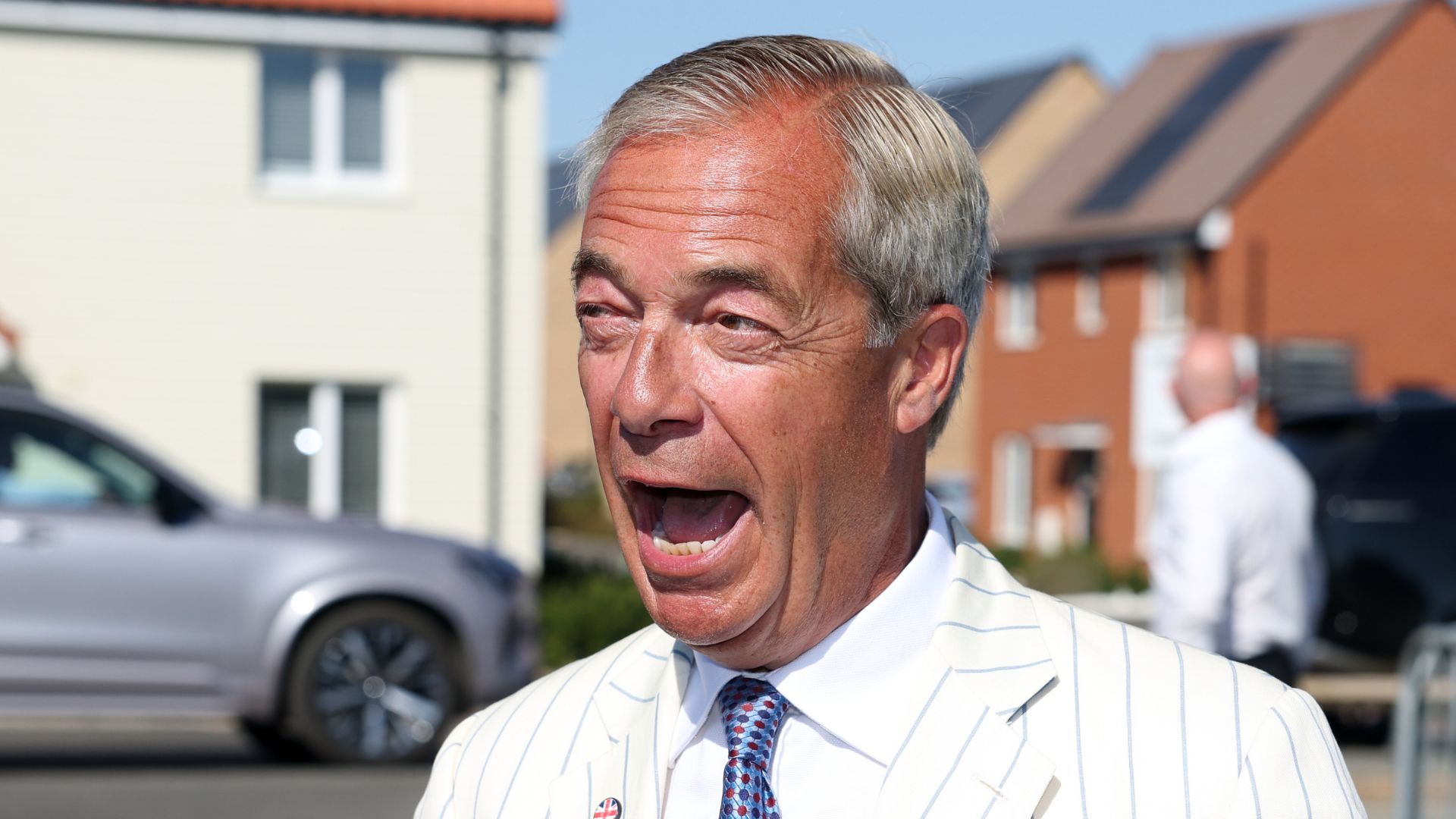
The Reform UK leader comfortably beat the dustbin-wearing comic candidate Count Binface to regain his parliamentary seat. (Photo: AP)
The UK's latest by-election in Clacton-on-Sea has shown one thing: for all the controversy surrounding him, Nigel Farage still has the support of voters in the coastal Essex constituency.
The Reform UK leader comfortably beat the bin-wearing comic candidate Count Binface to regain the parliamentary seat he quit just a month ago to trigger the widely mocked by-election.
Farage, who some see as a possible next prime minister, abruptly quit his seat in July amid an investigation into whether he failed to report a £5 million ($6.7 million) gift from a crypto billionaire overseas. He said he would contest the resulting by-election to prove that he still had the backing of voters.
On Thursday, they gave him their answer. Farage was backed by 63% of the voters – 22,239, more than 1,000 votes above the number he received when he was first elected to the seat two years ago. Count Binface, the alter ego of British comedian Jonathan Harvey, came second with about 27%.
Turnout among the potential 79,785 electorate was 44%, significantly below the nearly 60% recorded in the 2024 general election, when Farage faced a much stronger field of mainstream political candidates. The major political parties chose to boycott the contest, arguing that Farage's resignation had turned the election into little more than a stunt.
That left Binface, a serial candidate who has challenged prime ministers past and present, as the most prominent challenger among a wide but shallow field of 34. He received 9,455 votes, well clear of the third most popular candidate's 492 votes.
For Farage, however, the result was validation. He described it as an "overwhelming win" and said voters in Clacton had "stuck up two fingers to the entire political establishment".
But while the victory shows that Farage continues to enjoy strong support in his traditionally conservative constituency on England's east coast, it does not necessarily mean his return to Parliament is secure.
The parliamentary investigation that was suspended when he resigned has now resumed. Depending on its findings, Farage could be forced out of Parliament and face yet another by-election – this time not of his own volition.
So while the voters of Clacton have returned him to Westminster, the questions that prompted his resignation have not gone away.
A victory without the victory lap
Farage's return to Parliament was not accompanied by the usual scenes of a victorious candidate standing alongside his defeated opponents at the official count.
He declared his own victory in the early hours of Friday morning, but did not attend the formal declaration, where he would have been expected to stand on stage alongside the other candidates, many of whom had run joke campaigns.
"I'm damned if I'm going to stand on a stage, having won a resounding victory ... and be demeaned and humiliated by nobodies," he told supporters at a victory party.
Farage said he didn't attend because police told him about an "organized campaign to disrupt and degrade the result". A spokesperson for Reform said there was a credible threat against him, though police disputed that.
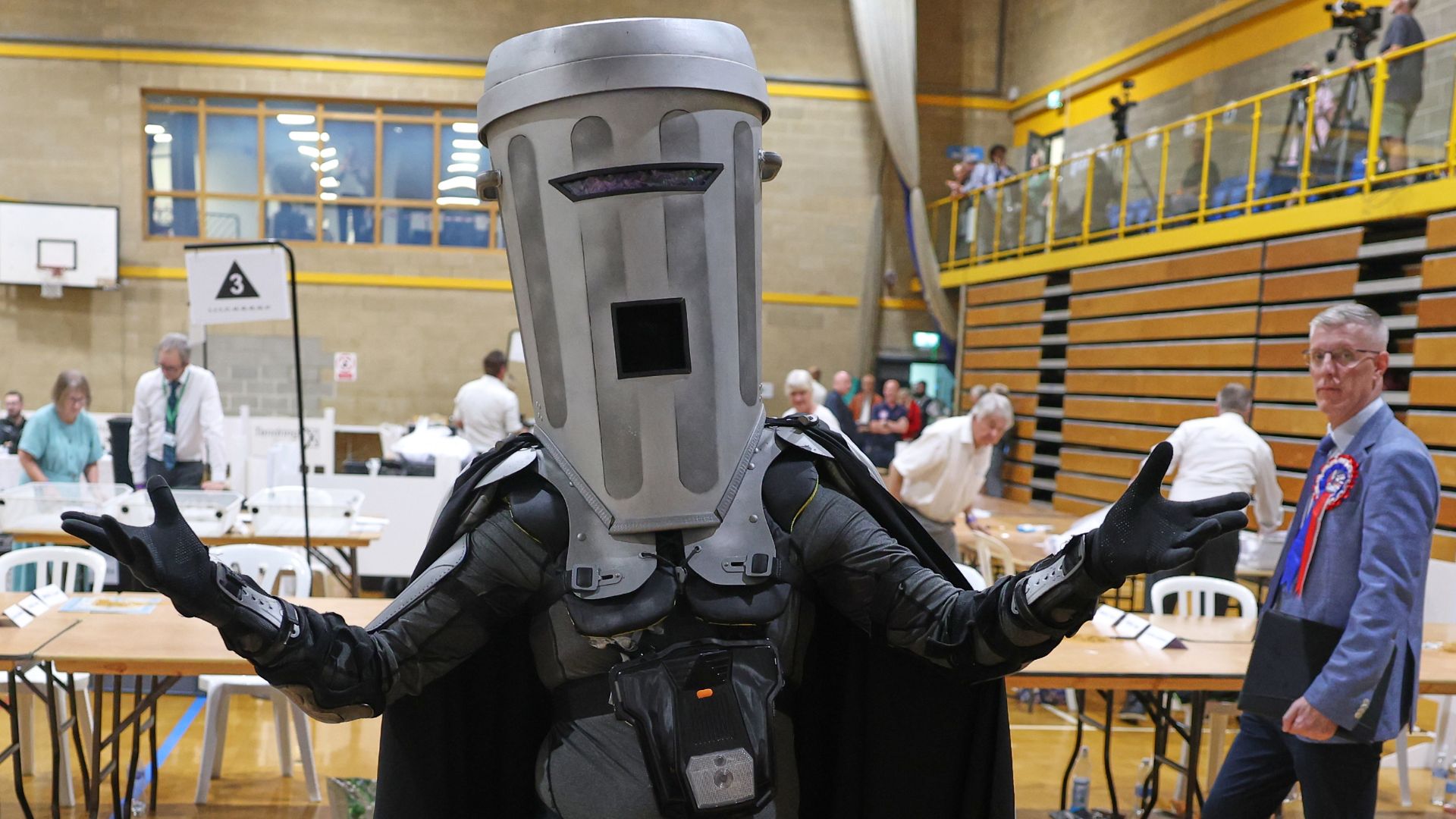
Behind Count Binface's jokes was a surprisingly strong electoral performance. (Photo: AP)
Enter Count Binface
If Farage's campaign was about proving his political relevance, Count Binface's was about reminding voters that Britain's electoral system allows for something rather less conventional.
The character, played by comedian Jonathan Harvey, ran on a platform that included promises to "cut your taxes, and raise everyone else's", to build one affordable home, and to nationalize singer Adele.
Yet behind the jokes was a surprisingly strong electoral performance. Binface secured about 27% of the vote, his best result to date and a dramatic improvement on the 95 votes he received just two months earlier, when he stood against now-Prime Minister Andy Burnham in another special election.
"So against Nigel Farage compared to Andy Burnham, I am 1,000 times more popular," he quipped. "Does that have anything to do with why he isn't here tonight?"
By securing more than 5% of the vote, Binface also earned back the £500 ($675) deposit required from candidates to contest an election.
His repeated candidacies, he said, were intended to highlight the peculiarities, and possibilities, of Britain's centuries-old democracy, where even the most high-profile politicians are above no one – including someone supposedly from outer space.
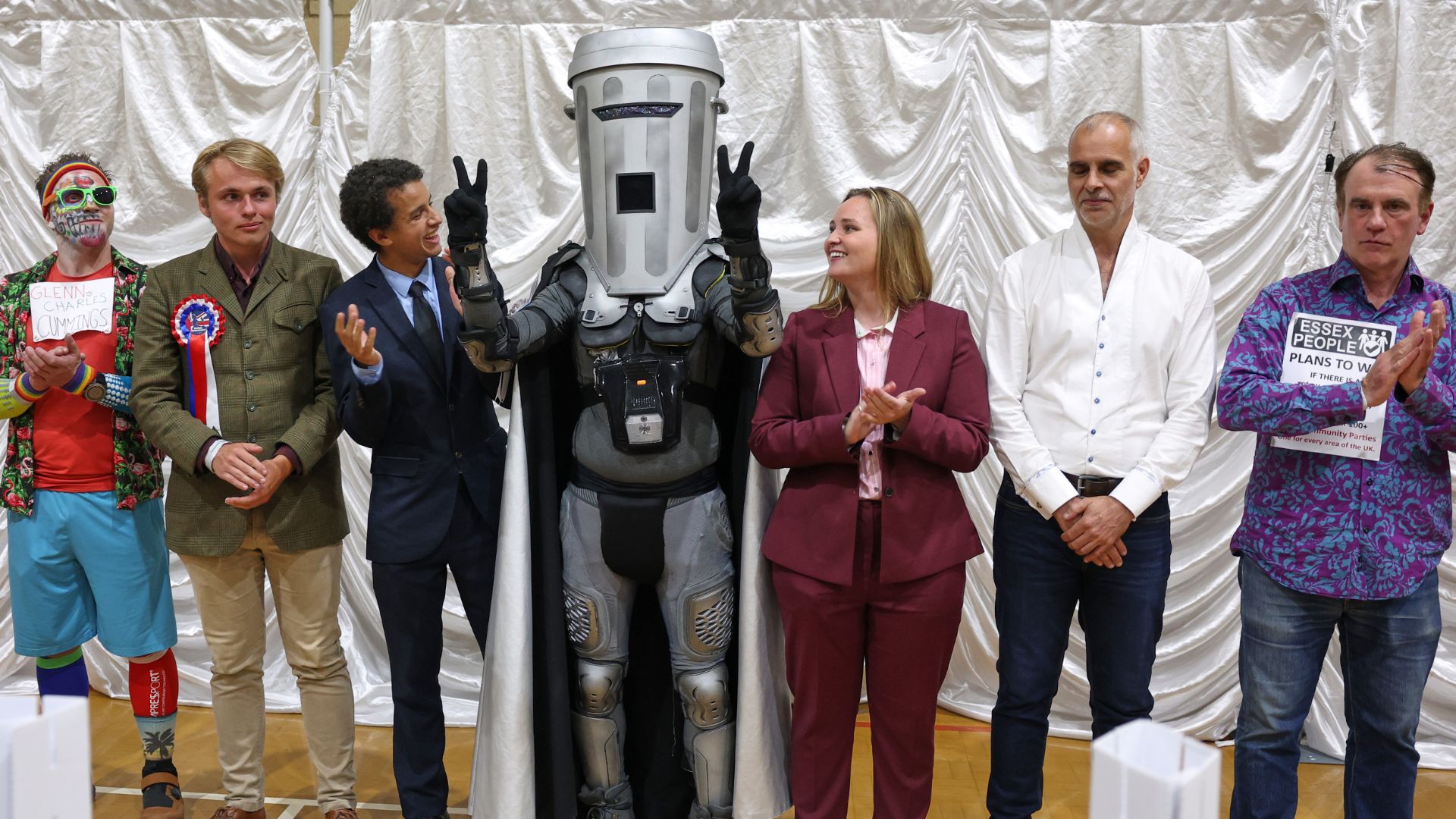
Farage did not attend the formal declaration, where he would have been expected to stand on stage alongside the other candidates, many of whom had run joke campaigns. (Photo: AP)
The questions Farage has not escaped
But behind the spectacle of a by-election fought between a political firebrand and a man dressed as a dustbin lies a much more serious question: What happens to Farage amid the ongoing investigations into his finances?
Labour Party chairwoman Bridget Phillipson dismissed the result as no victory for Farage, arguing that he still needs to answer questions about his finances and his relationship with a convicted fraudster.
"The mountain of sleaze and scandal he and Reform are now engulfed in has grown and grown while he's been trying to distract the public by fighting a by-election against a bin," Phillipson said. "Farage's distraction by-election doesn't clear his name – it just shows he likely has so much more to hide."
The parliamentary standards watchdog is investigating a payment Farage received in 2024 from Christopher Harborne, a Thailand-based cryptocurrency billionaire. Farage has argued that he did not need to declare the money because it was a personal gift, used to pay for his security, and was received before he became an MP.
The rules, however, require newly elected MPs to declare gifts worth more than $400 received during the previous year if they are connected to political activities. When he resigned on July 7, Farage described the scrutiny as an "establishment hit job" and a media-driven "witch-hunt".
The standards investigation was suspended when he resigned, but is now back in motion. If Farage is found to have broken parliamentary rules and suspended from the Commons for at least 10 sitting days, he could face another by-election.
Under Parliament’s recall rules, a petition would be opened in his constituency. If at least 10% of eligible voters signed it, Farage would lose his seat and a by-election would be held.
Farage also faces an investigation into his financial relationship with George Cottrell, an aristocratic crypto-gambling entrepreneur who served eight months in a US prison for fraud a decade ago after offering to launder money for undercover agents posing as drug traffickers. Cottrell, 32, remains close to Farage and has reportedly provided him with money for security and staff.
For a politician who has spent years positioning himself as an outsider battling the establishment, the continued questions over his finances represent a potentially serious political vulnerability.
Reform's wider gamble
The Clacton result nevertheless gives Farage something he badly needed: evidence that the controversy has not destroyed his support among voters.
Farage was one of the most prominent figures behind Britain's campaign to leave the European Union, and his Reform UK party has enjoyed strong national polling, although its numbers have slipped during months of scrutiny over his finances.
After several months of leading the opinion polls, Reform have now been overtaken by the ruling Labour party, boosted by new leader Burnham.
For Farage, the decision to resign and immediately seek re-election was therefore more than a personal gamble. It was an attempt to turn political scrutiny into a referendum on his own popularity.
For now, it has worked. The problem is that an election victory cannot necessarily settle questions being dealt with by Parliament's standards watchdog.
Farage may have proved that Clacton still wants him as its MP. He has not yet proved that the investigations into his conduct will find him guiltless.
And so, after a by-election that began as a political stunt, ended with a comfortable victory and featured a man dressed as a rubbish bin coming second, Farage returns to Westminster with the support of his voters - but with many of the same questions waiting for him when he gets there.