


SEOUL, Aug. 17 (Xinhua) -- South Korea will officially revive the pro-Japanese asset investigation committee after a 16-year hiatus, taking a decisive step to address unfinished business from its colonial past.
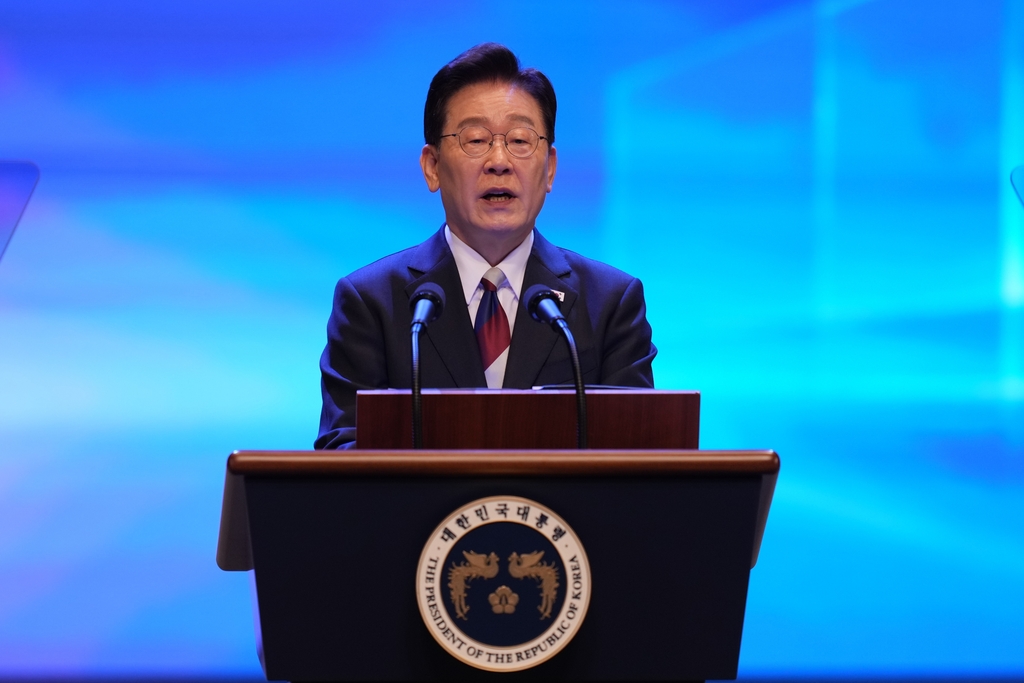
File photo: IC
South Korean President Lee Jae Myung said Saturday that his government will investigate and recover assets illicitly amassed by pro-Japanese, anti-national collaborators during Japan's colonial rule, and hold them fully accountable before history, as the special act on asset confiscation for pro-Japanese and anti-national collaborators was promulgated on June 2.
Lee made the remarks in an address to mark the 81st anniversary of the Korean Peninsula's liberation from the 1910-1945 Japanese colonial rule.
Under the special act, the pro-Japanese asset investigation committee was scheduled to be launched in December to track down and retroactively confiscate the hidden wealth of pro-Japanese collaborators.
Following the peninsula's liberation in 1945, efforts in South Korea to purge pro-Japanese collaborators faced severe political setbacks, most notably the dismantling of the special investigation committee for anti-national acts in 1949.
Fueled by persistent public demand for historical accountability, the first investigation committee was launched in July 2006 and operated for four years, only to designate 168 pro-Japanese collaborators and confiscate 2,359 parcels of land valued at 237.3 billion won (about 167.3 million U.S. dollars) based on market prices at the time.
Despite the historical significance of the committee resuming state-level efforts to liquidate the pro-Japanese legacy, its investigation focused heavily on traceable land assets, making it difficult to fully trace hidden financial assets or properties already liquidated and sold to third parties.
In addition, the government officially identified only about 1,000 people as pro-Japanese collaborators, much lower than the over 4,000 individuals designated by a prominent historical research NGO, the Center for Historical Truth and Justice.
Now, the newly promulgated legislation sought to close the loopholes by adopting aggressive asset-tracking mechanisms. If a pro-Japanese asset was already sold or transferred to third parties, the state can now legally track and confiscate the economic proceeds generated from the disposal.
The new investigation committee will operate for a maximum of five years with a new bounty system to grant bounty payouts to informants and whistleblowers who actively aid the state in discovering and recovering long-hidden pro-Japanese assets.
All recovered funds and liquidated proceeds will be prioritized for the welfare, livelihood stabilization and honorary support projects for Korean independence activists and their surviving families.
Public calls remained to broaden the scope of pro-Japanese collaborators subject to asset confiscation by amending the special act or revising enforcement decrees, as much of the concealed wealth tied to colonial-era collaboration will be legally untouchable without the legal updates.
Voice was also raised for a transition away from the traditional, analogue investigative methods toward an advanced, scientific tracking system by integrating artificial intelligence ontology technologies with local government land registries and whistleblower reward systems.