



The Third APEC Senior Officials' Meeting (SOM3) and related meetings are held in Dalian, northeast China's Liaoning Province, August 17, 2026. (Photos: VCG)
As the Third APEC Senior Officials' Meeting (SOM3) wraps its first week in Dalian, delegates from 21 economies are discussing digital innovation, food security and trade, laying key groundwork for the APEC Economic Leaders' Meeting in Shenzhen this November.
Under the official theme "Building an Asia-Pacific Community to Prosper Together," China has structured its host year around three priorities: openness, innovation and cooperation, with advancing the Free Trade Area of the Asia-Pacific (FTAAP) as a central focus following a commitment made at the APEC Ministers Responsible for Trade (MRT) Meeting in May in Suzhou.
The August 17-28 Dalian meetings bring together over 2,300 delegates from the APEC Secretariat, the APEC Business Advisory Council and the Pacific Economic Cooperation Council (PECC) across nearly 130 sessions. Policy recommendations on customs modernization, food security, energy transition, disaster risk reduction and anti-corruption cooperation will be submitted to ministers and leaders for formal endorsement ahead of the Shenzhen meeting.

The 43rd APEC Anti-Corruption and Transparency Experts' Working Group Meeting, part of the Third APEC Senior Officials' Meeting (SOM3) and related meetings, is held in Dalian, northeast China's Liaoning Province, August 17, 2026.
How international participants view APEC China 2026
The agenda has drawn broadly positive feedback from participating delegations.
"The challenges facing our region are becoming more interconnected, and so is APEC's response," said Eduardo Pedrosa, executive director of the APEC Secretariat. "The work taking place in Dalian helps economies solve practical problems together, from making supply chains more resilient to ensuring innovation and digital technologies support sustainable growth."
Delegates across parallel forums have also welcomed China's proposed priorities. At the concurrent APEC Customs Business Dialogue, delegates highlighted the importance of advancing digital customs governance and bolstering supply chain stability, noting such efforts bring greater certainty to regional trade.
"AI and digital transformation are practical tools for making cross-border trade more efficient, secure and predictable," said Francesco Urzua, undersecretary at Chile's Ministry of Agriculture, adding that Chile is advancing digital customs solutions to improve traceability and stands ready to align with regional standards.
Alongside the official agenda, a food security dialogue brought together nearly 150 representatives from government departments, business associations, research institutions and international organizations to discuss tech-driven innovation for regional resilience.
At the Senior Disaster Management Officials' Forum, representatives and experts discussed advancing early-warning systems and emergency management to help communities better prepare for natural hazards.
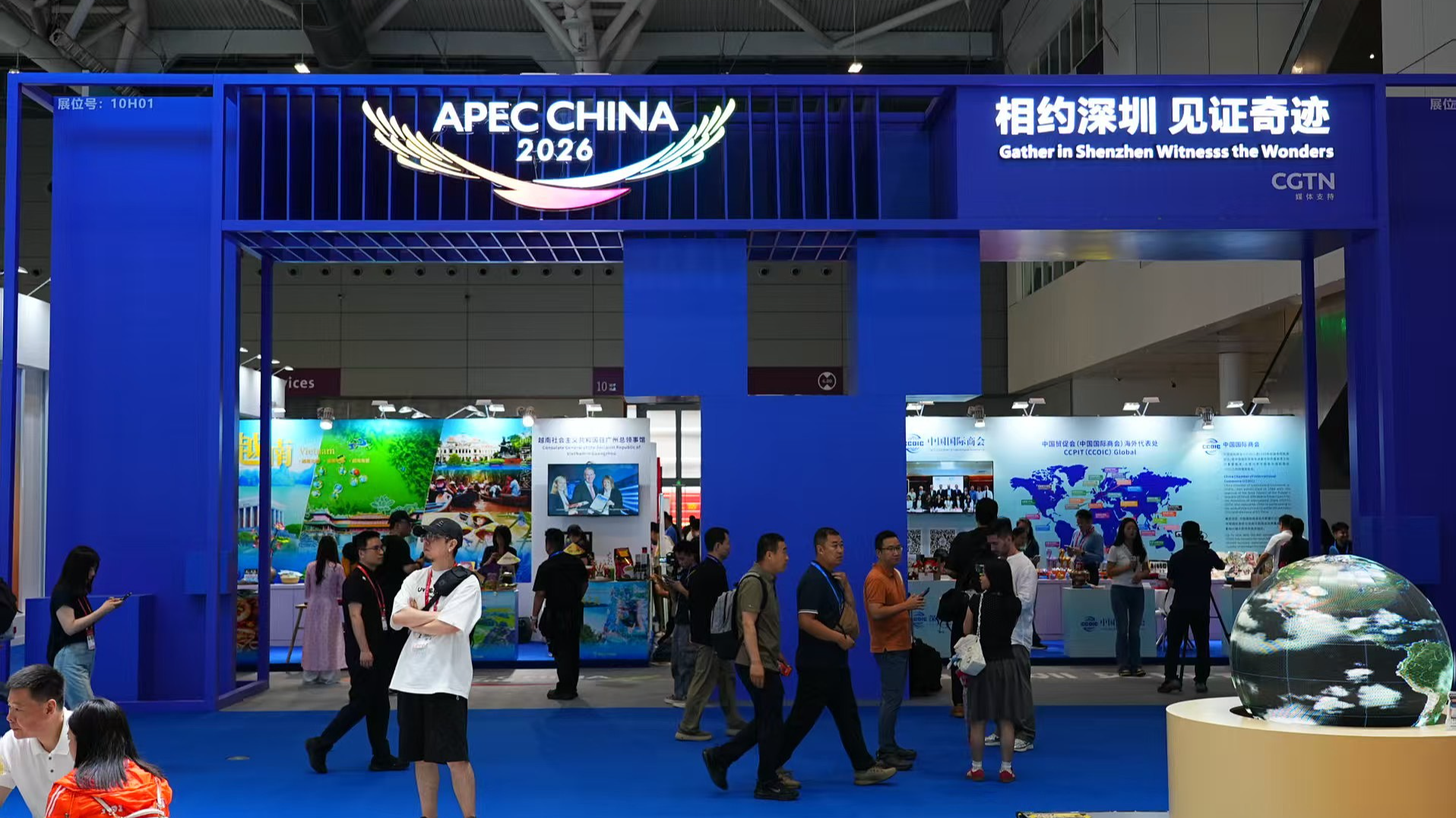
The China (Shenzhen) International Cultural Industries Fair features an APEC economies exhibition area for the first time in Shenzhen, south China's Guangdong Province, May 22, 2026.
Why cooperation matters in today's Asia-Pacific
Against a backdrop of slowing global growth, the emphasis on openness and innovation is designed to reactivate regional industrial and supply chains, support job creation and drive technological upgrading.
Beyond official diplomatic meetings, the APEC China Year agenda extends into cultural and creative exchange. In May, the 22nd China (Shenzhen) International Cultural Industries Fair featured a dedicated APEC Economies exhibition zone for the first time. With more than 200 AI enterprises and nearly 100 AI practical applications on show, the fair attracted 310 overseas exhibitors from 65 countries and regions, and drew more than 35,000 overseas visitors, serving as an informal platform for people-to-people and commercial exchange across the Asia-Pacific.
With ministerial meetings still to come before leaders gather in Shenzhen, outcomes from Dalian are expected to shape the next phase of APEC cooperation. The focus remains on translating dialogue into concrete initiatives that support inclusive growth and shared development.