


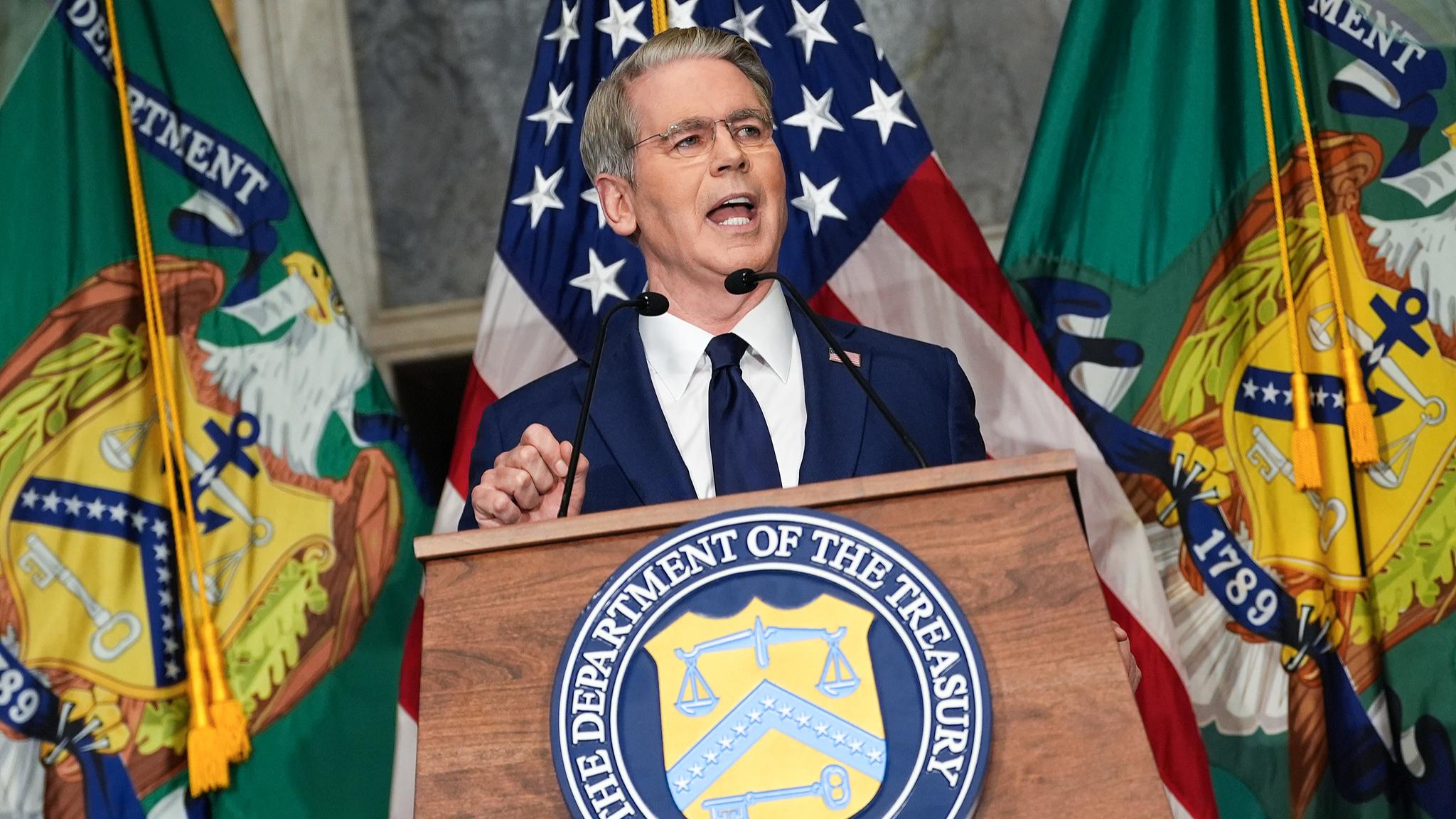
US Treasury Secretary Scott Bessent speaks at a news conference on the US economic campaign against Iran at the Treasury Department in Washington, DC, US, August 24, 2026. (Photo: VCG)
After six months of military threats and conflict, the United States have launched a large-scale campaign of economic pressure against Iran.
The new US sanctions against Iran extend beyond the financial and oil sectors, expanding secondary sanctions to five major areas – digital assets, gold, aviation, shipping and technology – and increasing time-bound pressure on third countries.
US Treasury Secretary Scott Bessent has also stated that the United States will launch the largest economic isolation campaign in history, demanding that countries choose sides in their trade relations with Iran.
Why is US shifting to economic war?
The primary reason the United States is imposing enormous military pressure on Iran is that it seeks both to maintain sustained pressure on Tehran and to escape the enormous costs generated by continued military conflict. On the one hand, the United States needs to maintain strong strategic pressure on Iran and sustain a high-pressure posture in the hope of forcing Tehran, under pressure, to seek dialogue with Washington and make concessions, thereby avoiding domestic criticism in the United States for ending the war in Iran too hastily.
On the other hand, six months of military conflict and intense direct confrontation have imposed strategic costs that are increasingly difficult for the United States to bear. US warfighting resources, air-defense missiles and strategic missiles are becoming insufficient to sustain high-intensity operations over the long term, and the United States can no longer rely solely on military means to force Iran to make concessions. Against this backdrop, shifting toward economic pressure to compel Iran to make concessions has become an increasingly important strategic option for Washington.
How will economic pressure be implemented?
The US shift toward economic pressure will broadly be implemented through three measures.
First, the US will maintain a maritime blockade of Iran. It will keep naval forces stationed around Iran and seek to intercept Iranian vessels, thereby disrupting Iran's economic links with the outside world.
Second, the US will impose sanctions on Iran in five areas – digital assets, technology, gold, aviation and shipping – while also targeting nuclear and missile technology procurement networks, cyberattack operations, oil revenues and the shadow fleet.
Third, the US will intensify pressure on Iran's trading partners, particularly its neighboring countries, forcing them to choose sides and thereby restricting Iran's ability to maintain economic ties with other countries through regional trade.
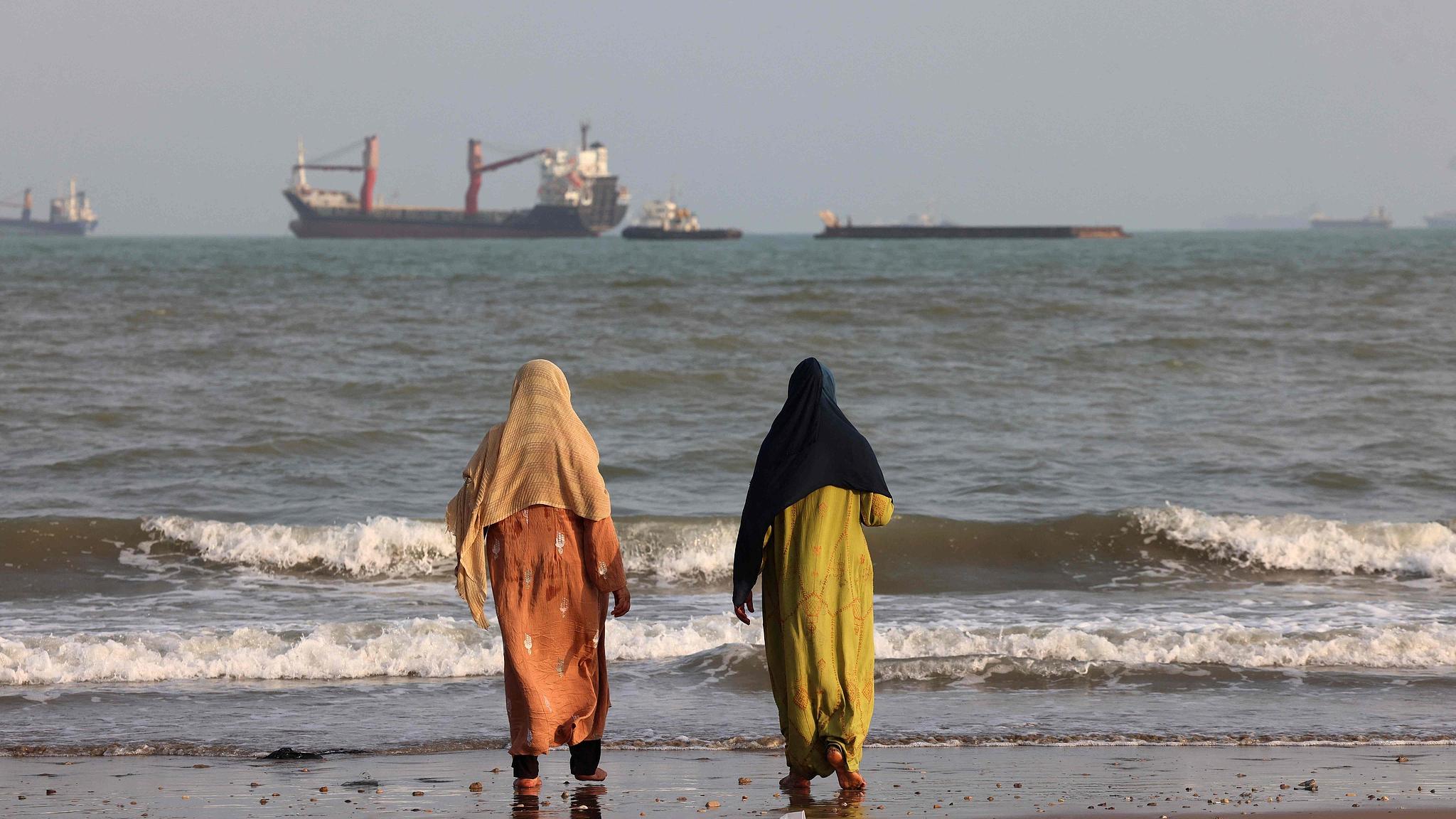
Vessels are seen in the Strait of Hormuz off Bandar Abbas, southern Iran, August 10, 2026. (Photo: VCG)
Can sanctions isolate Iran?
However, whether US sanctions can actually achieve their objectives remains subject to numerous challenges.
First, the US blockade of Iran has already lasted nearly six months. Although it has dealt a major blow to Iran's oil and natural gas exports, it has not succeeded in forcing Tehran to surrender. Iran's economy has suffered severe difficulties, but it has not reached the brink of collapse, nor have these difficulties developed into a major political crisis.
Second, the number of Iranian individuals and entities subject to US sanctions is already extremely large, making Iran the second-most-sanctioned state by the US. US economic sanctions and blockade measures against Iran have continued for decades, but they have likewise failed to force Tehran to capitulate in its bilateral relations with Washington. Therefore, the key factor determining whether US economic pressure will succeed may be whether Washington can force countries that maintain economic ties with Iran, particularly its neighbors, to cut their economic relations with Tehran.
For the US, however, it will be difficult to completely sever Iran's economic ties with these countries simply by forcing them to choose sides. Iran can continue to maintain its economic and trade networks with the rest of the world through its land borders with neighboring countries.
The Caucasus countries to Iran's north can serve as important channels connecting Iran with Russia, while Azerbaijan and Armenia will continue to play important roles as overland routes.
Türkiye, meanwhile, has long relied on imports of natural gas and oil from Iran and will find it difficult to sever its economic ties with Tehran in the short term.
Iran and Iraq share a long land border, and their extensive economic links will be difficult to completely cut off through unilateral US pressure.
To Iran's east, land routes through Pakistan and Afghanistan, as well as overland corridors through Central Asia to the northeast, can further extend Iran's economic networks to other parts of the world.
Therefore, it is neither realistic nor easy for the United States to unilaterally force Iran's trading partners to choose sides.
As the modern state system gradually matured during the 20th century, it became increasingly difficult to simply replicate the traditional methods of the 19th-century colonial era, in which military intimidation and economic pressure were used to achieve strategic objectives.
Historically, no country has ever been able to completely sever another country's economic ties with other states and with the rest of the world. Economic sanctions can have an impact in certain areas, but it is difficult to force another country to make major concessions solely through economic sanctions and military pressure.
For Iran, even under prolonged sanctions, it is unlikely to accept US demands easily and will continue to resist political pressure from Washington over the long term.
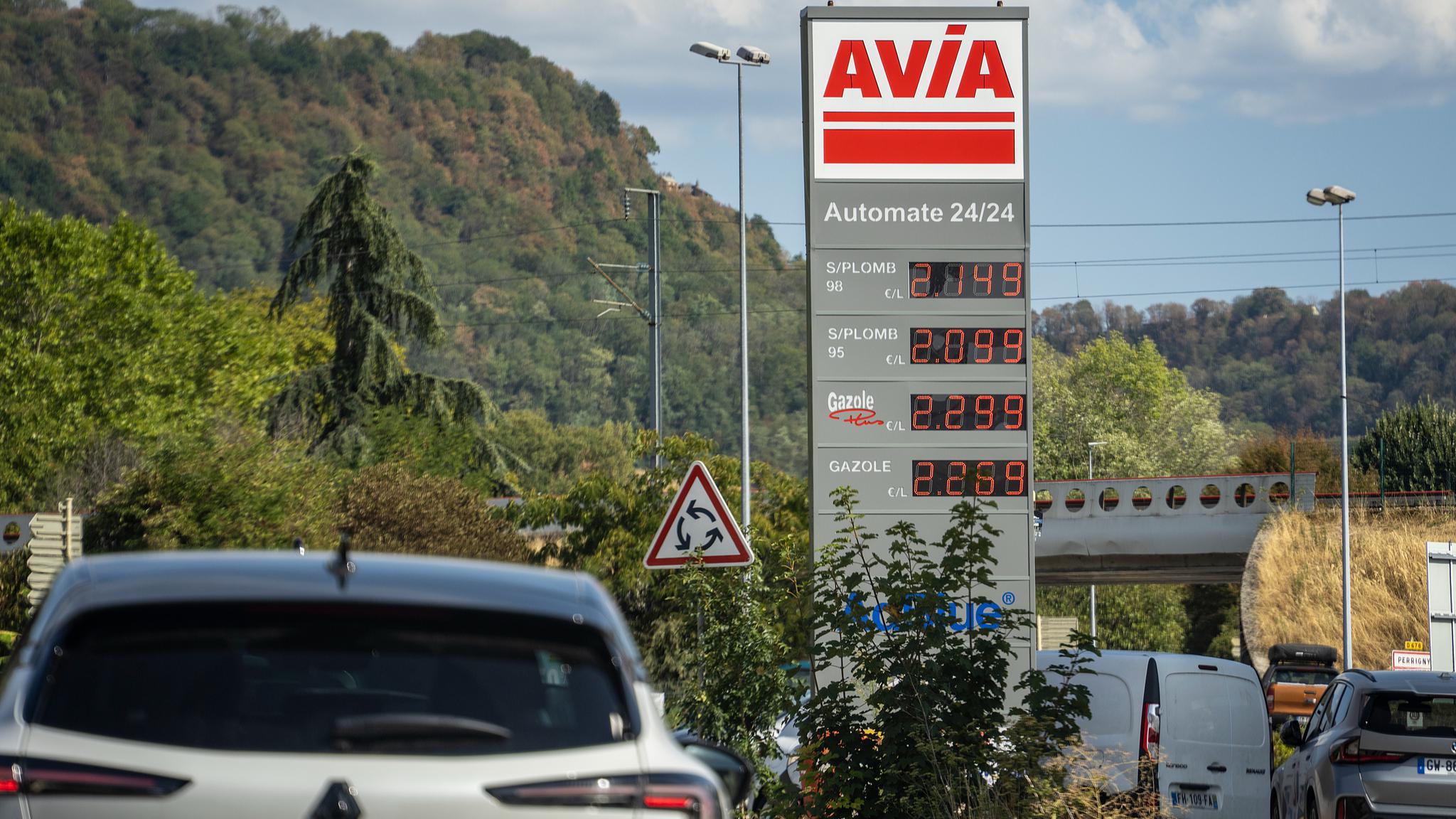
The electronic billboard of a gas station in Lons-le-Saunier, France, displays all fuel prices above 2 euros, which has climbed sharply amid the closure of the Strait of Hormuz, August 24, 2026. (Photo: VCG)
Who will bear the cost?
US pressure has already generated multiple challenges. The US itself will face inflationary pressure from rising crude oil prices, but it is not necessarily the country that will suffer the greatest losses. As the dominant power in the global economic system, the US can use the advantages of the dollar's international dominance to shift some of the strategic costs generated by the conflict onto other countries. Therefore, although sanctions will impose certain costs on the US, they are unlikely to cause severe and substantive damage to the US economy.
By contrast, US sanctions will have major repercussions for Iran, countries across the Middle East and developing countries around the world. First, for Iran, economic sanctions and the blockade will further worsen people's living conditions. Since the outbreak of the conflict between Iran and the US, Iran has been able to withstand US strategic pressure, but the Iranian currency has depreciated rapidly, prices have risen sharply and economic hardship among the population has continued to accumulate. As US pressure on Iran persists, Iran's domestic economic difficulties are likely to intensify further.
Second, for countries in the Middle East, continued US pressure on Iran means that regional tensions will remain prolonged. Energy exports, particularly energy production and exports by the Arab Gulf states, will face significant risks and uncertainty, while national economic development will also come under considerable threat. Finally, rising crude oil prices will drive up the prices of a range of petroleum, chemical and industrial products, thereby contributing to higher prices around the world.
For developing countries, this means greater fiscal pressure, rapidly rising living costs and an increased risk of poverty. Against this backdrop, the international community, particularly developing countries, will have little choice but to confront and bear the enormous costs generated by the conflict.
The costs of the US's military and economic war against Iran will ultimately be passed on to other countries. US allies in the Middle East, as well as allies such as Japan and South Korea, will inevitably face the ripple effects of higher international energy prices. Countries across the Middle East will confront greater hardship, economic pressure and conflict risks resulting from economic sanctions and trade blockades, while regional states will also have to cope with the resulting economic difficulties.
Overall, the economic war initiated by the US may ultimately be paid for by the rest of the world.
Wang Jin is the director of the Center for Strategic Studies at Northwest University, a special researcher for Beijing Club for International Dialogue and an expert on the Middle East.