


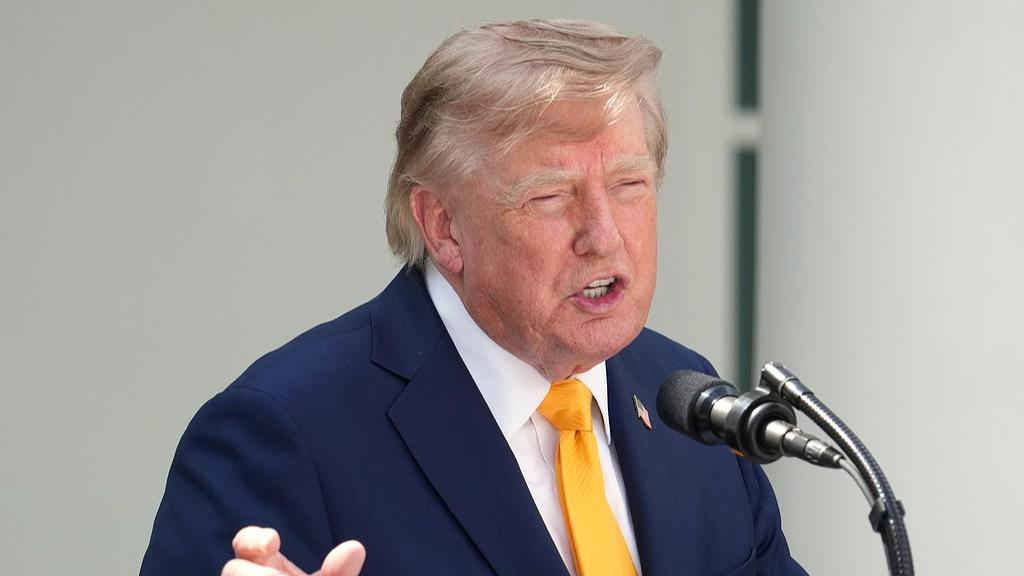
US President Donald Trump speaks during a back to school event in the Rose Garden of the White House, Washington, DC, August 24, 2026. /VCG
US President Donald Trump said on Tuesday that all mines in the international waters of the Strait of Hormuz have been removed or detonated, warning that any vessel placing new mines would be destroyed.
"I have just been informed by the United States Navy that all mines have been removed and/or detonated from within the International Waters of the Strait of Hormuz," Trump wrote on his Truth Social platform.
"Iran has been notified that any ship or boat placing new mines will be immediately and systematically destroyed," Trump wrote. "There is a Zero Tolerance policy on mine placement in full force and effect."
The US Space Force is "watching every square inch of the Strait," as well as Iran's Pickaxe Mountain and three other nuclear sites already destroyed by the United States, the president added.
Trump did not provide details on the mine-clearing operation or the number of mines removed or detonated.
Persian Gulf Strait Authority, the body Iran established to control maritime traffic in the Strait of Hormuz, announced on Sunday that vessels violating Iranian protocols for transiting the waterway will face restrictions on their future passages.
Trump's remarks came as Washington stepped up its economic pressure on Tehran while keeping the possibility of further military action on the table. The situation around the Strait of Hormuz remains highly volatile, with maritime traffic still severely disrupted and the two sides locked in a standoff over control and security of the strategic waterway.
Hegseth says US not ruling out military force against Iran
One day earlier, US Defense Secretary Pete Hegseth said that Washington was not ruling out using military force against Iran, even as the Trump administration unveiled an economic sanction plan against Tehran.
Hegseth said, after a speech to defense industry workers in Oshkosh, Wisconsin, that economic pressure was currently causing pain to Iran, while stressing that Washington was "by no means" ruling out military strikes "anywhere in the Strait of Hormuz or around Iran."
He warned that the US would respond if Iran "overplays their hand or messes with the American military," and called on defense contractors to "pivot to a wartime footing."
Hegseth also claimed that the US remained in control of the Strait of Hormuz, describing the blockade as "ironclad." He said Iran was unable to move oil through the strategic waterway, while the US retained the ability to safeguard commercial shipping.
Source: Iran conveys Hormuz conditions to US via Pakistan
Iran has conveyed its stance and conditions regarding the Strait of Hormuz to Pakistan for possible delivery to the US, Iran's semi-official Tasnim news agency reported on Tuesday, citing a source close to the Iranian negotiating team.
According to the source, Pakistan's army chief Asim Munir, who visited Iran on Monday, did not bring a threat or any similar message from Washington. Instead, his visit was aimed at helping create room for renewed negotiations.
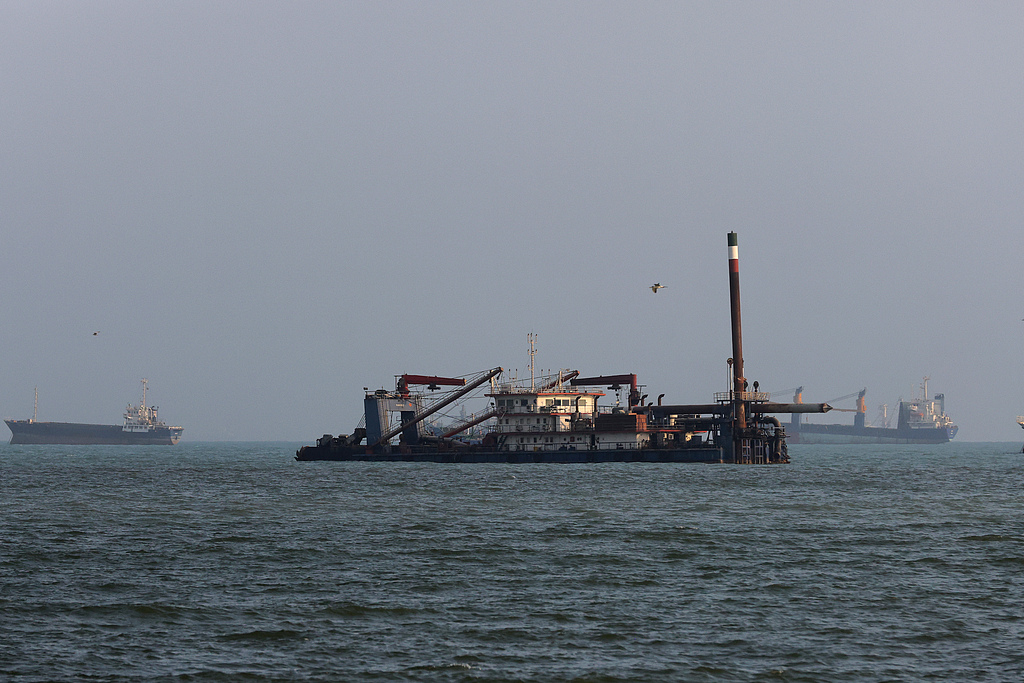
Ships are seen anchored in the Strait of Hormuz, August 10, 2026. /VCG
"Iran's positions were clearly conveyed to the Pakistani side," the source said.
Among Tehran's conditions, the source said, was a demand that the US return to the so-called Islamabad memorandum and implement its provisions. Pakistan was seeking to relay those conditions to Washington, according to Tasnim.
Iran, Oman discuss phased framework for temporary corridor in Hormuz Strait
Iran and Oman on Tuesday discussed a phased framework that includes setting up a temporary joint shipping corridor in the Strait of Hormuz and carrying out a joint project to demine the waterway, according to a joint statement issued by the two countries' foreign ministries.
The statement followed a visit to Tehran by Omani Foreign Minister Sayyid Badr bin Hamad Al Busaidi, who held "constructive" talks with his Iranian counterpart Seyed Abbas Araghchi on the resumption of safe navigation through the strait while respecting both countries' sovereignty and sovereign rights. The proposed framework was described as a "practical and operable basis" for further progress.
The two sides stressed the need for dialogue with other Persian Gulf countries and pledged to continue technical negotiations on a permanent shipping corridor, the future administration of the strait, and mechanisms for information exchange, traffic management and navigation and security services.
Separately, Iran's Tasnim news agency reported that Pakistani army chief Field Marshal Syed Asim Munir did not carry any message or threat from Washington during his Monday visit to Iran. Citing a source close to Iran's negotiating team, Tasnim said the visit sought to prepare the ground for Tehran-Washington talks and convey Iran's conditions and positions to the US.
Iranian attacks reportedly caused major damage to US intelligence sites
Iranian missile and drone strikes have damaged US intelligence sites and surveillance systems across the Middle East, potentially marking the most extensive losses ever suffered by American intelligence services, NBC News reported on Tuesday.
"Iran's missile and drone attacks have caused damage to American intelligence posts and surveillance facilities in the Middle East that surpasses any destruction suffered by American intelligence agencies," the report said.
The damaged infrastructure could require billions of dollars to repair, according to the sources.
Separately, the Financial Times reported on August 19 that Iran was considering possible strikes against US military facilities in Europe if Washington further escalated the conflict. Iranian forces were said to be assessing potential targets in southeastern European countries, particularly Bulgaria, while Cyprus, home to a British air base, was also reportedly under consideration.