


Gabes (People's Daily) - Tunisia laid the foundation stone for the Oncology Center at Gabes University Hospital on Sunday, marking a long-awaited health and humanitarian project for southern Tunisia.
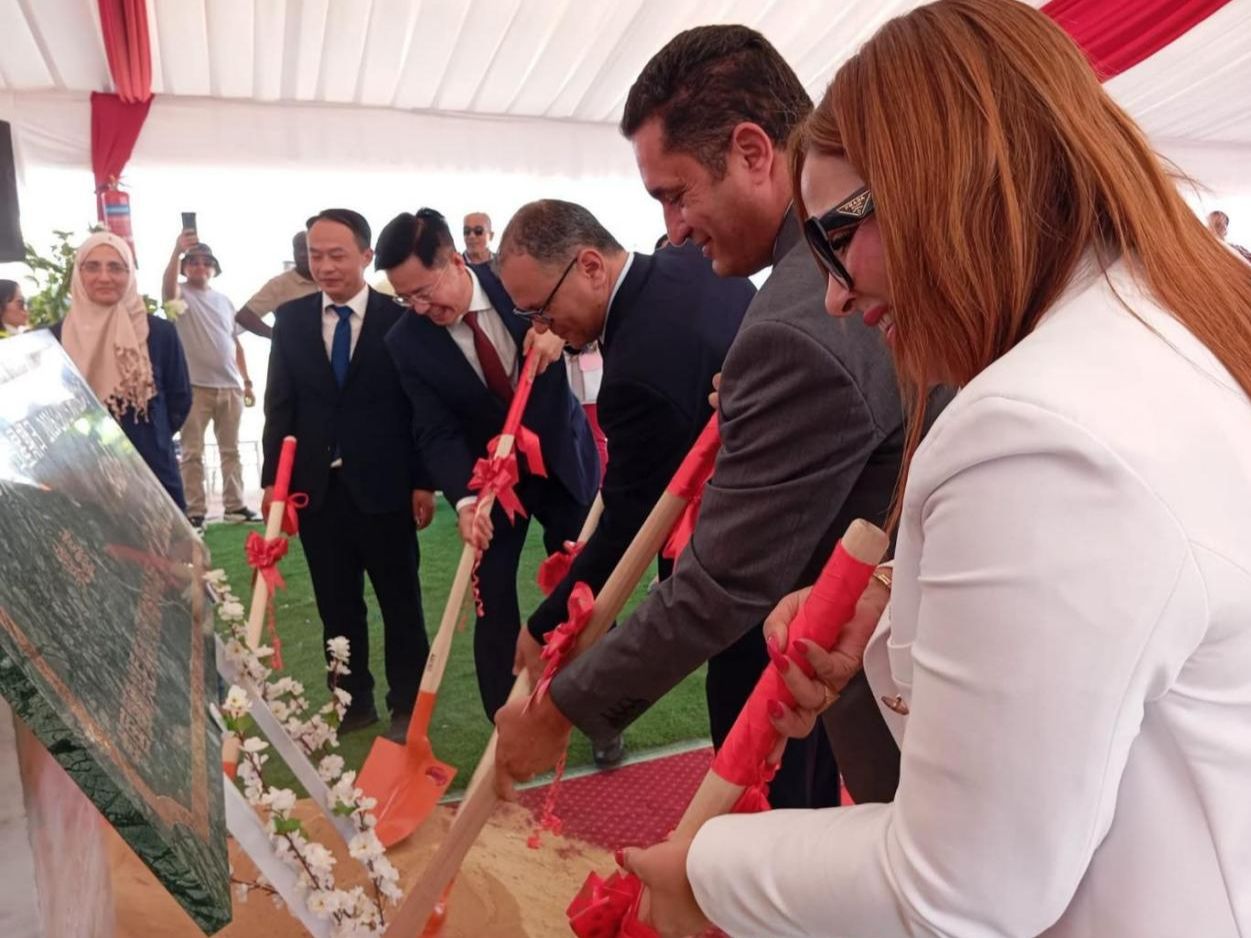
Tunisian and Chinese officials dig at the groundbreaking ceremony for the Gabes Oncology Center. (Photos byLeila Ben Atitallah)
Set to begin construction on August 31, the project is being carried out under a Tunisian-Chinese partnership aimed at upgrading health infrastructure and bringing specialized medical care closer to local residents.
The 33 million Tunisian dinar ($11.3 million) project is being funded through a grant from China to Tunisia. Slated for completion in 20 months, the center will occupy a 3,787-square-meter site, with a total built-up area of around 4,000 square meters.
The center will include a radiotherapy unit, a chemotherapy unit, a histopathology and cytology laboratory, inpatient facilities, a day hospital and a specialized oncology pharmacy, as well as outpatient clinics and supporting medical and technical spaces.
The project's significance lies in bringing key stages of cancer care together under one roof, from tissue diagnosis and tumor identification to radiotherapy, drug treatment and follow-up care. The day hospital will allow patients to receive treatments, particularly chemotherapy, without requiring lengthy hospital stays. The specialized pharmacy will help manage and dispense oncology medicines in accordance with safety and quality requirements.
The center is expected to strengthen the role of Gabes University Hospital as a regional oncology referral hub serving Gabes and other governorates in southern Tunisia.
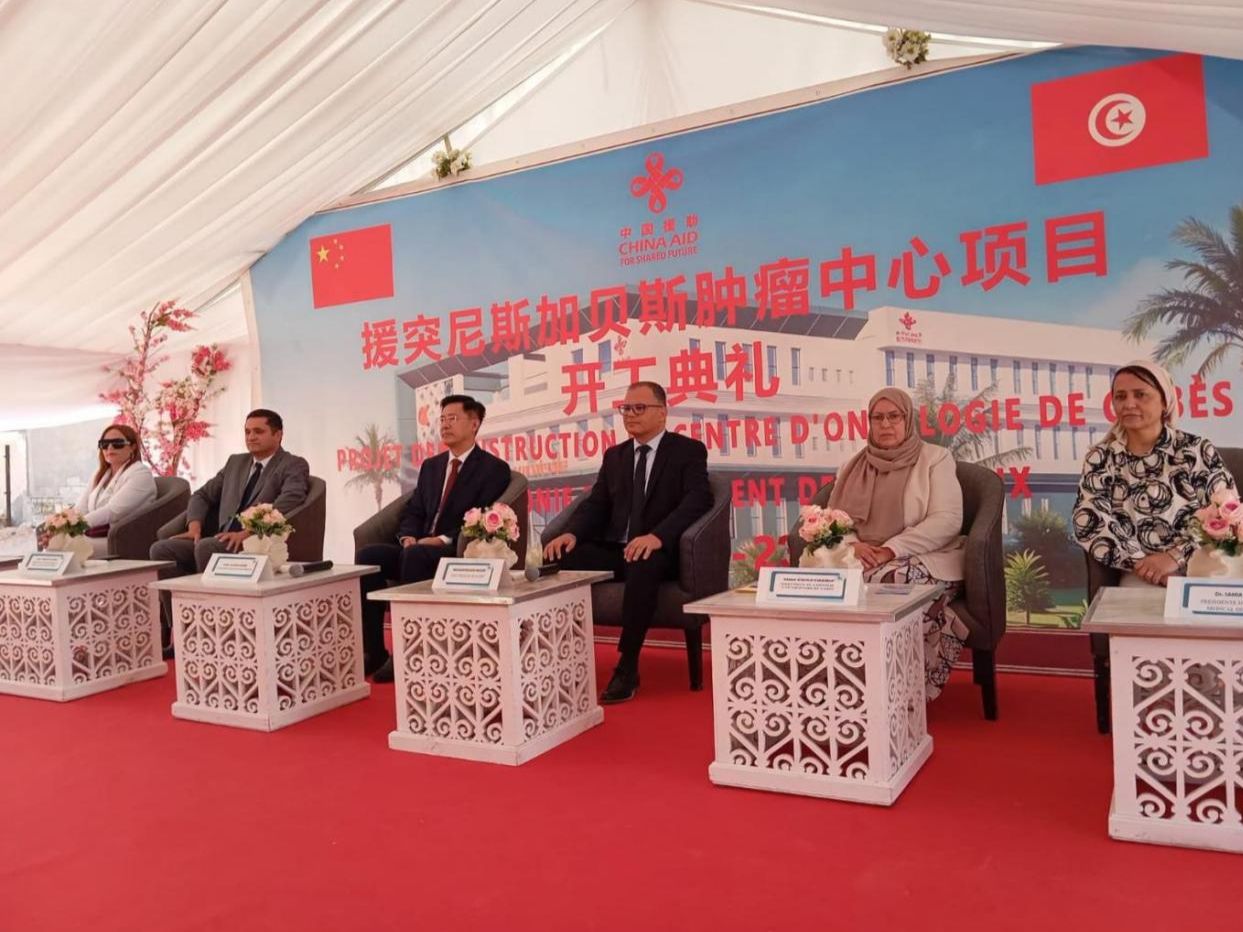
Doctors and officials attend the groundbreaking ceremony for the Gabes Oncology Center.
Dr. Narjess Annabi, regional director of health in Gabes, described the center as "a qualitative and historic step in the care of cancer patients in Gabes and southern Tunisia."
She said the project's central value lies in bringing treatment closer to patients. A radiotherapy unit will reduce the burden on patients who require repeated sessions.
"The fundamental message is that cancer patients in the south will no longer be forced, to the same extent as before, to travel hundreds of kilometers in search of treatment," she said.
Annabi also considers the project an important new stage in Tunisian-Chinese cooperation because it moves beyond equipment and technical assistance toward the construction of an integrated health project with a direct and lasting impact on local residents.
She noted that once construction is completed and the equipment installed, specialized technicians will train Tunisian medical teams to use the new equipment. This component will strengthen the project's sustainability, ensuring that the partnership rests not only on infrastructure, but also on the transfer of knowledge and skills.
Local residents see the project as a response to an urgent health and social need. Mohamed Saleh Mjaid, a Gabes resident, said that establishing the center "will contribute to developing public health services for cancer patients in Gabes and throughout southeastern Tunisia."
He noted that cancer patients in southern Tunisia previously had to travel to Sfax and Tunis for specialized cancer medicines and treatment. In his view, the new project "first reassures the people of the south and, second, demonstrates the growing level of trust between Tunisia and China." He added that it could strengthen hopes for expanding cooperation between the two countries into other fields, including energy.
For patients and their families, the center promises to bring specialized care closer, reduce travel and wait times, and improve access to treatment at a university hospital.
Annabi also expressed her gratitude to China, its government and people, and the Chinese teams and institutions that contributed to the project. She called the grant "a new humanitarian and civilizational bridge between the Tunisian and Chinese peoples."