


On the outskirts of Phoenix, a small town with a huge reliance on the Colorado River has capped growth, revived old wells and struck water deals.
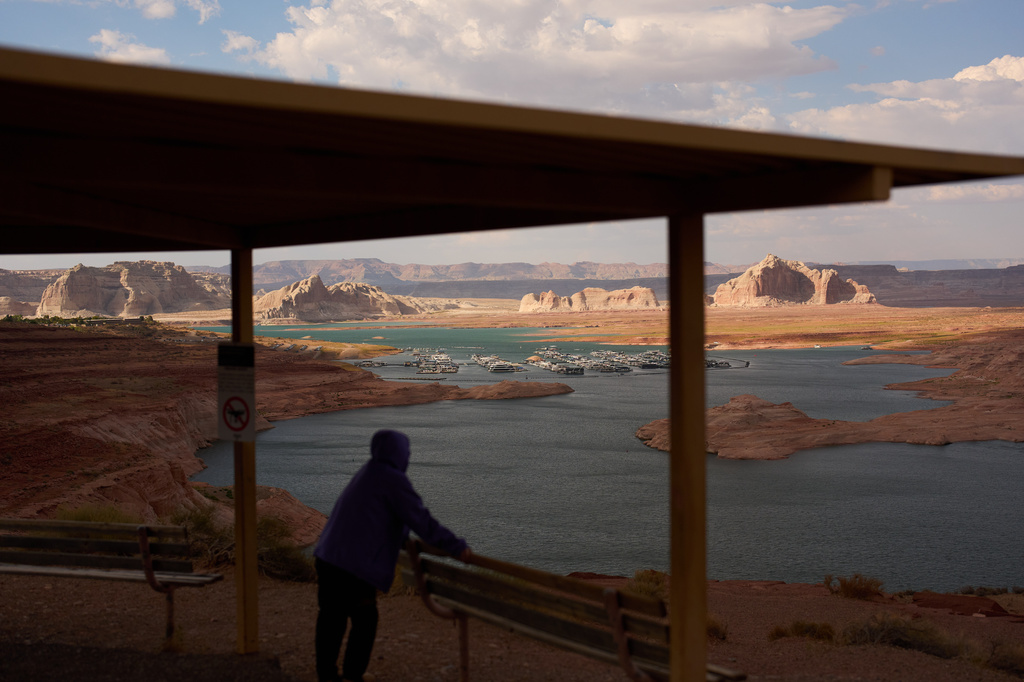
A person stands at an overlook near the Wahweap Marina on Lake Powell at the Glen Canyon National Recreation Area, July 15, 2026, near Page, Ariz. (Photo: AP)
But Cave Creek Mayor Robert Morris can't shake the real possibility that it's not enough to keep the desert community of about 5,000 people afloat well into the future. And a recent federal plan to address a deepening crisis in the river basin won't help.
Cave Creek gets nearly all of its water from the river, which serves 40 million people across the U.S. West and has been dwindling because of climate change, demand and overuse. The town already was forced to make cuts this year and it stands to lose more under a new federal plan.
Morris likened the situation to planning for a meteor strike.
“You can see it coming, but you can't get out of the way and you don't know what the damage is going to be,” he said.
The uncertainty stretches across seven U.S. states, tribal nations and Mexico. Farmers are deciding which crops are worth the investment. Phoenix could lose some municipal and industrial water for the first time and turn to backup supplies. And residents could face even more costly water.
Nevada raised the stakes this week by suing the Interior Department and the U.S. Bureau of Reclamation, saying basic needs in the Las Vegas region will go unmet if the area has to absorb planned reductions of up to 70% of its Colorado River water in the next decade.
The bureau said Thursday it does not comment on litigation.
“The uncertainty is going to continue to build in the wrong direction,” said Tom Buschatzke, director of the Arizona Department of Water Resources.