


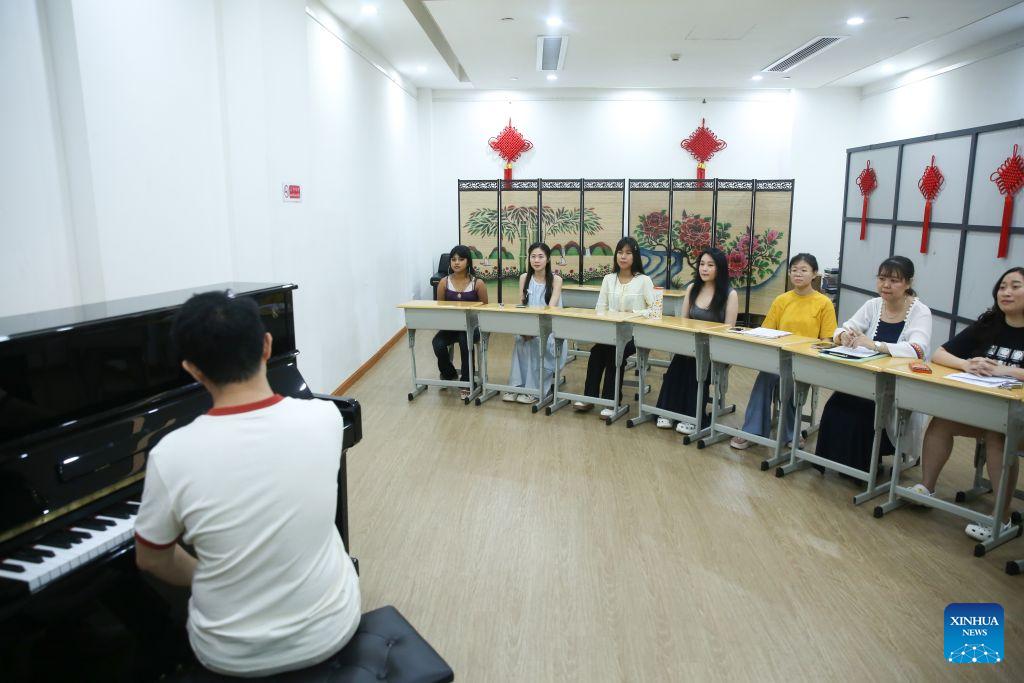
Local students attend a Chinese singing class at the China Cultural Center in Yangon, Aug. 28, 2026. (Xinhua/Myo Kyaw Soe)
YANGON, Aug. 30 (Xinhua) -- In a modest classroom in Yangon, voices rise not just in songs but in quiet connection -- weaving together two cultures through the simple, universal language of music.
Phyo Nyein Zaw has become a familiar figure at the China Cultural Center in Yangon, teaching singing lessons to nearly 40 students from different backgrounds over the past two years.
"Music is a universal language," he said in an interview. "Even if you don't understand the lyrics, you can feel the energy and emotion. It brings people together."
Born and raised in Yangon, Phyo Nyein Zaw developed a love for singing at an early age, inspired by his father, who has been singing for more than 40 years.
He studied Myanmar literature at university and began performing at temples in 2012. In 2018, he was selected through a singing competition held at the center to perform at a television station in Nanning in China's Guangxi Zhuang Autonomous Region.
That experience in China, he recalled, was a turning point. "It opened my eyes to how music can carry culture across borders," he said.
Now back in Myanmar, he teaches a growing number of students at the China Cultural Center. The singing course runs for over two months, with classes covering everything from breathing exercises and vocal registers -- including chest voice, head voice and mixed voice -- to music theory.
To keep students engaged, he weaves popular songs from social media platforms such as TikTok into his lessons.
"These songs often blend traditional Chinese elements with modern styles," he explained. "They help my students understand not only the music but also the culture behind it."
Among the 13 students in his current class is 16-year-old Aung Min Zaw, a local teenager who speaks Chinese but had never received formal vocal training before joining the class.
"I can speak Chinese, but I can't sing, so I joined the singing class," Aung Min Zaw said, adding that the techniques he has learned have transformed the way he performs.
For Aung Min Zaw, the class is more than just music. "We have a lot of fun during the training because we meet people from different backgrounds. We cheer for each other while learning," he said.
The events and classes held at the center offer a glimpse into cultural exchange between Myanmar and China. Visitors include Myanmar locals as well as members of the Chinese community. Teachers and students from the National University of Arts and Culture also frequently visit the center. Together, they share stories, compare musical traditions and discuss ideas for future cultural collaborations.
"Sometimes we talk about how we can work together to create something new between artists from the two countries," the teacher said with a smile.
Looking ahead, he hopes to train students who will not only sing well themselves but also go on to teach others. "I want to share what I've learned and help more people become vocal coaches," he said. "That way, the bridge between our two countries will only grow stronger.
For now, in his classroom in Yangon, the sound of voices rising in harmony is a reminder that music knows no borders, and that one teacher's passion can echo far beyond the walls of a single room.
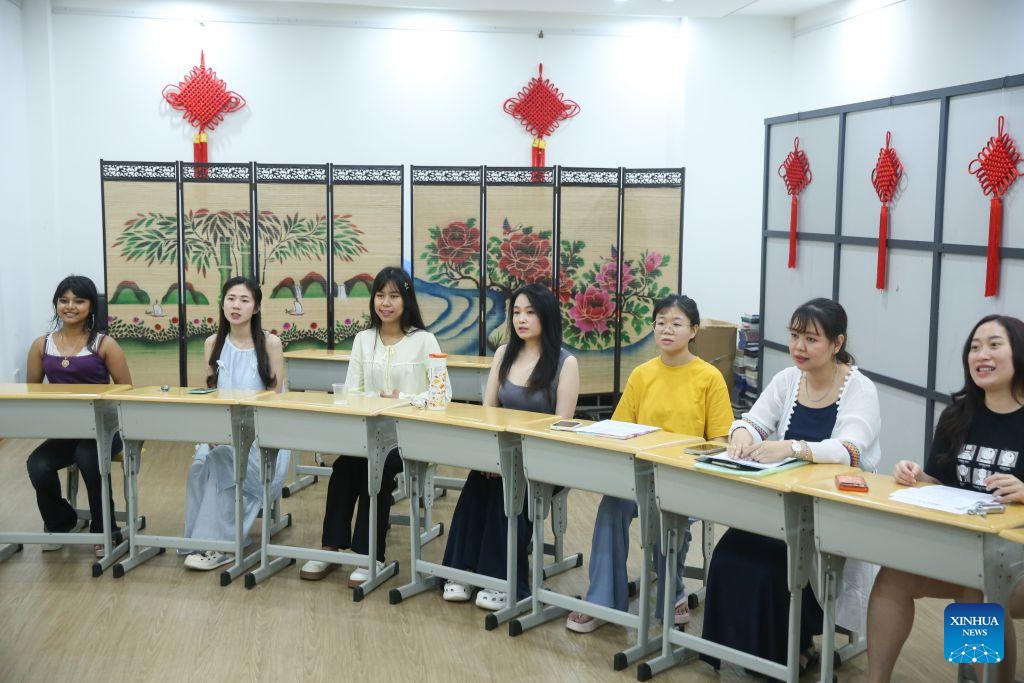
Local students attend a Chinese singing class at the China Cultural Center in Yangon, Aug. 28, 2026. (Xinhua/Myo Kyaw Soe)