


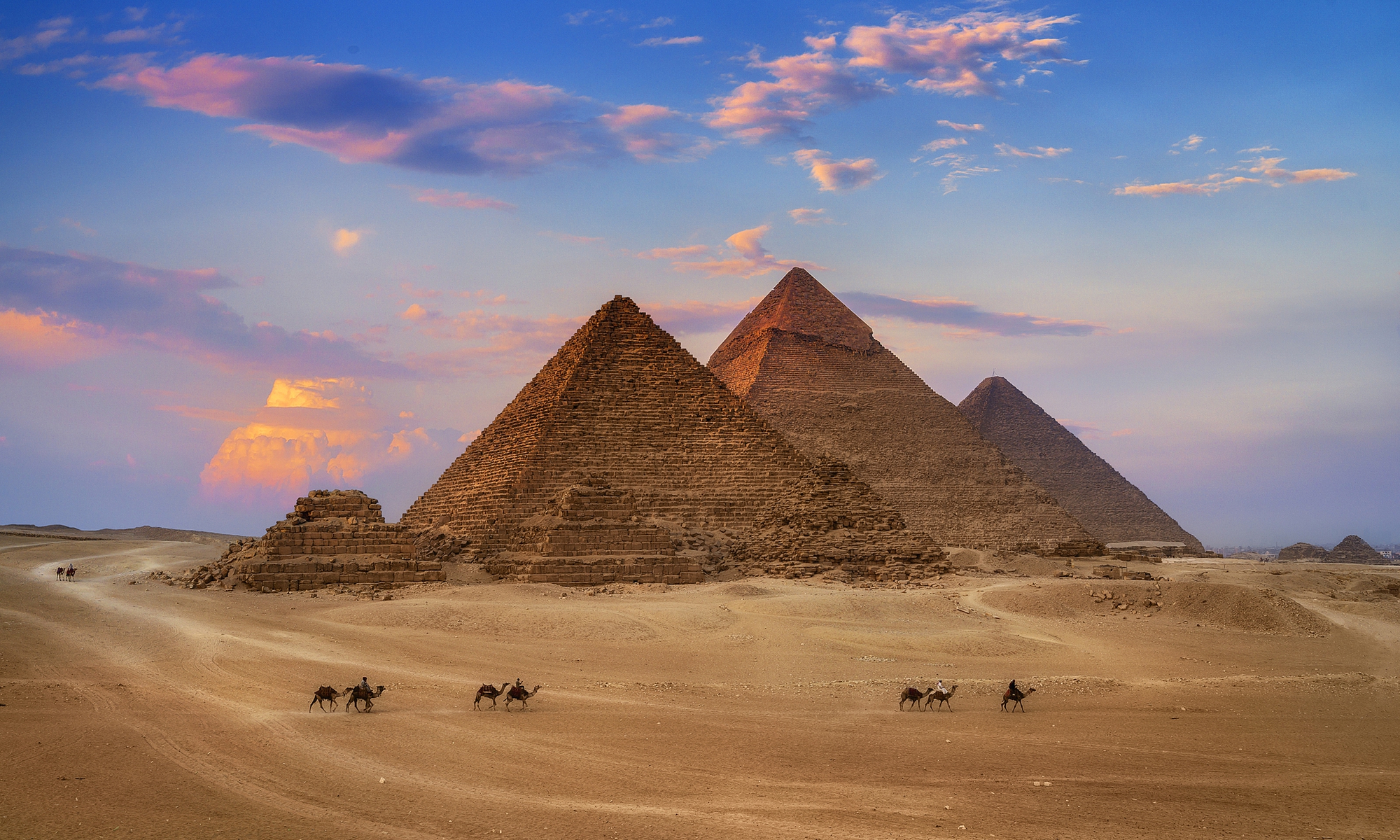
The landmarks in Egypt (Photos: VCG)
There is a strong sense of harmony and friendship between the Chinese and Egyptian peoples. Despite the vast geographical distance separating them - across oceans, mountains and rivers - and despite their different languages, the two peoples share similar civilizational principles. Both belong to ancient civilizations built around the values of human security and well-being. They cultivated the land to feed people and advanced the medical science to heal them. Both civilizations were founded on the principles of peace and the value of human life. Therefore, it is no surprise that such deep feelings of friendship, affection and cooperation exist between the two peoples.
Attention is now turning to the visit of Chinese President Xi Jinping, particularly as the Egypt-China relationship has become one of the fastest-growing and most transformed partnerships in recent years. It is now possible to say that China-Egypt relations are living their golden age, built upon a long history of friendship and cooperation and a shared political will to build a broader and more prosperous future.
The visit of President Xi to Egypt confirms Cairo's important position in Beijing's foreign policy, as well as China's significance as a strategic partner for Egypt at a time when the region and the world are witnessing major political and economic transformations.
Relations between the two countries have witnessed remarkable progress in recent years, particularly through the frequent meetings between the two heads of state. These meetings have helped elevate the bilateral relationship to broader horizons based on mutual interests, respect for sovereignty, non-interference in internal affairs and a shared commitment to development and peace.
The China-proposed Belt and Road Initiative represents one of the most important pillars of cooperation between the two countries. Egypt's unique geographical location and the Suez Canal give Cairo a pivotal position within the initiative. Linking it with Egypt's Vision 2030 also opens wide opportunities for developing infrastructure, ports, economic and industrial zones, and transforming Egypt into a center for trade and investment connecting Asia, Africa and Europe.
Egypt's accession to the BRICS group represents an important step toward strengthening its presence in the global economy, expanding its trade and investment relations, benefiting from new markets, and enhancing cooperation with emerging economic powers. Egypt's participation in the activities of the Shanghai Cooperation Organisation is also of particular importance as part of its efforts to expand its international engagement and strengthen its political and economic standing.
Chinese investments remain one of the most prominent features of the partnership between the two countries. Chinese projects have become an integral part of Egypt's development process in the fields of industry, energy, transportation, infrastructure and technology. The China-Egypt TEDA Suez Economic and Trade Cooperation Zone in Ain Sokhna stands out as a successful model of industrial cooperation, alongside the participation of Chinese companies in major projects, including the Central Business District in Egypt's New Administrative Capital.
Chinese tourism also represents a promising area of cooperation, especially with the growing interest of Chinese tourists in cultural and historical destinations. With greater promotion of Egypt as a tourist destination and continued development of services and transportation, tourism can become one of the most important channels of economic and people-to-people cooperation between the two countries.
China's policy of granting tariff exemptions to African exports also opens new horizons for Egyptian products in the Chinese market. At the same time, it reinforces Egypt's importance as a natural gateway to Africa, thanks to its strategic location, the Suez Canal, its ports, economic zone and transportation networks.
The strength of China-Egypt relations is not based on economics alone. The two countries also share political understanding on many international and regional issues, foremost among them the Palestinian cause and the rejection of any displacement of the Palestinian people, while emphasizing the need to respect their legitimate rights and establish their independent state.
China-Egypt relations have moved beyond the stage of traditional friendship to become a multidimensional partnership that brings together politics and economics, investment and technology, and culture and tourism.
With the visit of the Chinese president to Egypt, the shared desire to build on what has already been achieved and open new horizons for cooperation in industry, technology, energy, artificial intelligence and investment becomes even clearer.
It is a partnership between two ancient nations - one that does not stop at the boundaries of the present, but extends forward to shape a stronger and more prosperous future for both countries and for the region.