


BRICS and SCO: Lifting the people of the Global South
What do a Brazilian solar plant, a freight train in Qingdao, and an AI governance framework have in common? They are examples of what international cooperation delivers for people.
The question is no longer whether BRICS and the Shanghai Cooperation Organization (SCO) matter. It's how they translate into everyday gains.
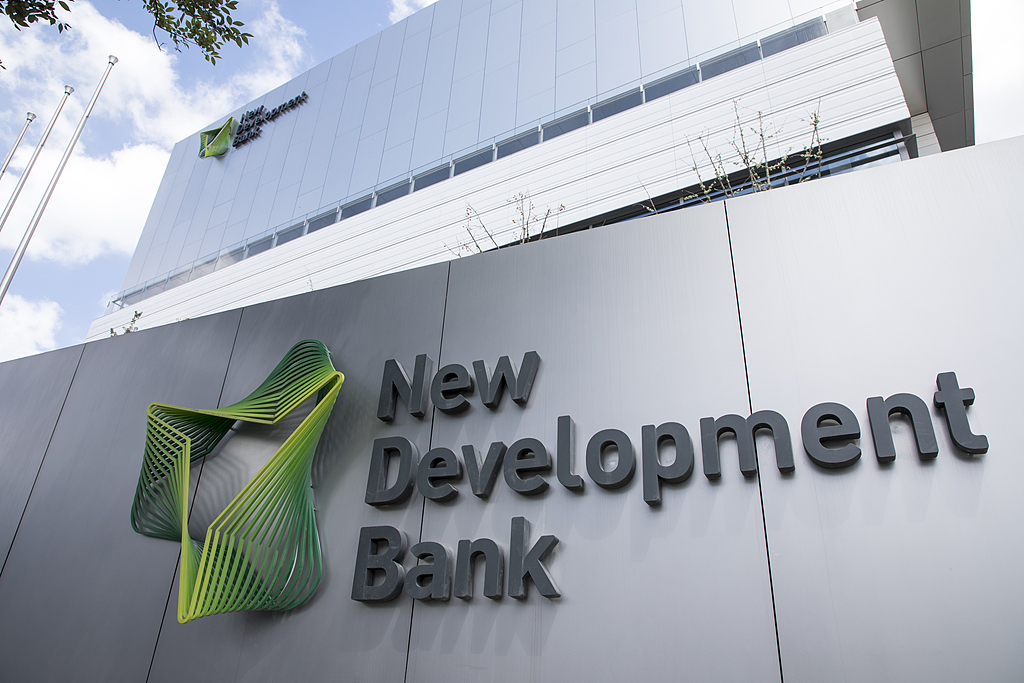
File photo of the headquarters building of BRICS New Development Bank in east China's Shanghai. /VCG
Making development tangible
Since approving a $300-million renewable energy loan to Brazil in 2016, the BRICS New Development Bank (NDB) has funded 139 projects worth $42.9 billion – covering metro lines, clean water, and digital infrastructure across member states.
The SCO works in similar ways. In the first half of 2026 alone, the China-SCO Local Economic and Trade Cooperation Demonstration Area in Qingdao operated 461 freight trains, driving $332 million in imports and exports – a 115.6% year-on-year surge.
When loans build railways and freight corridors lower trade barriers, development is no longer a distant promise – it's a rising tide that lifts all boats. That's the Global Development Initiative in action: a wave of that carries everyone forward.
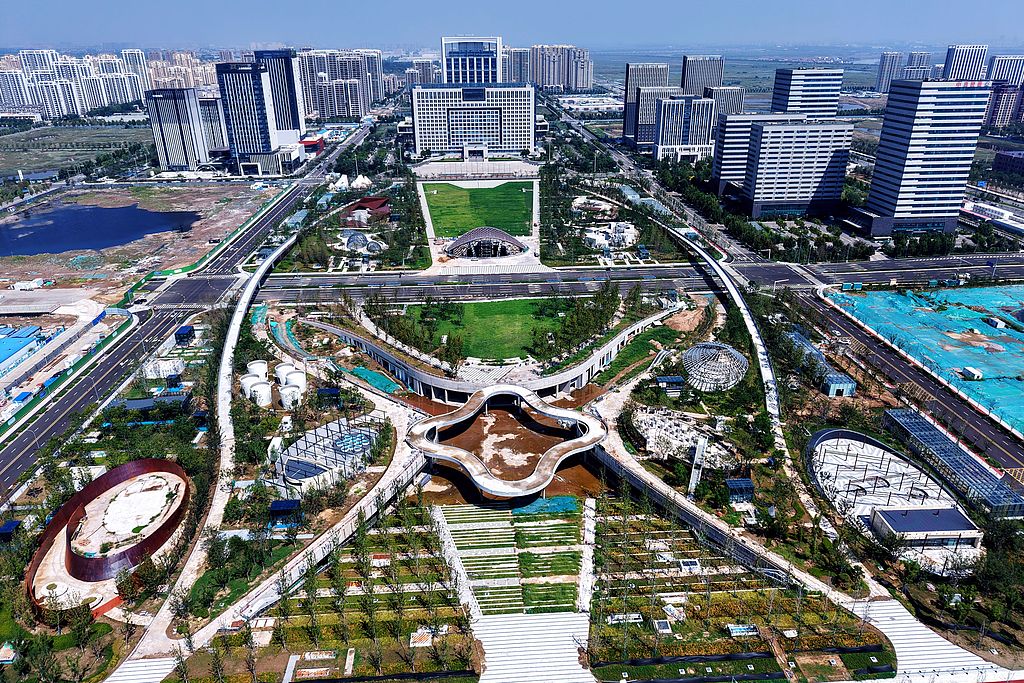
An aerial photo of the China-SCO Local Economic and Trade Cooperation Demonstration Area in Qingdao, east China's Shandong Province, September 2, 2025. /VCG
Making security a shared responsibility
But development gains need protection.
Counterterrorism has been central to the SCO since its founding. At the 2026 Bishkek summit, member states adopted a new declaration and approved a Universal Center for Countering Security Challenges and Threats and an SCO Anti-Drug Center.
BRICS is also broadening security. At the June 2026 Agriculture Ministers' Meeting, members – representing 42% of global agricultural land – prioritized food security, climate-resilient agriculture, and a new Grain Exchange initiative.
From anti-terrorism to food safety, security is being reframed around protecting daily life, becoming more common, comprehensive, cooperative, and sustainable in line with the Global Security Initiative, the aim of which is security for all.
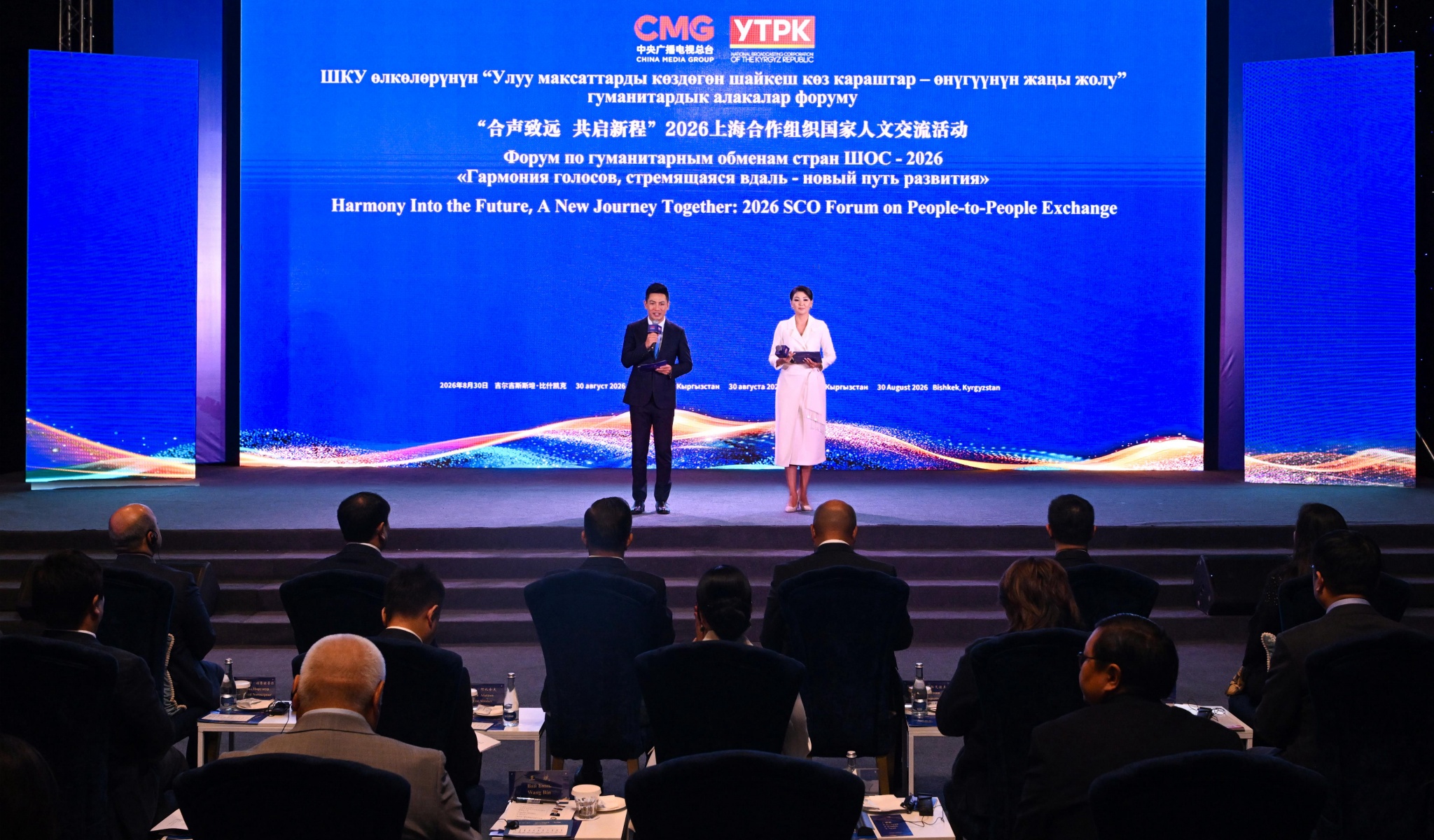
The 2026 Shanghai Cooperation Organization (SCO) Forum on People-to-People Exchange is held in Bishkek, Kyrgyzstan, August 30, 2026. /CMG
From encounters to mutual understanding
The principle of cooperation goes far beyond projects and investment. True cooperation is fundamantally about human connection.
The Global Civilization Initiative recognizes that real partnerships are built on mutual respect, understanding and the sharing of know-how to lift each other up.
On August 30, the 2026 SCO People-to-People Exchange Event brought together more than 100 guests from politics, business, culture and media in Bishkek.
The SCO University network now connects more than 120 institutions across seven countries, including China, Russia, Kazakhstan, Kyrgyzstan, Tajikistan, Belarus and Iran, supporting joint talent development. Last September, the China-SCO Vocational Education Cooperation Center was established in Tianjin.
BRICS countries run film, sports, education, media and youth exchanges to foster cultural cooperation and build skills and friendship.
Luban Workshops have been set up in SCO countries including Kazakhstan, Tajikistan, Russia and Pakistan, to train the next generation for the digital future.

The exhibition of BRICS New Industrial Revolution 2024 in Xiamen, southeast China's Fujian Province, September 10, 2024. /VCG
Giving the Global South a voice
Artificial intelligence will play a major part in that future – and everyone should share in it.
The 2025 BRICS statement on AI governance championed an inclusive digital ecosystem, ensuring developing nations aren't merely technology consumers, but active rule-makers.
At the 2026 SCO summit, leaders called for reforming global governance so that all countries can have a seat at the table and share the fruits of progress.
From NDB financing and regional connectivity to counterterrorism, food security and AI governance, BRICS and the SCO are giving countries of the Global South more opportunities to chart their own path.
This aligns with China's Global Governance Initiative, which calls for sovereign equality, multilateralism, a people-centered approach and a more just and equitable global governance system.
A power plant, a freight train, a counterterrorism mechanism, a vocational training program and an AI governance framework may seem unrelated.
Together, however, they tell a larger story: China's four global initiatives are being translated into practical benefits that people can see and feel.