


Canada pushes back and puts the WTO to the test
Canadian counter-tariffs on US goods took effect on September 8 as scheduled, covering about 27.6 billion Canadian dollars ($20 billion) worth of imports from the US. The measures target steel, dairy, appliances, agricultural equipment, pulp and paper, plastics, electronics and other products, with tariff rates of 15%, 25% and 50% matching the corresponding US rates. Canada's existing tariffs on some steel and aluminum products have also risen from 25% to 50%.
The retaliation has strong public backing in Canada. More importantly, it has been carefully designed to hit politically sensitive US industries and states ahead of the November midterm elections.
Maine is the clearest example. Canada buys roughly half of Maine's lobster catch, and the new tariffs come during the important fall fishing season. Other targeted products include steel, aluminum and auto parts in Michigan, cheese in Wisconsin, and appliances in Kentucky. These are not just major US industries; they are concentrated in states where important congressional races are being contested.
The message from Ottawa is therefore broader than the value of the goods involved. Canada is showing that US tariff pressure can carry a political and economic cost at home.
At the same time, Canada is leaving room for negotiation. The two countries have already spent months trying to reach a broader trade arrangement, and Ottawa has made clear that it wants a fair deal rather than an open-ended trade war. The retaliation puts pressure on Washington while keeping the possibility of a negotiated settlement alive.
The direct economic impact of the US-Canada tariff fight, however, remains limited for now. The latest Canadian measures cover only a relatively small share of bilateral trade, and even a wider escalation would not by itself be likely to cause a major shock to the global economy.
The significance of Canada's retaliation lies elsewhere.
It sends a much bigger signal to the world trading system: unilateral US tariffs do not have to go unanswered.
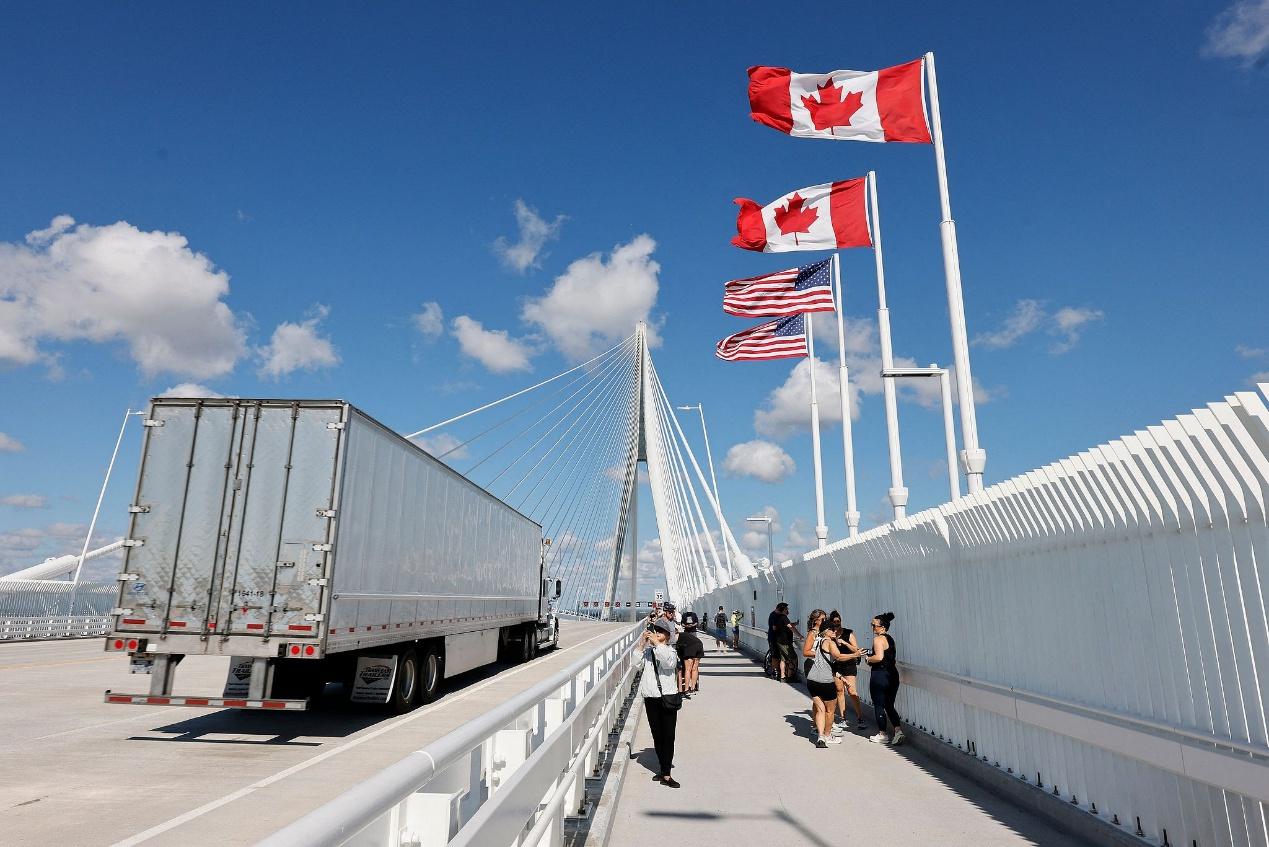
A truck crosses the Gordie Howe International Bridge between Windsor, Ontario, Canada, and Detroit, Michigan, US, on September 6, 2025. (Photos: VCG)
This raises a fundamental question for global trade — Turnberry or WTO?
The Turnberry System, as described in this commentary, represents a new US approach in which tariffs are used as leverage to secure individual concessions from trading partners through bilateral agreements. The name comes from the US-EU trade framework reached at Turnberry, Scotland, in July 2025.
Under that framework, the US agreed to a 15% tariff ceiling for most EU goods, while the EU agreed to eliminate tariffs on US industrial goods and provide preferential access for a range of US agricultural and seafood products. The EU also announced plans to purchase $750 billion in US energy through 2028 and for European companies to make an additional $600 billion in investment in the US.
Turnberry therefore represents more than one trade agreement. It points toward a trading system based increasingly on bilateral bargaining, with tariffs serving as the main negotiating weapon. That is fundamentally different from the WTO system, which is built around common rules and obligations among its members.
Canada's retaliation is a direct challenge to that direction.
Ottawa is not simply matching US tariffs with tariffs of its own. Canada has also taken US tariff measures to the WTO, including its challenge over US steel and aluminum tariffs. By combining retaliation with WTO action, Canada is making a broader policy statement: unilateral tariffs that run against WTO rules should not simply be accepted as the new normal.
That matters far beyond Canada.
If major trading economies are forced to negotiate separately with Washington whenever tariffs are imposed, the global trading system could become increasingly fragmented. Common rules would gradually give way to bilateral deals in which market access depends more on bargaining power than on agreed WTO obligations.
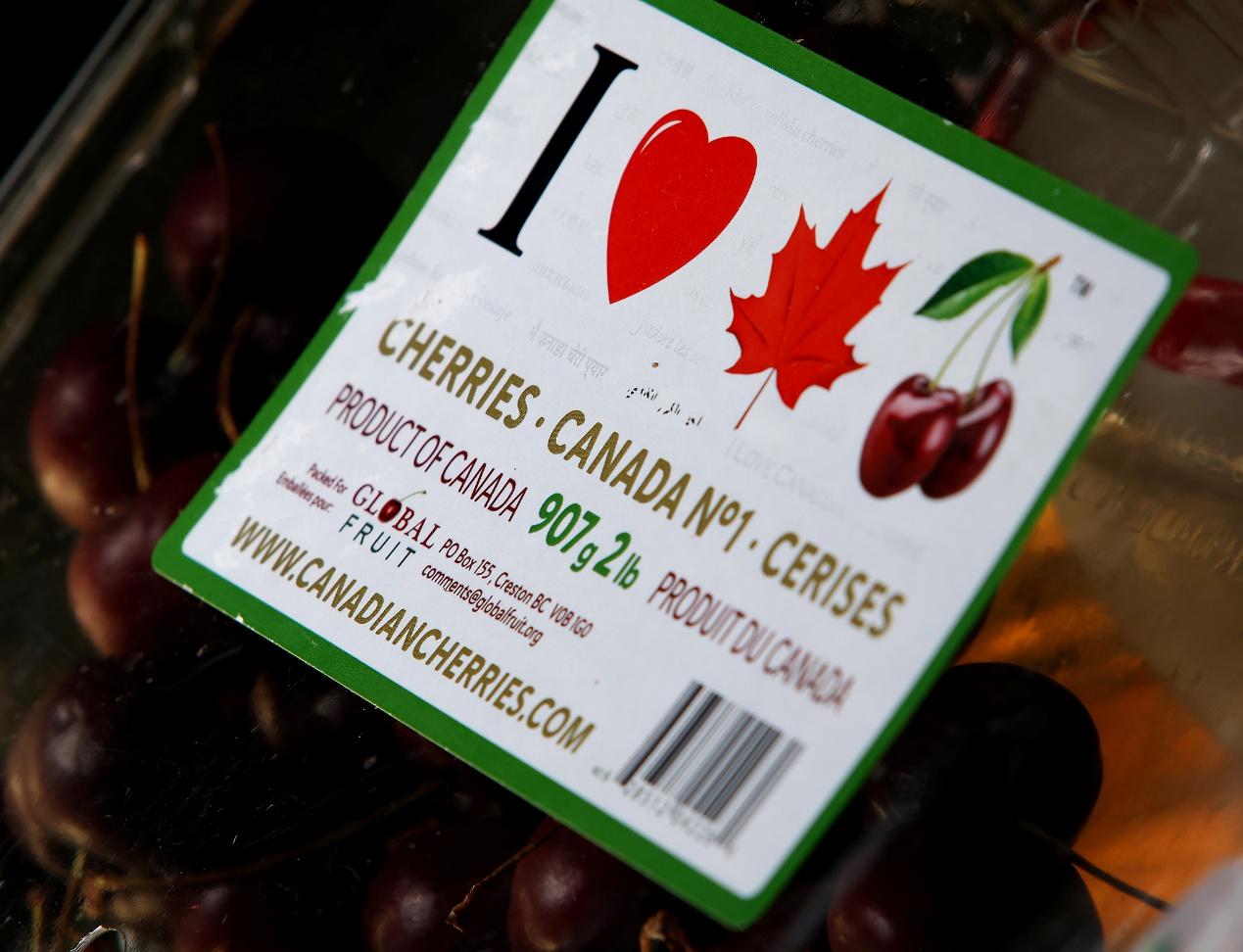
A package of cherries with Canadian labeling is displayed in Brampton, Ontario, Canada, on August 30, 2026.
Yet world trade has shown considerable resilience. WTO data show that world merchandise trade volume grew 4.6% in 2025 despite the sharp rise in tariffs and trade uncertainty. The resilience suggests that global trade is not simply a function of US policy. Supply chains, markets and trading relationships have continued to adjust.
That adjustment is already encouraging greater trade diversification.
Canada is looking to deepen economic relations with partners beyond the US. Other economies are doing the same, seeking new markets and supply chains to reduce their exposure to unilateral measures by any single trading power.
This does not mean the US will become less important. The US remains by far Canada's largest trading partner, and the two economies are deeply integrated. But Canada's response shows that economic dependence does not necessarily mean accepting every condition imposed by a larger trading partner.
The broader issue, therefore, is not whether Canada's CA$27.6 billion retaliation will change the global economy. It will not.
People enjoy a sunny day along the north shore of Lake Ontario in Toronto, Canada, on August 28, 2026.
The issue is what comes next.
Will more countries accept a trading system increasingly shaped by unilateral tariffs and bilateral bargaining? Or will they use countermeasures, negotiations and the WTO to defend a system based on common rules?
Canada has chosen to push back.
Its tariffs are aimed not only at specific US products but also at politically important states and industries. Its WTO action challenges the legitimacy of unilateral tariffs. And its efforts to diversify trade show that dependence on the US market is no longer being treated as inevitable.
That makes Canada's retaliation much more than a bilateral tariff dispute. It is an early test of whether the WTO-centered multilateral trading system can withstand the rise of the Turnberry System.
Canada has made its choice: push back against unilateral tariffs, keep negotiating where possible, and keep the WTO in the game.