


SCO at 25: Empowering the Global South, promoting global governance
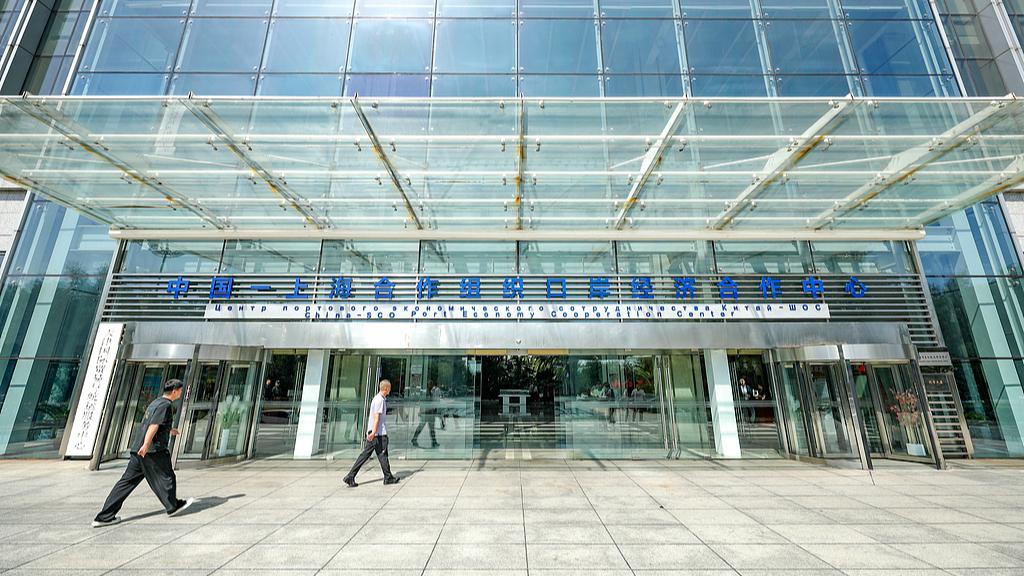
The China-SCO Port Economy Cooperation Center is inaugurated in Tianjin, China, September 3, 2026. (Photo: VCG)
Turning 25, the Shanghai Cooperation Organization (SCO) is moving beyond regional cooperation to take on a broader role in global affairs. Its evolution from a security-focused mechanism into a comprehensive cooperation platform mirrors the broader rise of the Global South and its push for development, greater representation and a stronger voice in global affairs.
The 26th Meeting of the Council of Heads of State of the SCO Member States, which concluded on September 1 in Bishkek, Kyrgyzstan, underscored this new direction: the SCO is becoming a platform not only for common development across Eurasia, but also for advancing Global South development and shaping a more just and equitable global governance system.
From 'Shanghai Five' to key platform for Global South cooperation
Over its 25-year history, the SCO has undergone three major transformations.
It first evolved from the "Shanghai Five," established around border security, into a regional security cooperation organization. It then expanded beyond security into a comprehensive platform covering more than 50 areas, including the economy, people-to-people exchanges and international cooperation, while steadily expanding its membership and partnerships.
The third transformation is now underway: the SCO is evolving from a comprehensive regional organization into a broader force for advancing a multipolar world, safeguarding global peace and development, and shouldering greater global responsibilities.
As Chinese President Xi Jinping has put it, the SCO's "most significant achievement" has been its gradual transformation into a new type of regional cooperation organization that spans the largest geographical area, represents the largest population and possesses enormous development potential in the world.
How has the SCO achieved this? The answer lies in the "Shanghai Spirit."
Over the past 25 years, the SCO has established a model for relations among major powers, neighboring countries and countries of different sizes, bringing together the development potential of nearly half of the world's population and about a quarter of the global economy. Its approach reflects the trend of the times in several important ways.
First, equality: All member states are equal, with no leader or subordinate members, and countries of all sizes consult with one another on an equal footing. Second, non-alignment, non-confrontation and non-targeting of third parties: The SCO seeks partnerships without forming alliances and dialogue rather than confrontation. Third, multilateralism: It seeks to promote security through cooperation and development through cooperation.
This model stands in sharp contrast to bloc politics and zero-sum games. It also resonates with the increasingly strong aspirations of the Global South: to safeguard their rights to peace and development while gaining greater representation and a stronger voice in international affairs on the basis of equality.
Advancing security and development in tandem
For Global South countries eager to achieve development and revitalization, the SCO offers both opportunities and safeguards.
The opportunity lies in the vast space for common development. Trade between China and other SCO member states rose from $12.1 billion in 2001 to $523.5 billion in 2025, a more than 40-fold increase in just over two decades, according to data from the General Administration of Customs.
At the summit in Bishkek, China announced the establishment of an international cooperation center for AI applications and a China-SCO Port Economy Cooperation Center in Tianjin. It also pledged to jointly implement 100 scientific and technological cooperation projects over the next three years, continue advancing the development of "10-million-kilowatt-level" photovoltaic and wind power projects, and further open its huge market to partners.
With development prioritized and benefits shared more broadly, the SCO is connecting multiple growth poles across Eurasia, fostering a community of shared development and a shared future.
The SCO's second major contribution is providing a solid foundation of security and stability for development.
In 2025, the SCO established "four security centers" including the SCO Universal Center for Countering Security Challenges and Threats, the Information Security Center, the Center for Combating Transnational Organized Crime and the Anti-Drug Center, marking a significant advancement in SCO security cooperation.
This year, the summit approved regulations for the Universal Center for Countering Security Challenges and Threats and the Anti-Drug Center, paving the way for the security centers to begin operations. Meanwhile, the SCO is further strengthening its security cooperation network to tackle the "three forces," telecommunications fraud and transnational crime.
At the same time, the SCO advocates a common, comprehensive, cooperative and sustainable approach to security, opposes external interference in the internal affairs of countries, and emphasizes resolving differences through dialogue and consultation. Such an approach to security reinforces its approach to development, allowing Global South countries to pursue their development agendas in a stable environment.
Meanwhile, from Luban Workshops to basic education cooperation centers, and from Confucius Institutes to various livelihood projects, people-to-people exchanges are further strengthening the social foundations of cooperation among countries.
From regional governance to global governance
"The SCO takes root in the Global South, its heart beats with the Global South, and it is an important pillar of South-South cooperation," Xi highlighted the organization's increasingly prominent Global South identity at the SCO Plus meeting.
As the Global South grows in strength and the balance of international power undergoes profound changes, the trend toward a multipolar world has become irreversible.
China advocates an equal and orderly multipolar world: sovereign equality and mutual respect are fundamental principles, and Global South countries should have greater representation and a stronger voice in international affairs. Balanced and orderly development and respect for the rule of law are essential, with major powers in particular expected to uphold rules and the law. Multilateralism, dialogue and consultation are key approaches, as global affairs should be decided through consultation among all countries. Mutual benefit, win-win cooperation and inclusiveness represent the direction of development, while protectionism and decoupling have no future.
From the Global Governance Initiative proposed at the Tianjin summit to the plans and arrangements adopted at the Bishkek summit, the Bishkek Declaration explicitly called for efforts to build a more just and equitable global governance system.
Over the past year, the SCO has evolved from a regional governance participant into an important force for global governance reform, leveraging its strength, wisdom and action to advance Eurasian development, empower the Global South and promote a more just global governance system. Governance, like progress, requires constant renewal.
Looking ahead, the SCO will shoulder greater historical responsibility – speaking up for peace, driving development, bridging differences through cooperation and turning shared aspirations into shared gains. Together with the Global South, it will help advance an equal and orderly multipolar world and move firmly toward the shared future of humanity.