


Egypt's wind power push, tied to manufacturing, offers lessons for Nigeria and Africa
Egypt is betting that building wind turbines at home can help it build a renewable-energy industry, positioning it as a template for Africa’s push for renewable-energy industrialization.
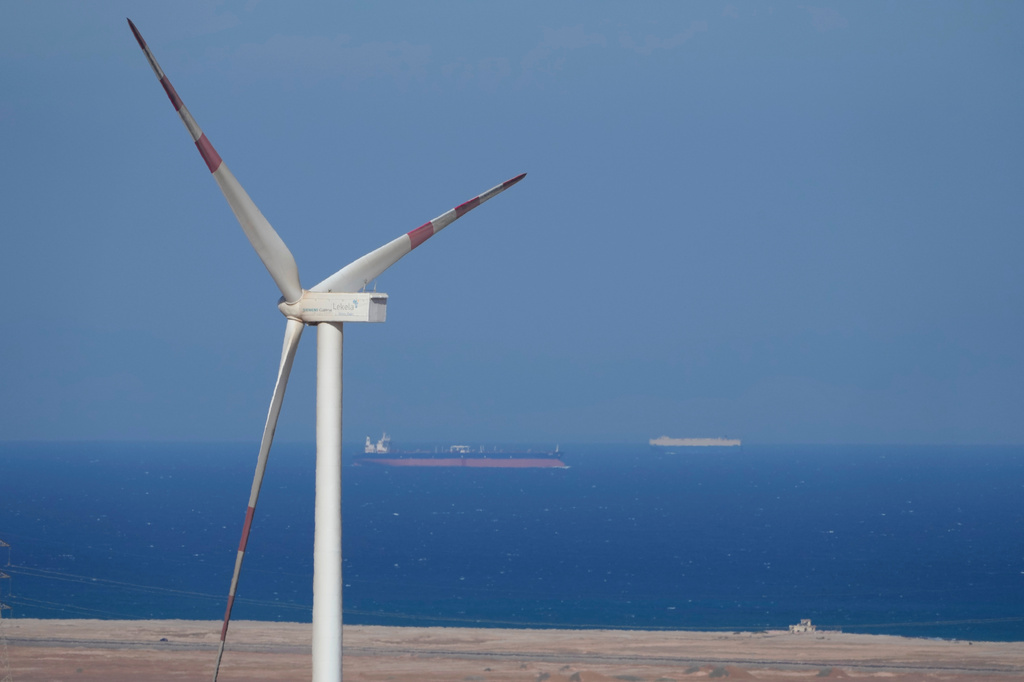
Cargo ships sail past Lekela wind power station near the Red Sea city of Ras Ghareb, Egypt, Oct. 12, 2022. (Photo: AP)
The country signed a deal with China’s SANY Renewable Energy to develop a 2,000-megawatt wind project in the Gulf of Suez alongside Egypt’s first wind turbine manufacturing plant. The project is expected to connect to the national grid within 23 months of final agreements, while the factory is intended to supply Egypt and potentially export equipment across Africa and the Middle East.
Even though Egypt’s project is still in its early stages, energy experts say its emphasis on scale, local manufacturing and technology transfer could offer lessons for other African countries struggling to turn renewable-energy ambitions into functioning infrastructure.
That includes a project in Nigeria, where a 10-megawatt wind farm took nearly two decades to begin producing electricity. The difference highlights a broader challenge for Africa’s renewable-energy push: how to move beyond importing equipment and announcing projects to building the financing, industrial capacity and policy stability needed to deliver them at scale.
“The contrasts are stark,” said Fadhel Kaboub, an associate professor of economics at Ohio's Denison University. “We have a project in Nigeria that took two decades to come online, whereas we have this one project in Egypt that looks like it’s going to really take off.”