


WMO: Global ozone layer recovery continues to show success
GENEVA, Sept. 16 (Xinhua) -- The Antarctic ozone hole in 2025 was one of the smallest in decades, testimony to the continuing success of international action to protect the Earth's ozone layer, the World Meteorological Organization (WMO) said on Wednesday.
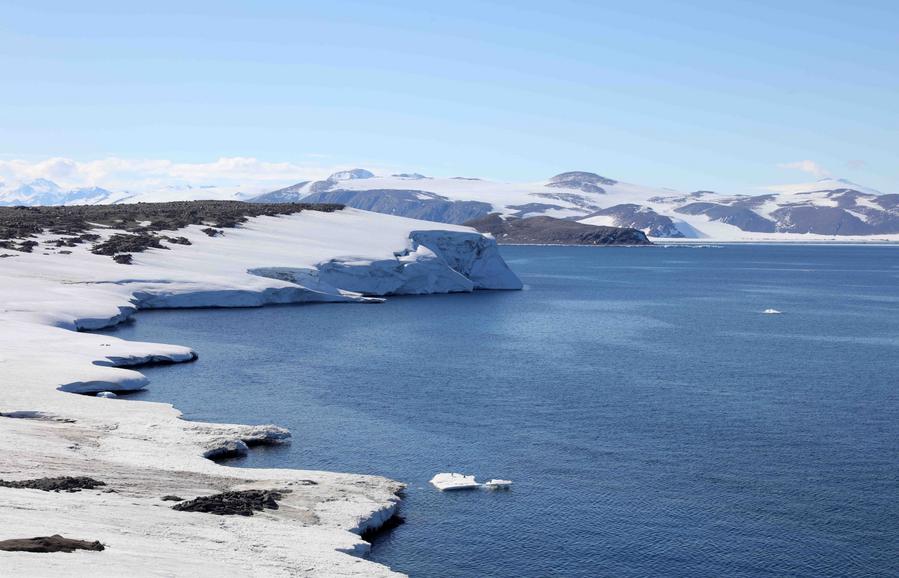
This photo taken on Dec. 27, 2024 shows a view of the scenery near China's Qinling Station in Antarctica. (Xinhua/Huang Taoming)
The WMO Ozone Bulletin said that last year's ozone hole ranked as the fourth to fifth smallest since severe depletion patterns were observed in 1992. This is the second consecutive year that both the depth and extent of the ozone hole were significantly below the 1990-2010 average.
Year-to-year fluctuations are influenced by large-scale meteorological transport conditions which drive springtime ozone depletion, an event that occurs after almost every austral winter above Antarctica, and every five to 10 years in the Northern Hemisphere.
In 2025, total column ozone was below average (negative anomalies) in a large region extending from Greenland and Europe to Central Asia, northern Japan and the Kamchatka Peninsula in the Russian Federation.
The bulletin said that these variations occur within the long-term trend toward the healing of the ozone layer, reflecting the success of the Montreal Protocol on Substances that Deplete the Ozone Layer, which phased out chemicals such as chlorofluorocarbons once found in refrigeration, fire-fighting foam and other common uses.
"This is an environmental success story. Since 2000, the ozone layer has been recovering, and we can expect full recovery within several decades," WMO Secretary-General Celeste Saulo was quoted as saying in the press release.
The bulletin was released for World Ozone Day on Sept. 16, which celebrates the 1987 Montreal Protocol that successfully phased out ozone-depleting substances. This year's theme is global action for a cooler planet.