


A story of trust and friendship: Mauritanian mother names newborn 'Khalil' aboard Chinese hospital ship
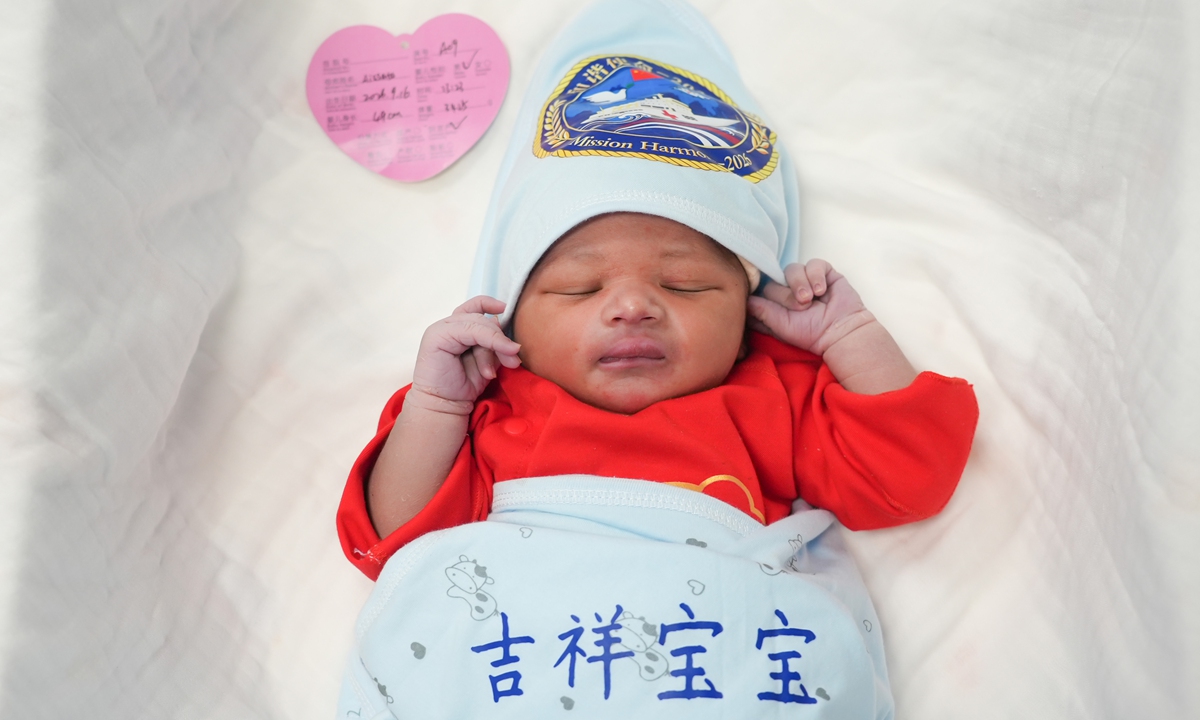
The "Auspicious Baby," Mohamed Khalil Sy, who was born on September 16 aboard the Chinese naval hospital ship Auspicious Ark while it was docked at Friendship Port in Nouakchott, Mauritania. (Photo: Courtesy of Chinese People's Liberation Army (PLA) Navy hospital ship Auspicious Ark)
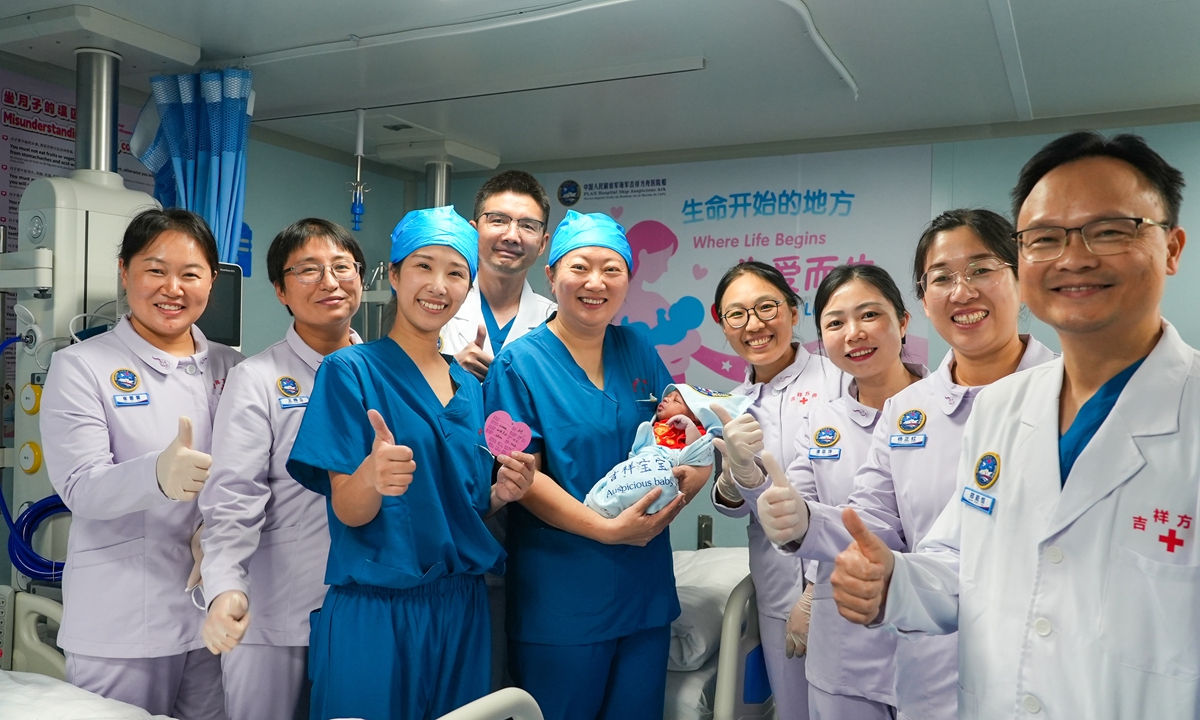
Medical staff pose for a photo with the "Auspicious Baby." (Photo: Courtesy of Chinese People's Liberation Army (PLA) Navy hospital ship Auspicious Ark)
For a Mauritanian mother, a medical emergency aboard a Chinese naval hospital ship became more than a safe delivery - it became a moment of trust between a patient and a team of doctors from a country she knew little about.
The mother, 34-year-old Aissata Ba, recently gave birth to a 3.425-kilogram baby boy aboard the Chinese naval hospital ship Auspicious Ark when it stopped in Mauritania. She shared her story with the Global Times on Friday, saying that the experience made her especially grateful to the Chinese doctors.
Ba told the Global Times that she knew little about the hospital ship before arriving. During a prenatal checkup at a local hospital on Wednesday morning, doctors found that the fetus was not in the proper position and that she had low amniotic fluid. They recommended that she seek treatment aboard the Chinese hospital ship, which had recently arrived in the country.
"I was told that a Chinese medical ship had just arrived and that its medical team was very capable. I'm very happy that I came here. This is my first boy. I want to thank the Chinese doctors," Ba told the Global Times.
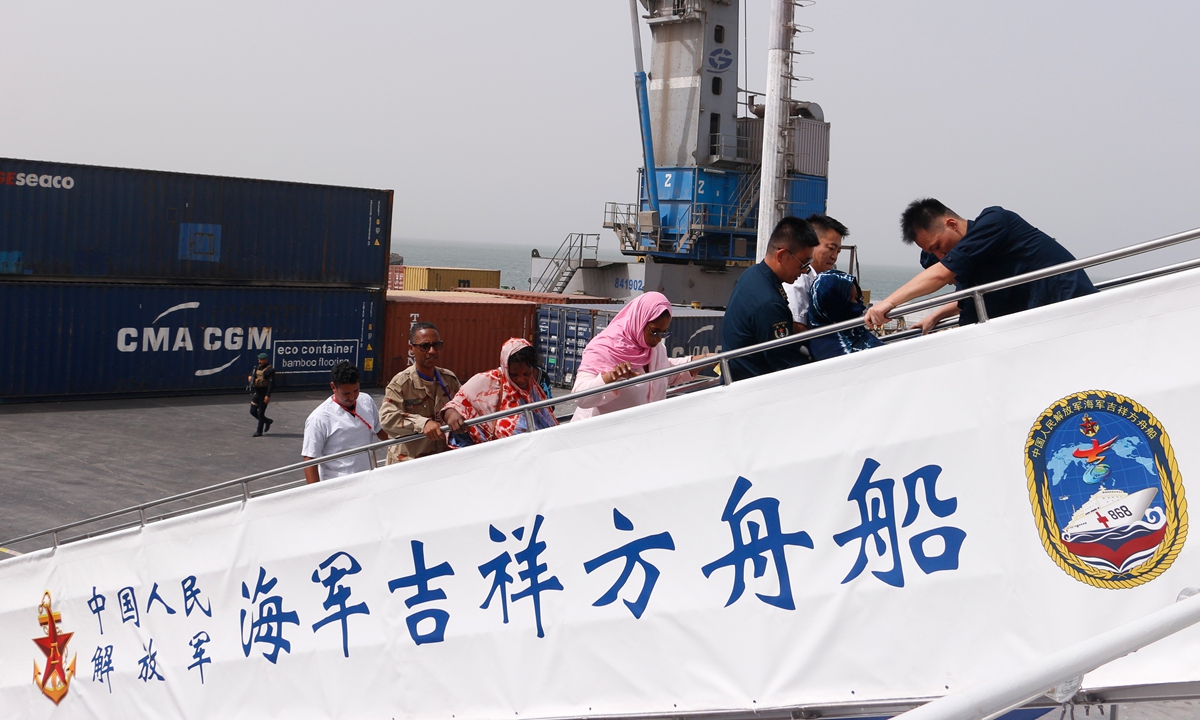
Chinese naval personnel transfer the expectant mother to the hospital ship Auspicious Ark. (Photo: Courtesy of Chinese People's Liberation Army (PLA) Navy hospital ship Auspicious Ark)
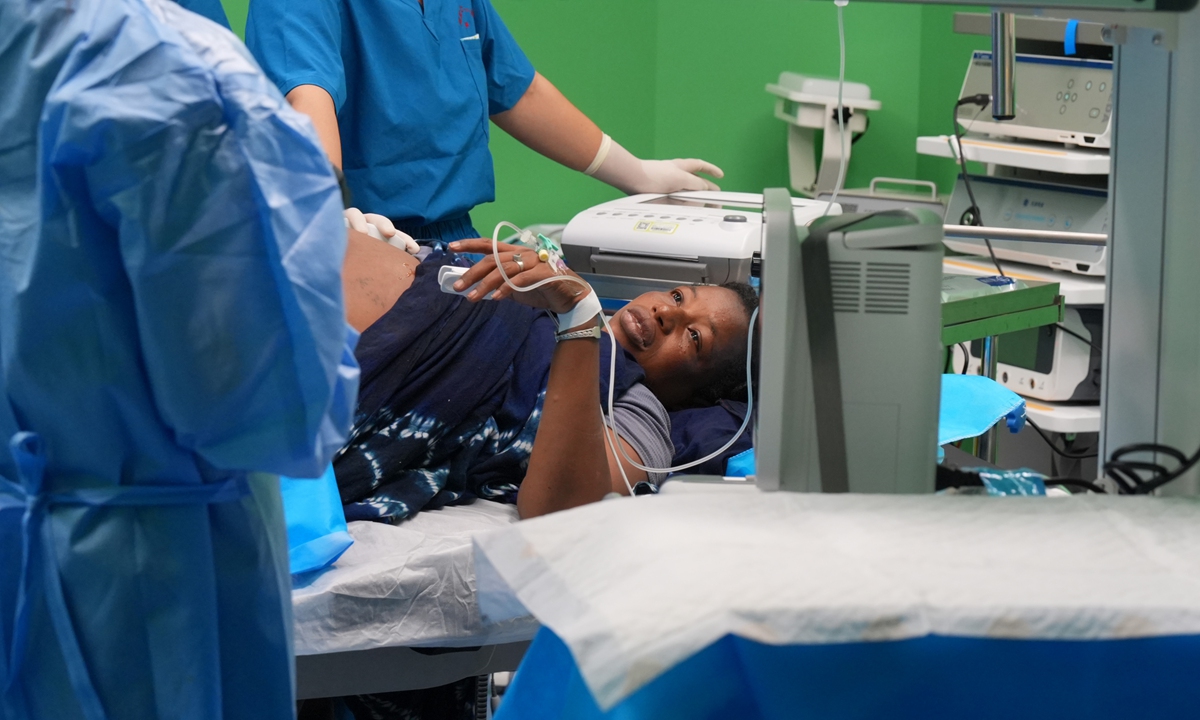
Medical staff examine the expectant mother aboard the hospital ship Auspicious Ark. (Photo: Courtesy of Chinese People's Liberation Army (PLA) Navy hospital ship Auspicious Ark)
A doctor with the medical team told the Global Times on Friday that the team had initially been informed that a woman who had previously given birth was approaching delivery and that preparations should be made for a vaginal delivery. However, examinations after Ba arrived aboard the ship showed fetal malpresentation, a scarred uterus, low amniotic fluid volume and signs of amniotic fluid contamination, making the situation more complicated.
Ba had initially hoped to deliver naturally. After a comprehensive assessment, the medical team explained the risks of a vaginal delivery and recommended a cesarean section.
"I trust the Chinese doctors," Ba said through an interpreter. Hearing those words, obstetrician and gynecologist Xu Xiaozhe, who was part of the medical team treating her, said he was deeply moved.
The doctor said the medical personnel aboard the ship came from different institutions and had conducted multiple drills during the voyage. However, this was the first time they had carried out an obstetric and gynecological operation aboard the Auspicious Ark.
"From the emergency reception of the patient to the completion of the operation, everyone coordinated in an orderly manner, and the entire process was smooth and tightly organized," the doctor told the Global Times.
During the operation, medical staff closely monitored Ba's vital signs, while anesthesiologist Xu Fengying stayed by her side and used gestures to help ease her anxiety. A pediatrician was also on standby in the operating room. At 1:23 pm on Wednesday, the 3.425-kilogram baby boy was delivered safely.
Ba recalled that she had been frightened at the beginning of the process, particularly after being told that her amniotic fluid was running low.
"I was afraid something might happen to my baby. But when I heard him crying loudly, I knew my child was healthy," she told the Global Times.
Ba said doctors and nurses remained by her side throughout the process, and that she felt particularly reassured when an interpreter told her that a pediatrician was there to examine the baby.
In a written response to the Global Times on Friday, a doctor with the medical team said language differences posed a challenge, but volunteers assisted with interpretation throughout the treatment. Nonverbal communication was also important, the doctor said, citing Ba's local doctor Wahba as an example.
"Her trust in us also gave us tremendous confidence and motivation," the doctor said.
"Our medical staff kept trying to ease her anxiety, and she could feel our goodwill. Sometimes, empathy between doctors and patients can be conveyed with just a look," the doctor said.
The doctor said the medical team had initially been concerned about the newborn's condition. Pediatrician Ma Ming remained in the operating room throughout the procedure and examined the baby immediately after birth.
The mother and child have since remained under observation and are both doing well.
"Doctors and nurses take care of me and my baby every day. We are both doing very well," Ba told the Global Times.
The baby was named Mohamed Khalil Sy. Ba told the Global Times that the family had originally planned to name him Mohamed after his grandfather, but later decided to add Khalil to commemorate the circumstances of his birth aboard the Chinese hospital ship.
"I'm very grateful to the Chinese doctors. My child was born aboard a Chinese hospital ship, and that was fortunate for both of us, so we wanted to call him 'Khalil,' for friendship," she said. "He also happened to be born at Friendship Port. I will tell him this beautiful story when he grows up."
The Chinese medical team also gave the newborn a blanket bearing the words "Auspicious Baby," a traditional Chinese-style red bellyband and other gifts.
Ba said she liked the gifts very much and would keep them for her son so she could tell him the story behind them when he grows up.
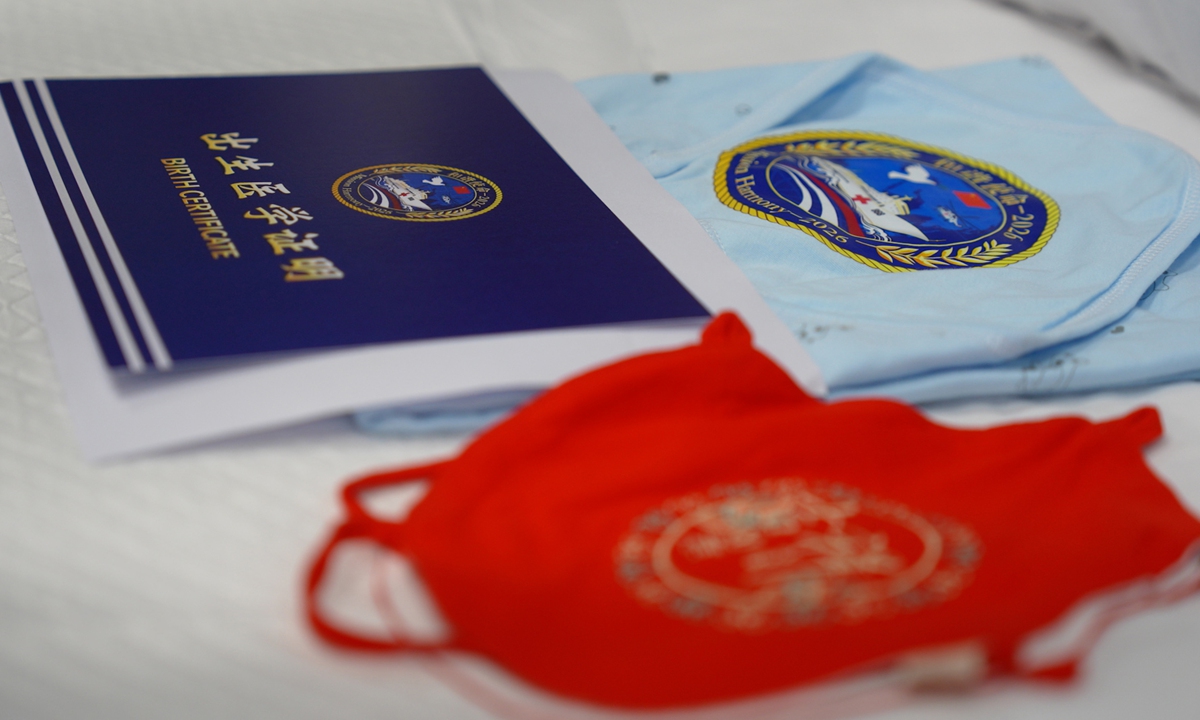
A traditional Chinese-style red bellyband and a blanket bearing the words "Auspicious Baby," presented to the newborn as gifts. (Photo: Courtesy of Chinese People's Liberation Army (PLA) Navy hospital ship Auspicious Ark)
Mauritania is the first stop of the Auspicious Ark's "Harmonious Mission 2026." According to China's Ministry of National Defense, the hospital ship set out in late July for Africa and South Asia to provide medical and health services and conduct cultural exchanges. The mission marks the Auspicious Ark's first overseas mission since its commissioning.
A doctor with the medical team told the Global Times that welcoming the first "Auspicious Baby" on the first day of medical services at the mission's first stop was a particularly happy moment for the entire floating hospital.
"The safe arrival of a new life speaks louder than a thousand words," the doctor said.