


Impact of recent mudslide in Nepal to weigh on its economy: ADB
KATHMANDU, Sept. 23 (Xinhua) -- The recent devastating mudslide in Nepal is expected to affect the country's economy in the current fiscal year 2026-27, with the economy projected to grow by 4.1 percent, the Asian Development Bank (ADB) said on Wednesday.
In its latest Asian Development Outlook, the ADB said Nepal's economic growth is expected to moderate in the current fiscal year compared with its earlier projection, as severe disasters in August damaged transport infrastructure, hydropower facilities and other productive assets.
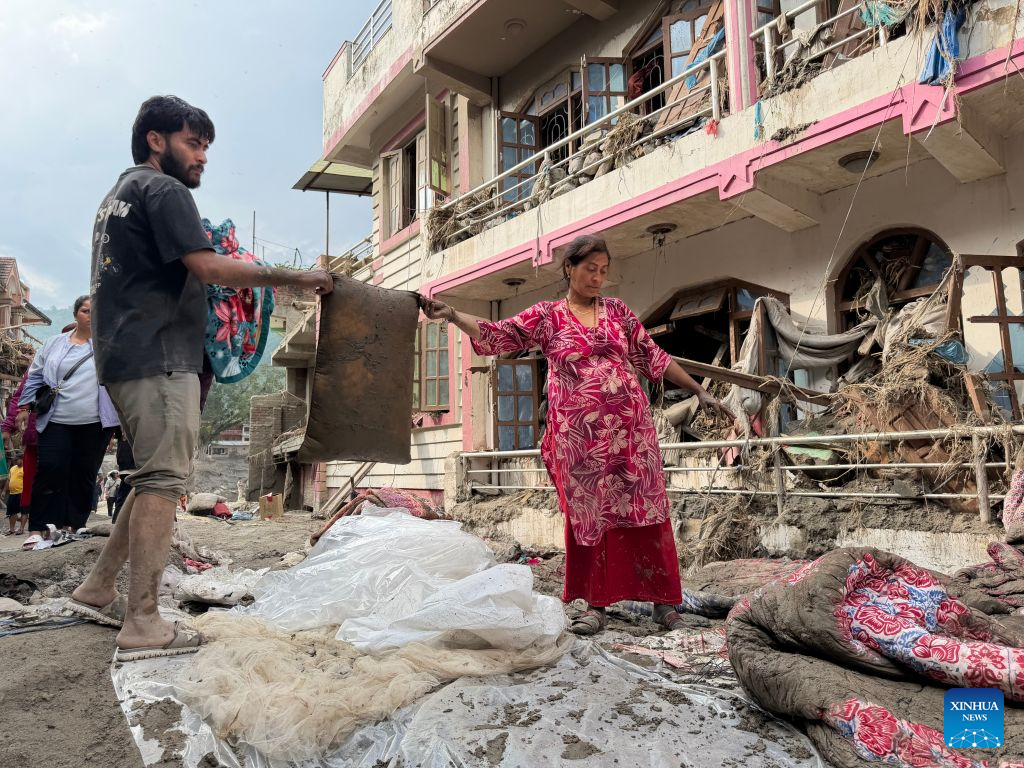
This photo taken with a mobile phone shows mudslide-affected residents cleaning up their belongings in Devighat in Nuwakot, Nepal, Aug. 29, 2026. (Photo: Xinhua)
The mudslide and its aftermath are expected to disrupt trade, tourism, agriculture and local economic activities, weighing particularly on industrial and services-sector growth during the first quarter of fiscal year 2026-27, which began in mid-July.
The damage to critical infrastructure and productive assets is likely to constrain economic activity in the short term, while disruptions to transport and other supply networks could further affect businesses and the movement of goods and people, the ADB said.
According to the Rapid Disaster Needs Assessment (RDNA) report prepared by a joint technical team of the National Planning Commission and the National Disaster Risk Reduction and Management Authority, the recent mudslide is estimated to have caused losses of 2.69 billion U.S. dollars.
However, reconstruction and rehabilitation spending is expected to partly offset the economic impact of the disaster by supporting demand and helping restore damaged infrastructure, according to the ADB. Increased investment in hydropower expansion is also expected to contribute to economic activity.
The RDNA report said an estimated 4.77 billion U.S. dollars will be required for the reconstruction and recovery of affected infrastructure and assets.
The reconstruction effort could, however, put additional pressure on public finances as the government increases spending to restore infrastructure and productive capacity damaged by the floods.
Public debt is expected to increase further in fiscal year 2026-27 as additional resources are mobilized for reconstruction and recovery. Nepal's public debt had started to rise substantially after the country mobilized domestic and foreign debt for the reconstruction following the 2015 earthquake.
"Despite higher financing needs, Nepal remains at low risk of debt distress," the ADB said.