


This year's El Nino-driven heat could cause nearly half a million more deaths, group says
This year's powerful El Nino and the record global heat it's driving, along with severe droughts, wildfires and shrinking water supplies, could lead to nearly half a million more deaths worldwide by the end of February, according to a research report released Wednesday.
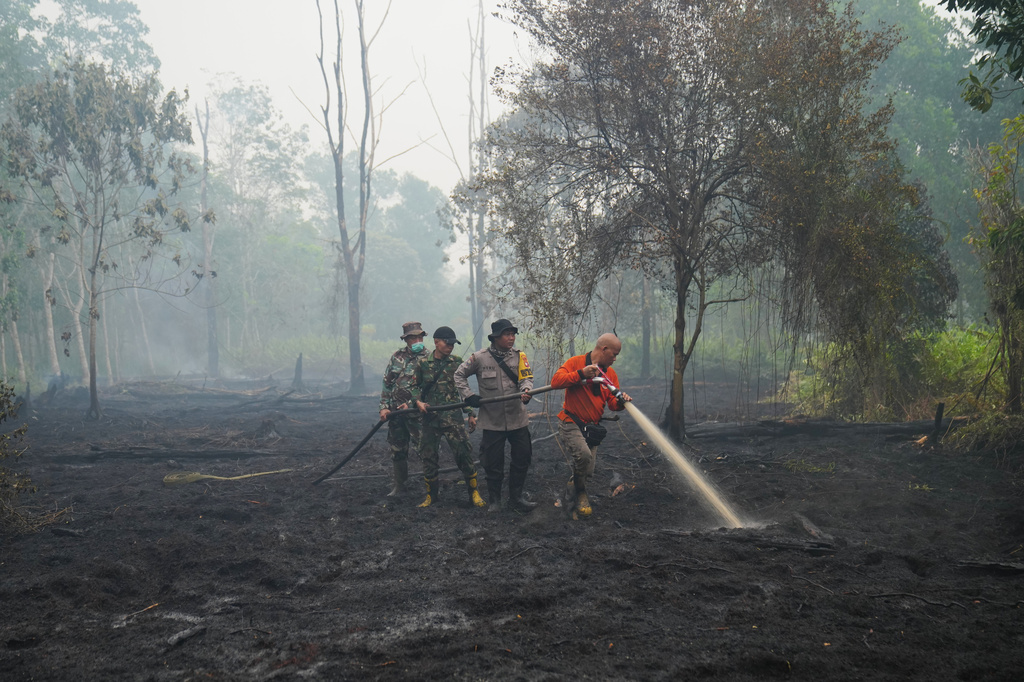
Firefighters spray water to put out wildfires burning through peatland forest in Kubu Raya, West Kalimantan, Indonesia, Sept. 12, 2026. (Photo: AP)
The grim warning by the University of Chicago-based Climate Impact Lab says that as many as 451,000 more heat-related deaths between June and the end of February could be attributed to El Nino, compared with heat deaths expected in a typical year.
The heaviest toll, the group says, is expected in poorer countries, already struggling with food insecurity and high energy costs, partly due to climate change and the fallout of the war in Iran.
Michael Greenstone, a co-founder of the group and the study's co-author, said the heat danger will likely persist beyond February — even though this El Nino is expected to end by then. The fallout of the weather phenomenon could be felt well into next summer, he added.
The research, he said, shows that heat is most dangerous in places that are already hot and relatively poor.
“If you’re already in a hot place, the extra couple of degrees are going to be much more dangerous,” he said. Wealthier places, he added, generally have greater access to air conditioning, reliable water supplies and functioning health systems.
The study combined seasonal temperature forecasts with localized estimates of how high temperatures affect mortality across more than 24,000 regions worldwide.
Researchers estimated the additional heat-related deaths by comparing deaths expected under El Nino-driven high temperatures with deaths expected if temperatures remained similar to what they have been in the last three decades. The projected fatalities are for the entire El Nino period, from June 2026 until the end of February 2027.